
Overlooked Routes
Getting to Machu Picchu Without Hiking: Deeper Immersion and Far Fewer Blisters
What happens when you skip the Inca Trail and spend those days exploring the ruins around the gates to Machu Picchu instead? A deeper, richer arrival at one of the world's great wonders.
September 14, 2026
The terraced hills of Machu Picchu reveal themselves as sunrise burns away the morning fog.
The road to Machu Picchu is an essential part of the journey. Most travelers choose to hike the Inca Trail or the Quarry or Salkantay Trail, walking the ancient steps that the Incas carved into the Andes centuries ago. But what if you want to get to Machu Picchu without hiking — or physically can't hike? What if you'd rather take a train and spend those extra days discovering the depth of Incan civilization in the places most visitors never see?
The Inca Trail has long been framed as the only "real" way to arrive — as though the destination only counts if you've suffered for it. While the trail does offer a unique form of immersion, I'm here to respectfully disagree.
As a travel advisor, I've helped clients plan their way to Machu Picchu, and I wanted to experience the non-hiking route firsthand before recommending it. I chose to take the train, partly because a three-to-four day hike didn't appeal to me, and partly because this leg of my combination tour with Intrepid Travel came right after a trip to the Galápagos Islands.
I knew my body would still be recovering from days of swimming, snorkeling, and hiking. What I didn't expect was that my alternative route would give me something the hikers didn't have: a deeper understanding of the Incas that transformed the moment I finally stood before their lost city.
Lima and Cusco: Setting the Stage
After nine days in the Galápagos, I flew from Ecuador to Lima, Peru, for a quick overnight. Lima is a colonial city built largely on top of an Incan world that Spanish conquistadors dismantled with brutal force, and nowhere does that history land more viscerally than the Monastery of San Francisco, whose catacombs hold the remains of at least 70,000 people. The tour, however, ended with tastings of pisco sours and churros — quite literally the best churro I've ever had.
The next morning, we flew to Cusco, the historic capital of the Inca Empire and the gateway to some of the most important Incan ruins in South America. You can still see buildings where the base walls are original Incan stonework, sturdy and precise after centuries of use. I explored the city's major landmarks: the Qorikancha temple, San Pedro market, Plaza de Armas, the famous Twelve-Angled Stone, Regocijo Square, and San Blas Square.
At roughly 11,200 feet, the altitude will hit you even if you've taken altitude sickness medication. Talk to your doctor about starting it the day before you fly in, and plan to spend at least one full day in Cusco acclimatizing before heading up to any ruins. Accommodations in Cusco range from boutique hotels built into historic structures to revitalized monasteries for tranquil retreats before heading up to Machu Picchu — something I can help you find based on your travel style and preferences.
The Sacred Valley: A Day in the Life in the Andes
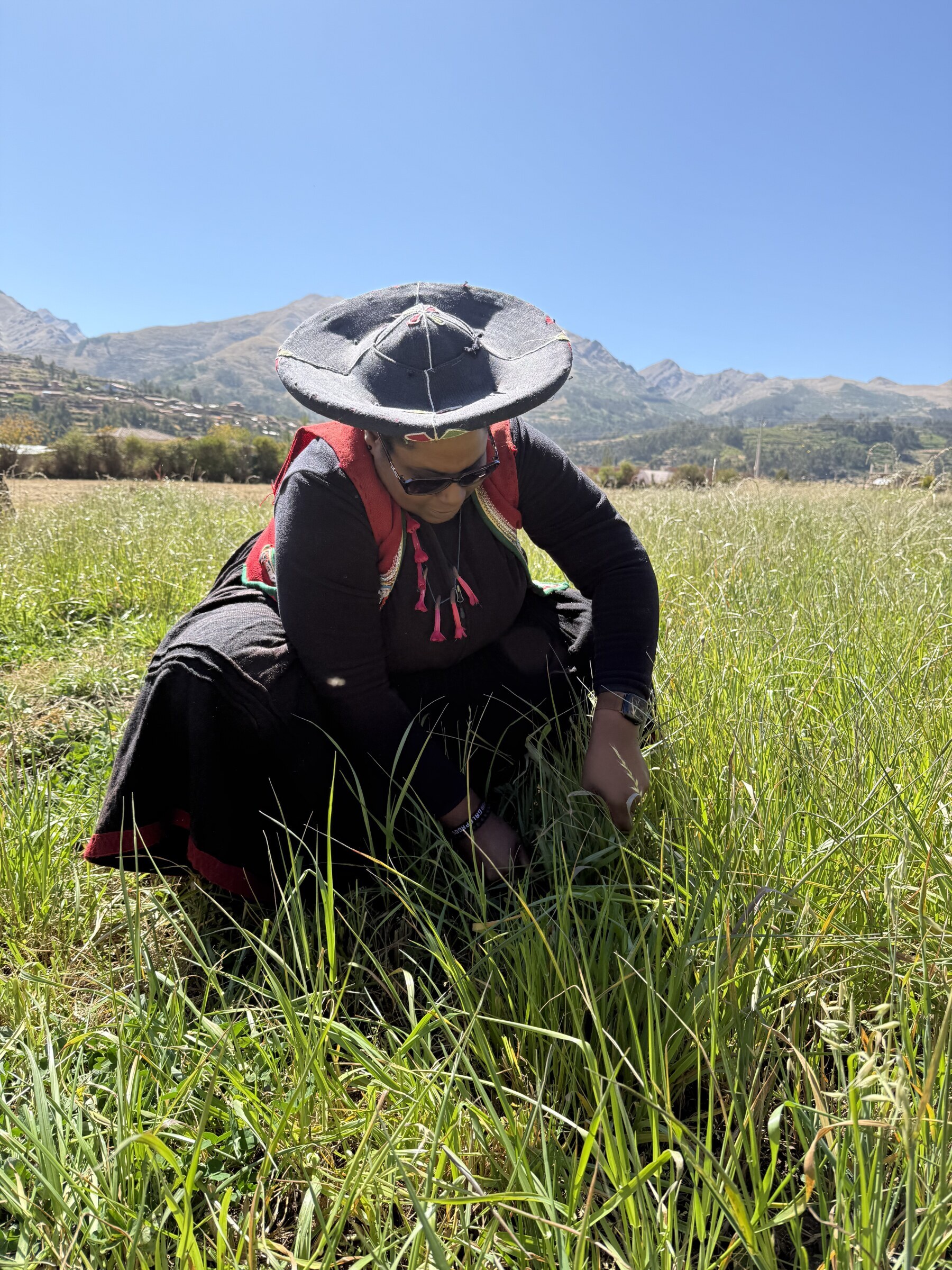
From Cusco, my tour group drove through the Sacred Valley to Ollantaytambo. Our first stop was a local community, where women greeted our group with flower necklaces, dancing, and singing. They dressed us in traditional clothing and invited us into a day of their lives — cutting grass with sickle knives, carrying it back to feed the alpacas and llamas, learning how they spin thread from alpaca fibers and dye them using plants and insects. A vegetarian lunch followed of potato soup, quinoa with vegetables, and vegetable fritters, prepared entirely by the community.
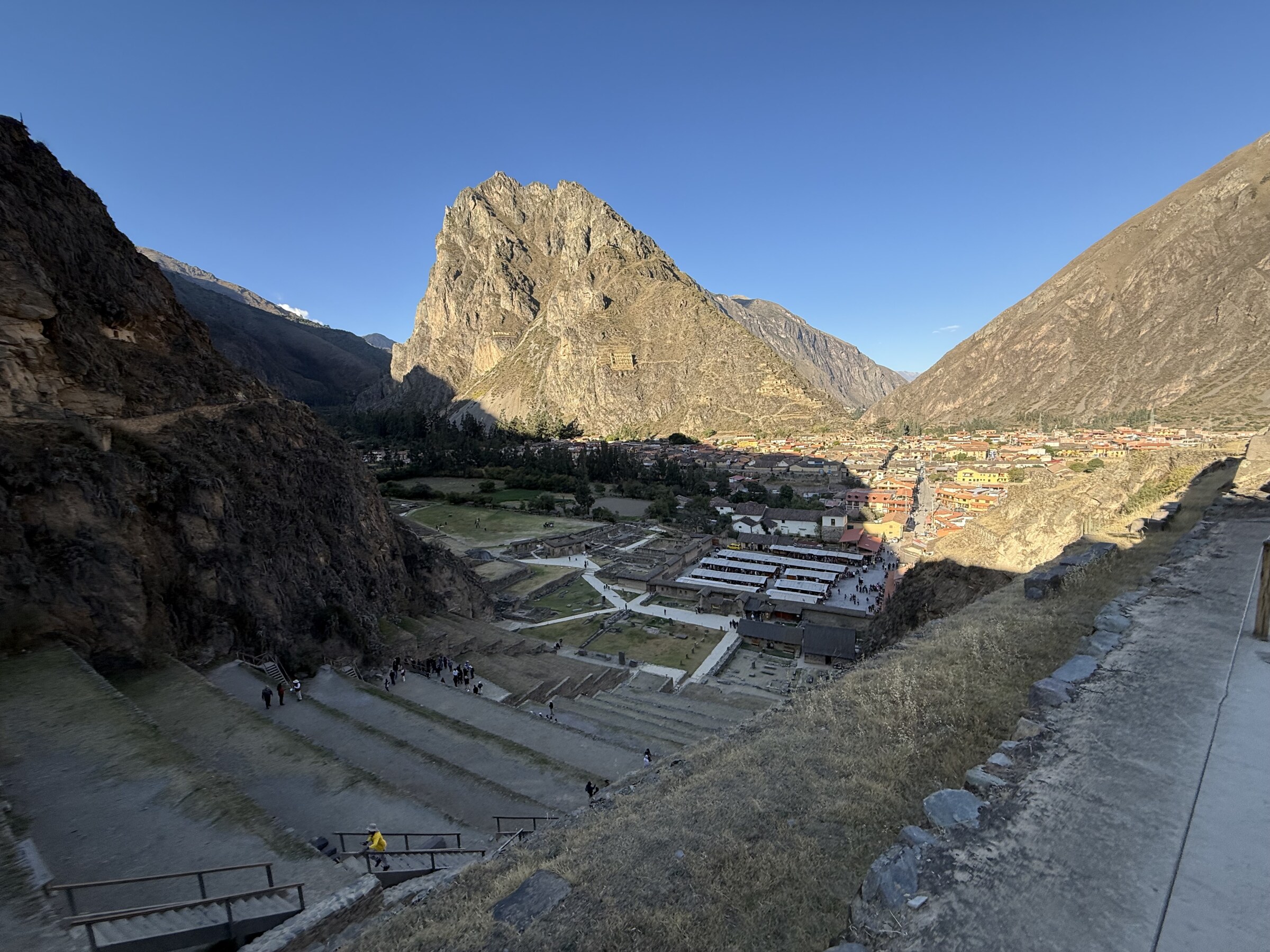
The group continued to AMA restaurant — a social enterprise that employs single mothers and supports their children's education — where I savored hot chocolate and brownies made with chocolate from the Cusco region. Our final stop was the town of Ollantaytambo itself — a key stop on any Sacred Valley Peru itinerary, where a few of us climbed the steep stone stairs to the ruins of the ancient Incan city. The views from the top were stunning, and my first real glimpse of the scale and precision the Incas were capable of.
What I Did While the Others Hiked
At Ollantaytambo, our group split three ways. Some set off on the four-day Inca Trail. Others began the three-day Quarry Trail. And my group? We headed back to Cusco for three days of the richest immersion into Incan history I could have imagined.
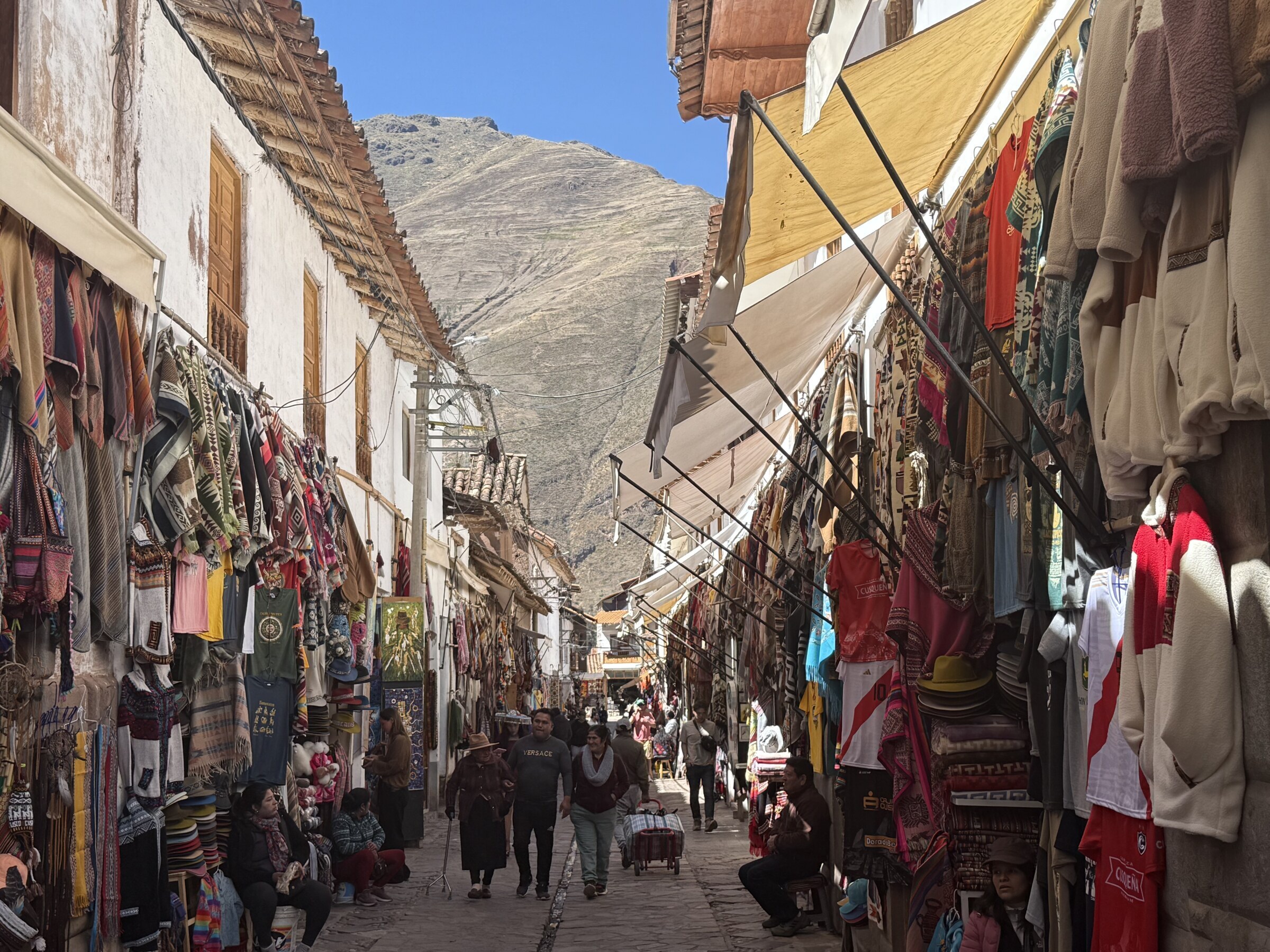
My first day began at the Urqo ruins — a sacred agricultural site with a sun temple used for astronomical and ritual purposes, and a carved stone once used for offerings. Some say it's shaped like a puma; others insist it's a snake. I couldn't quite decide between the two. From there, I made my way to Pisac, a market town buzzing with preparations for the Virgen del Carmen festival. Parades filled the streets while Inca terraces rose in the mountains above them. I tried local empanadas from the communal oven, the pastries softer and more delicate than any I'd had before. Back in Cusco, I returned to the Qorikancha temple and Convent of Santo Domingo — said to be the most important temple in the Inca Empire — for a deeper look at the museum and grounds.
Day two was a full day of Incan ruins, and one of the most memorable days of the trip. I started at Tambomachay, the highest site, believed to be a sacred site where water was worshiped. From there I walked to Puka Pukara — the "red fortress" — an important relay station where runners carried messages to Inca leaders via quipu, a counting system of knotted cords. Next came Quenqo, meaning "zigzag" — a temple dedicated to the puma, which the Incas considered god-like and sacred. Inside a cave-like chamber stood a ceremonial table believed to have been used for mummification.
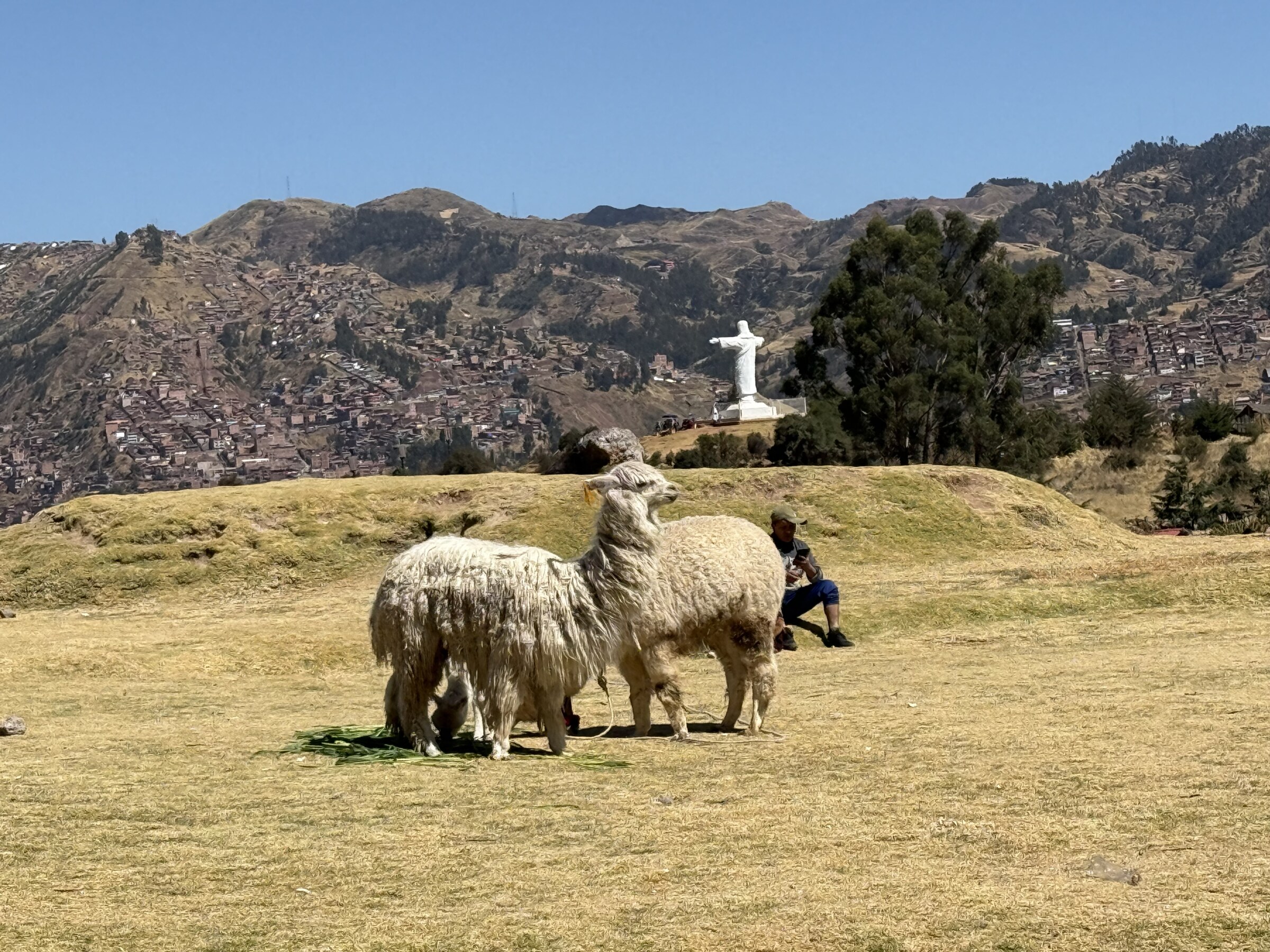
The final site was Saksaywaman — spelled Sacsayhuamán in Spanish — which our guide translated roughly as "zigzag head," or "speckled head." The city the Incas built is said to be shaped like a puma, and Sacsayhuamán formed its head. As one of the largest Inca sites in Peru, it functioned as a religious complex with temples dedicated to rain and sun. Many of the stones weigh over 120 tons — moved into place with nothing but wooden rollers and ramps. At every stop, the ingenuity and sheer scale of these ruins left me speechless.
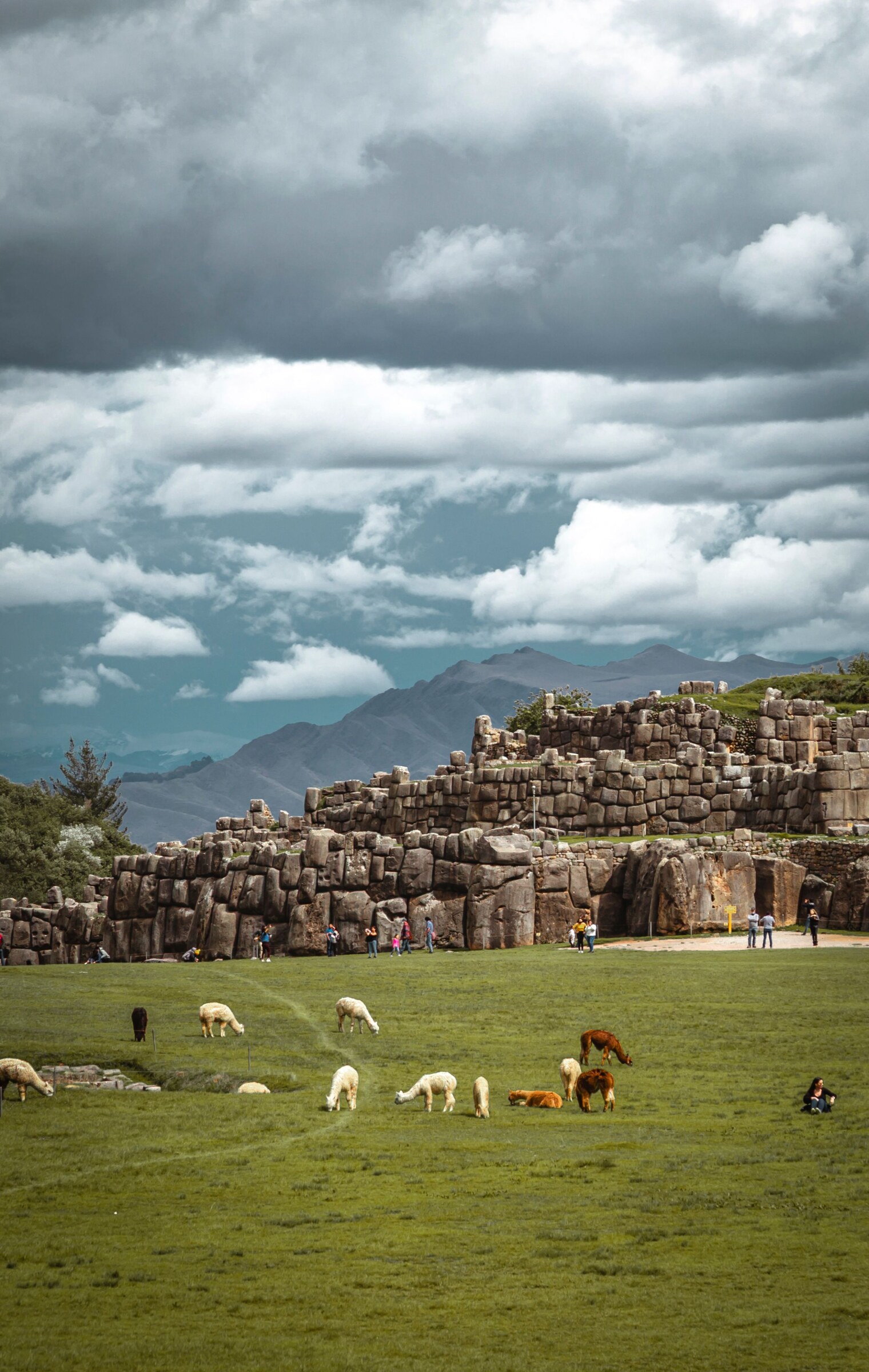
My group convinced our guide to add one more stop: Cristo Blanco, just next door. Walking up that hill was the hardest climb of the entire day — perhaps because I was hiking at altitude after everything we'd already covered — but the panoramic views of Cusco were magnificent. Six miles of hiking at high elevation later, I made it back to the city and ended the day with a traditional Incan massage using Andean herbs and ancient techniques. I had earned it.
The Train to Machu Picchu: Inca Rail and Other Alternatives
Three days. Four Inca sites. Six miles on foot through high-altitude ruins. A community lunch, a festival parade, a traditional massage, and a return visit to the most important temple in the Inca Empire. By the time I packed my bag for Aguas Calientes, I had context for Machu Picchu that I hadn't expected to learn — and I hadn't even arrived.
On day three, our group met up with those who'd completed the Quarry Trail, while the Inca Trail hikers had their own separate finale, entering Machu Picchu through the Sun Gate after four days on the trail. Together, my group and the Quarry Trail hikers boarded the Inca Rail train to Aguas Calientes, the small town at the foot of the citadel also known as Machu Picchu Pueblo, and arrived as the afternoon light was fading over the valley.
If you have time to spend a night in Aguas Calientes before entering the ruins, the Sanctuary Lodge — Belmond's luxury retreat just outside the citadel gates — is one of the closest and most comfortable stays near Machu Picchu, and one I regularly recommend to clients looking for a seamless, high-end experience. The Urubamba River rushes through the center of this mountain town, loud enough to hear from almost anywhere, and the streets climb steeply in every direction, lined with market stalls selling everything from alpaca scarves to Machu Picchu keychains. There's a lively, anticipatory energy in Aguas Calientes, as if everyone there is simply waiting for the same thing: tomorrow morning.
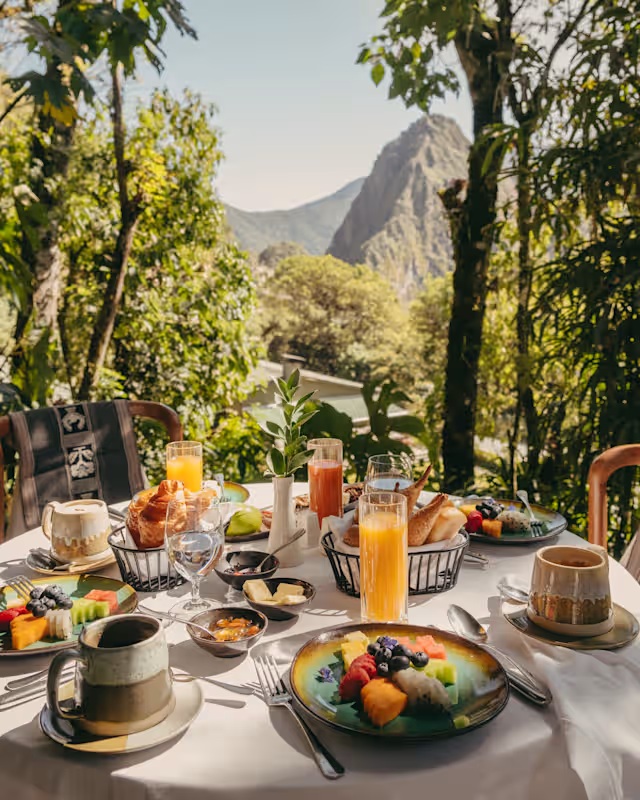
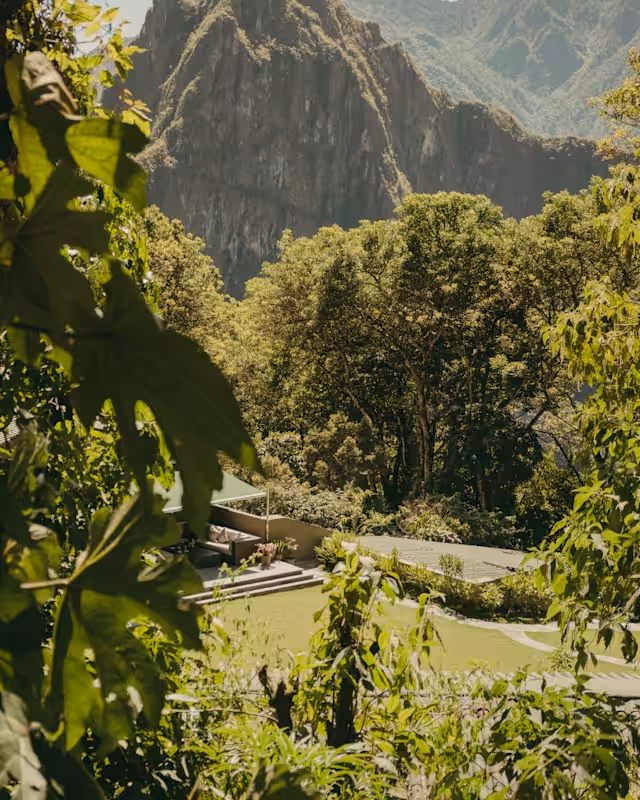
For most travelers, Inca Rail's 360° and Vistadome cars are the most popular choice, with panoramic windows and comfortable seats for the roughly 95-minute journey. Tickets run $50–$100 per person each way, and the bus up to Machu Picchu is an additional $24 round trip. If you want something more elevated for the journey itself, Belmond's Hiram Bingham — an 84-seat, 1920s-style luxury train departing from Cusco — includes live music, refined Peruvian cuisine, and elegant dining and observation carriages to watch the Andes unfold around you in comfort. Both options are best booked in advance — it's one of the first things I lock in for clients.
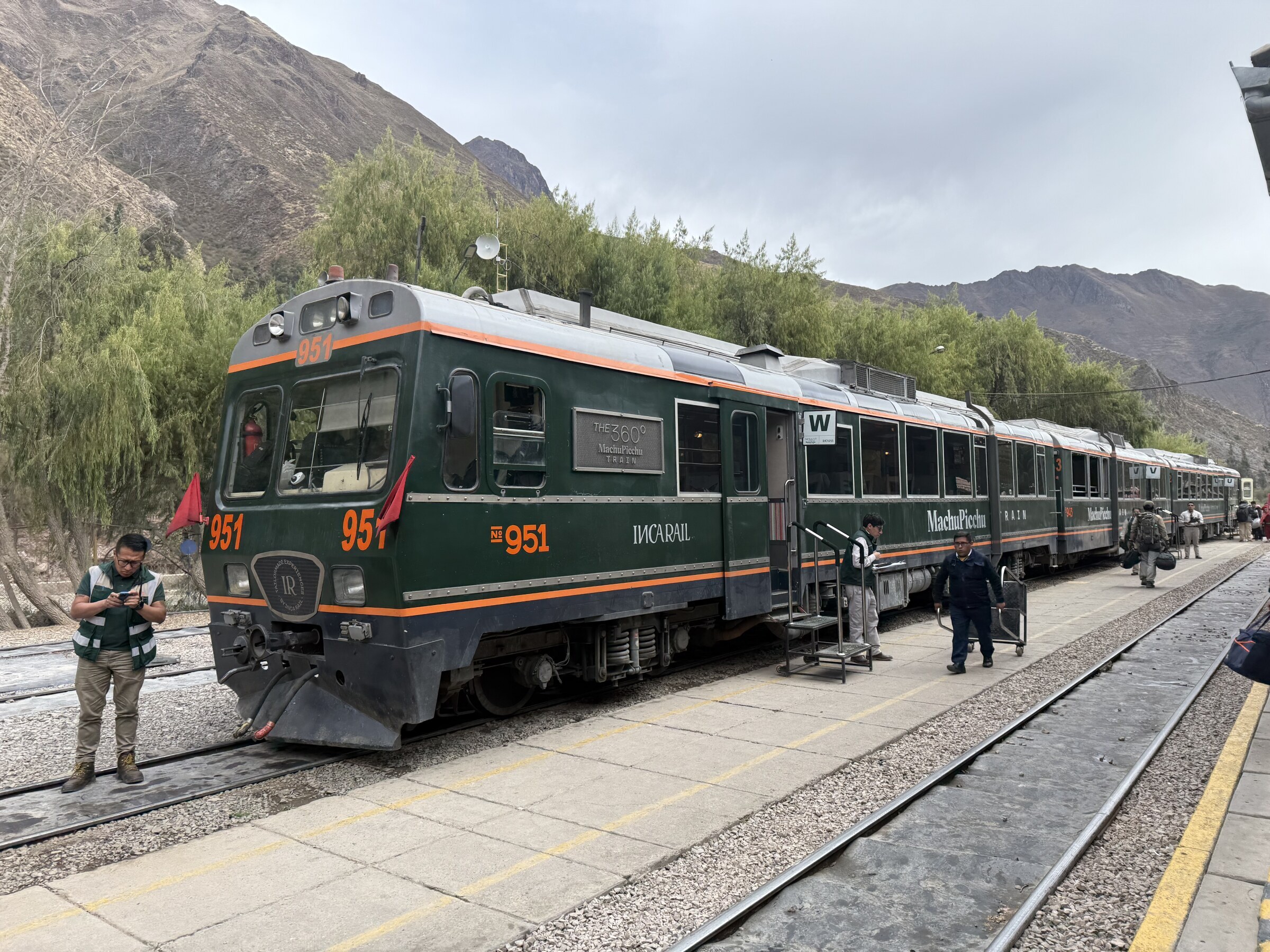
Entrance fees to the citadel itself run $45–$60 USD depending on the circuit. Machu Picchu entry slots, Inca Rail tickets, and a night at Sanctuary Lodge can all sell out months in advance — especially during peak season (May through October, with June and July being the busiest months). The earlier you start planning, the more options you'll have. As a travel advisor, I handle all of that coordination for my clients, from locking in timed entry permits to arranging the train and ground transfers so that the logistics disappear and the experience is all that remains.
How I Saw Machu Picchu: The Main Event
When the alarm went off, I was already awake. Very early on day four, we walked to the bus stop in the dark, everyone half-asleep but electric with excitement. The bus wound its way up the mountain until the citadel revealed itself, as it has for centuries: Machu Picchu.
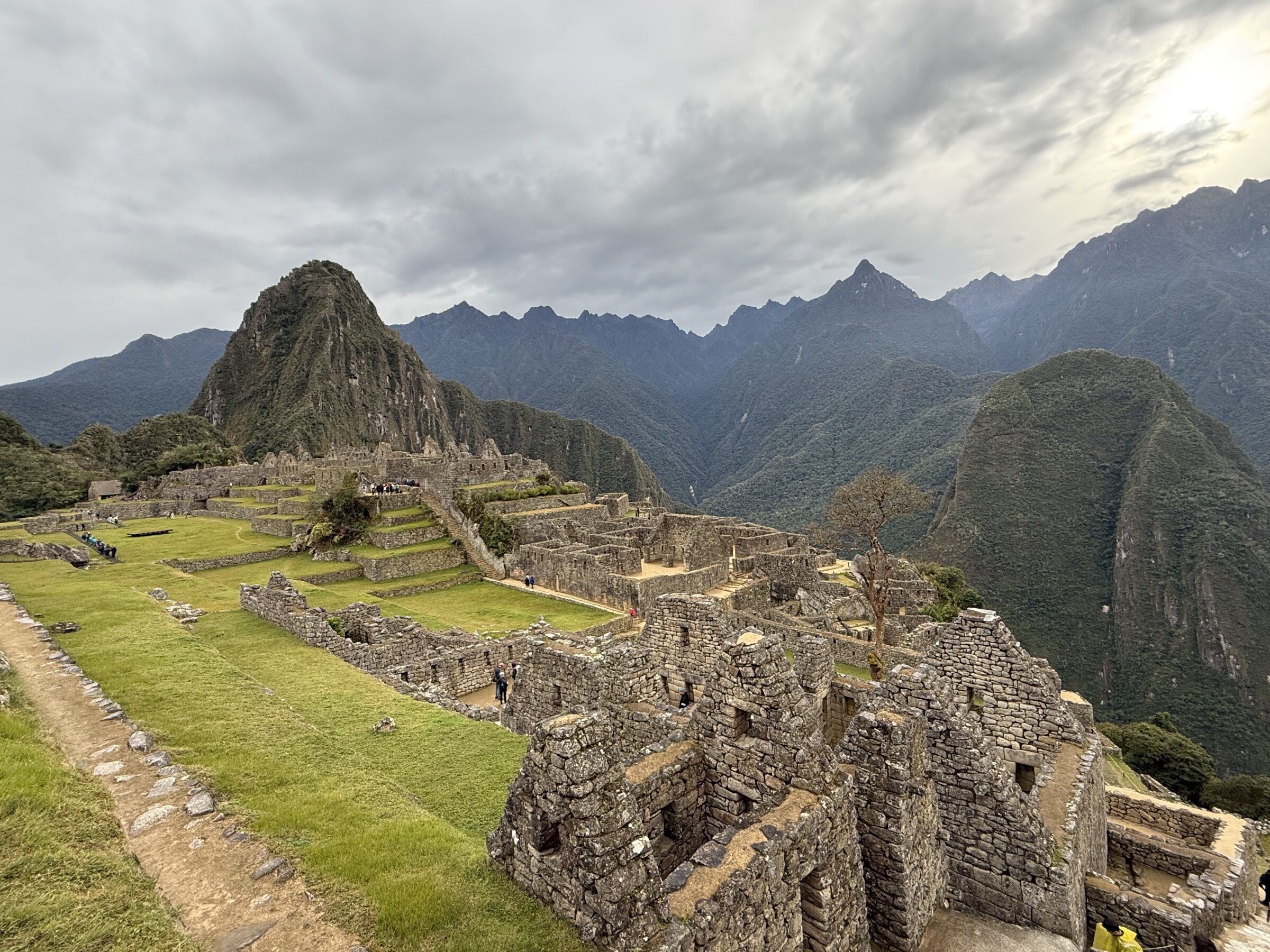
We took the longest of the three circuits, climbing steadily upward. As we ascended, the fog that had cloaked the ruins lifted, almost reverently, revealing terraces, stone walls, and jagged peaks little by little. By the time we reached the panoramic viewpoint, the fog was gone entirely.
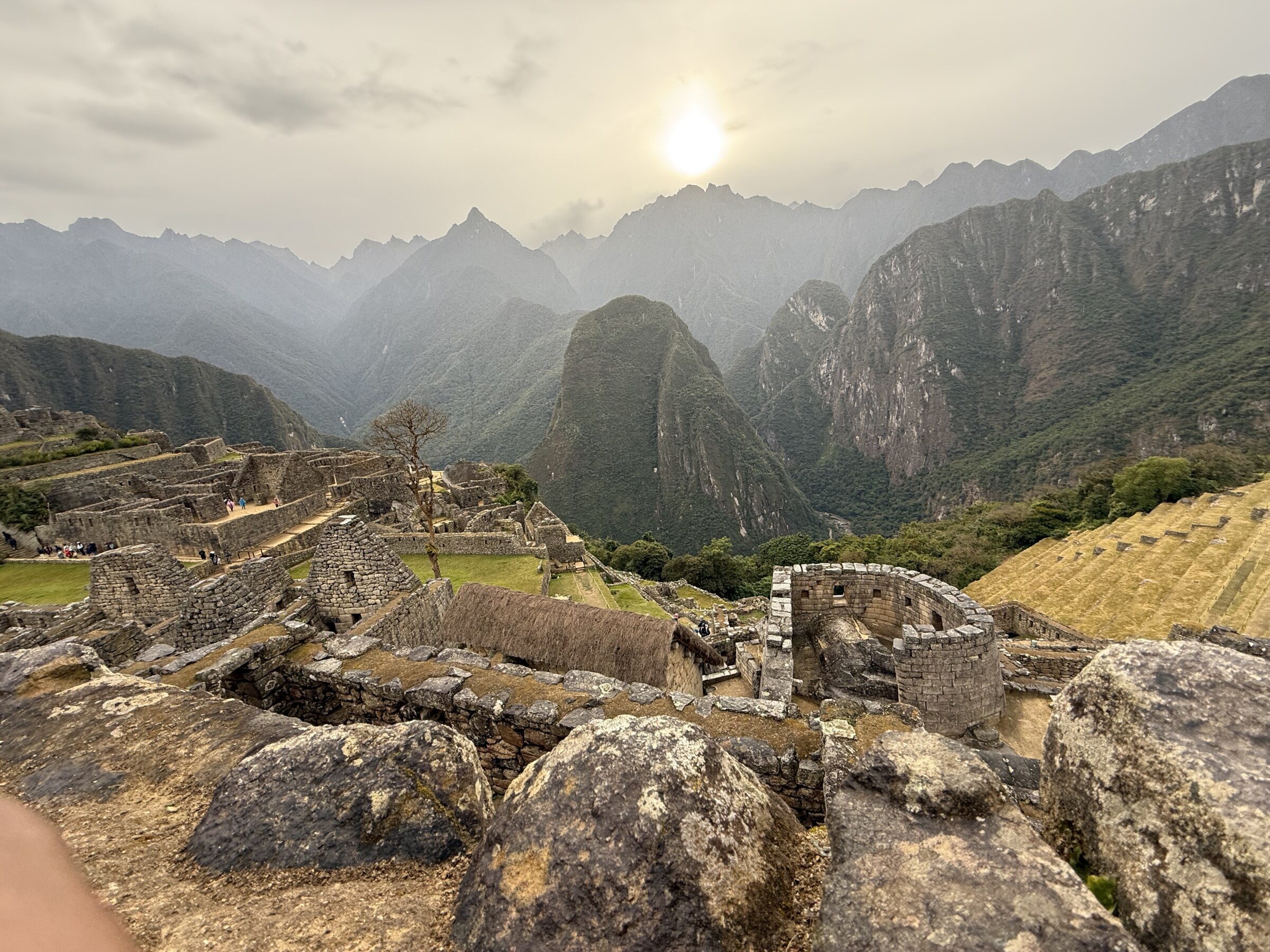
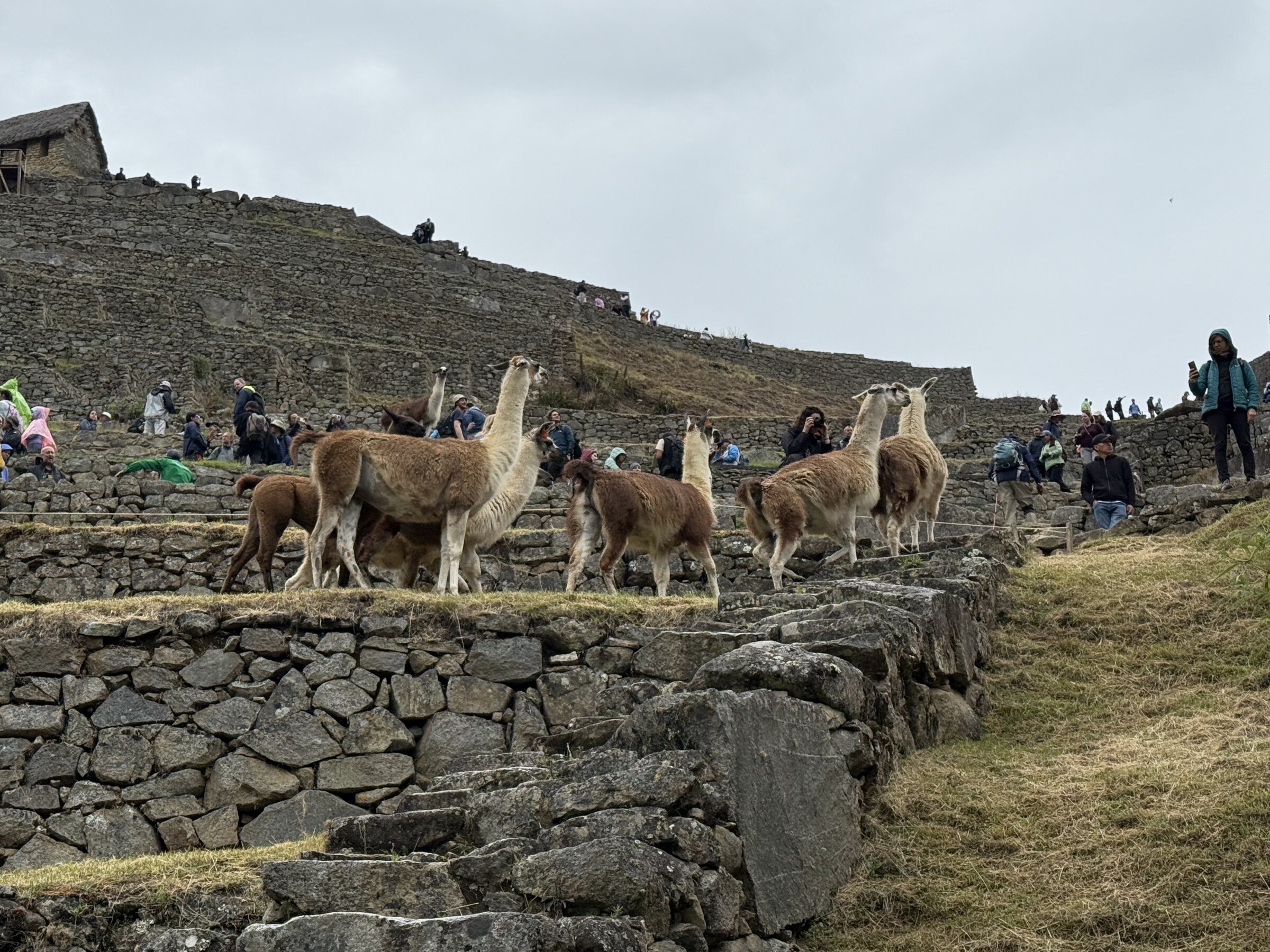
Silence fell over our group. We simply stood and gazed at the full sweep of Machu Picchu — built in the fifteenth century as an estate for Emperor Pachacuti, abandoned in the sixteenth century, and never found by the Spanish. That invisibility is why it survived when so many other Incan sites were destroyed. It was a full minute before the tour guide's voice pulled me back to reality, steering us to the corner where we could capture the iconic photograph.
What made this moment extraordinary was everything I'd learned in the days before. At the other ruins, we had studied how the Incas revered the sun and the rain. Now, at Machu Picchu, I watched those elements come alive — brief showers activated the ancient water drainage system right before our eyes, and when the sun emerged, the Intihuatana sundial cast its shadow exactly as it had centuries ago. The Temple of the Sun, the Temple of Three Windows, the agricultural terraces — they weren't just ruins. They were a civilization's brilliance made tangible.
Who I'd Recommend This Trip For
This route was made for a few specific types of travelers. If you're managing mobility limitations, chronic pain, or a health condition that makes multi-day trekking unrealistic, this is your path to Machu Picchu without hiking — no compromises required. If you're a luxury traveler who wants the full experience without four days of camping and climbing, the train gets you there in comfort, and properties like Belmond's Sanctuary Lodge put you steps from the citadel gates. If you've already hiked to Machu Picchu and want to go deeper on your next visit, the Cusco ruins circuit will completely reframe what you thought you knew. And if you simply don't want to hike? That's reason enough.
Now, I still hiked six miles in a single day at Machu Picchu, but I chose to, and that's a far cry from nine-plus miles over three or four days on rugged mountain terrain. I left a little less sore than those who took the trails. But I also left with something more: a profound awe for the Incas and a richer understanding of what Machu Picchu truly meant to them. The non-hiking alternative to Machu Picchu isn't a consolation prize or a cop-out — it's the fuller story.
If you'd like to experience Machu Picchu this way, connect with me below to tailor your trip to your exact needs.

Plan your next journey with
Shebna GarconShebna Garcon is a fully licensed travel advisor with LuxRally Travel — trained, insured, and accredited to plan and book travel anywhere in the world. Shebna has personally traveled to all 7 continents & is happy to help her clients see the world!
Related Stories
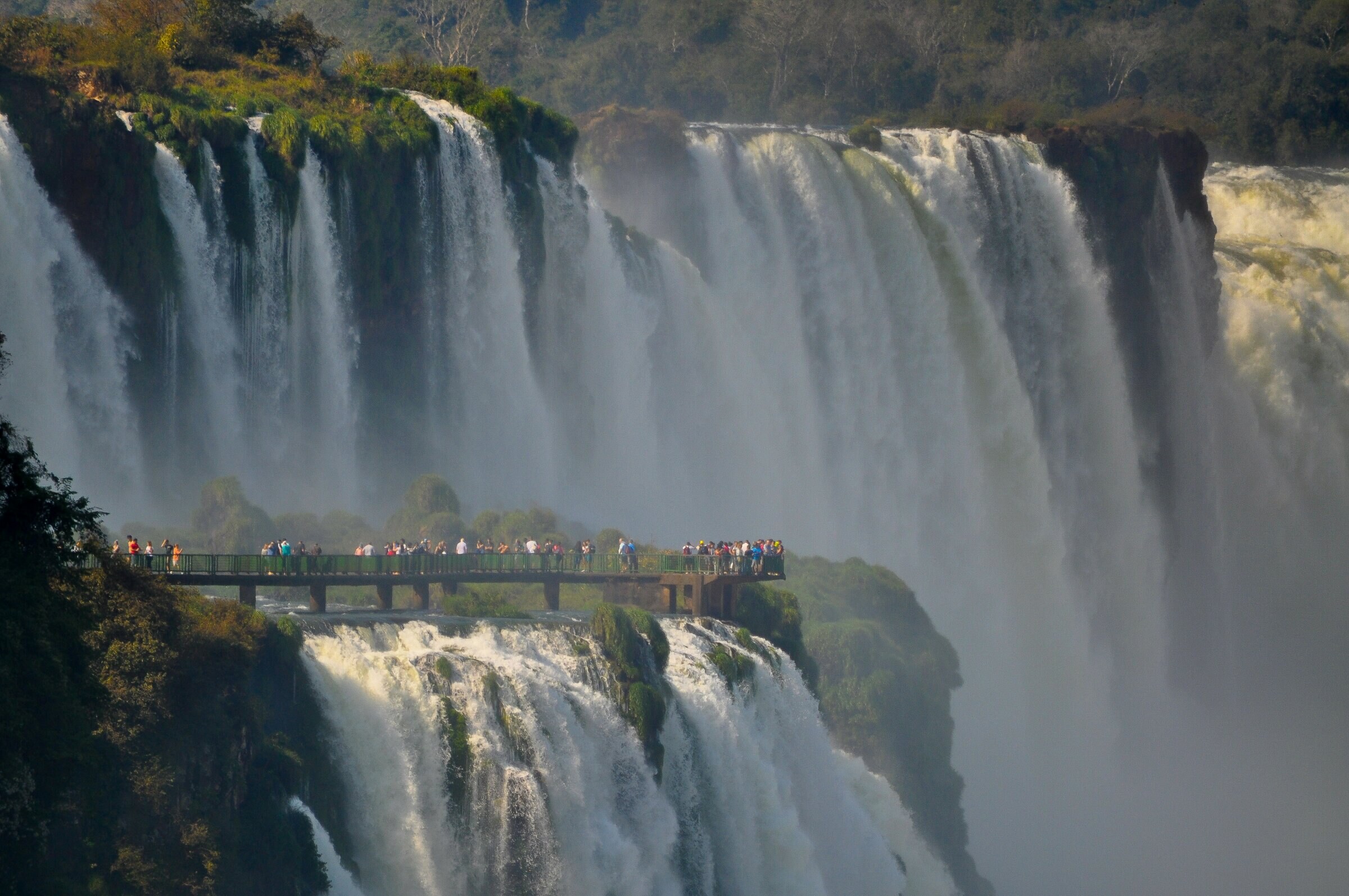
An Advisor's Quest to the World's Most Famous Waterfalls: Niagara, Victoria, and Iguazú Falls
“There is a hidden message in every waterfall. It says, if you are flexible, falling will not hurt you.” ~ Mehmet Murat Ildan
By Shebna Garcon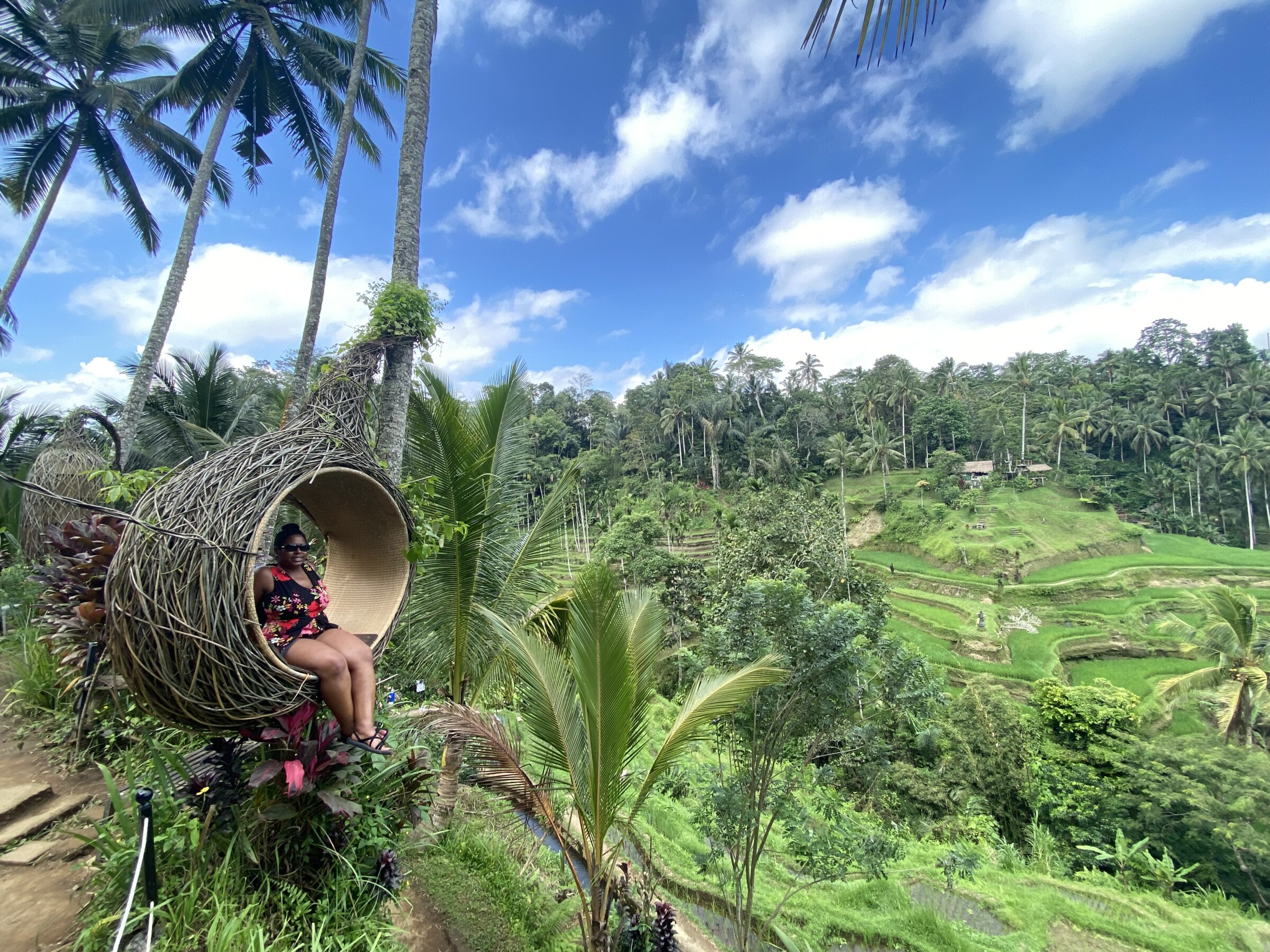
Four Types of Solo Trips to Take When You're Done Waiting on Someone Else
After over a decade of waiting on others, I decided to see the world for myself, alone. Here are four types of solo trips, personally tested by a luxury travel advisor — from group expeditions to fully private tours.
By Shebna Garcon
Why Hải Phòng, Vietnam Should Be on Every Luxury Traveler's Itinerary
French colonial architecture, extraordinary multi-story cafés, and the quiet beauty of Tam Bạc Lake — Hải Phòng is Vietnam's best-kept secret, especially for solo travelers and couples seeking luxury off the beaten path.
By Stephcynie Curry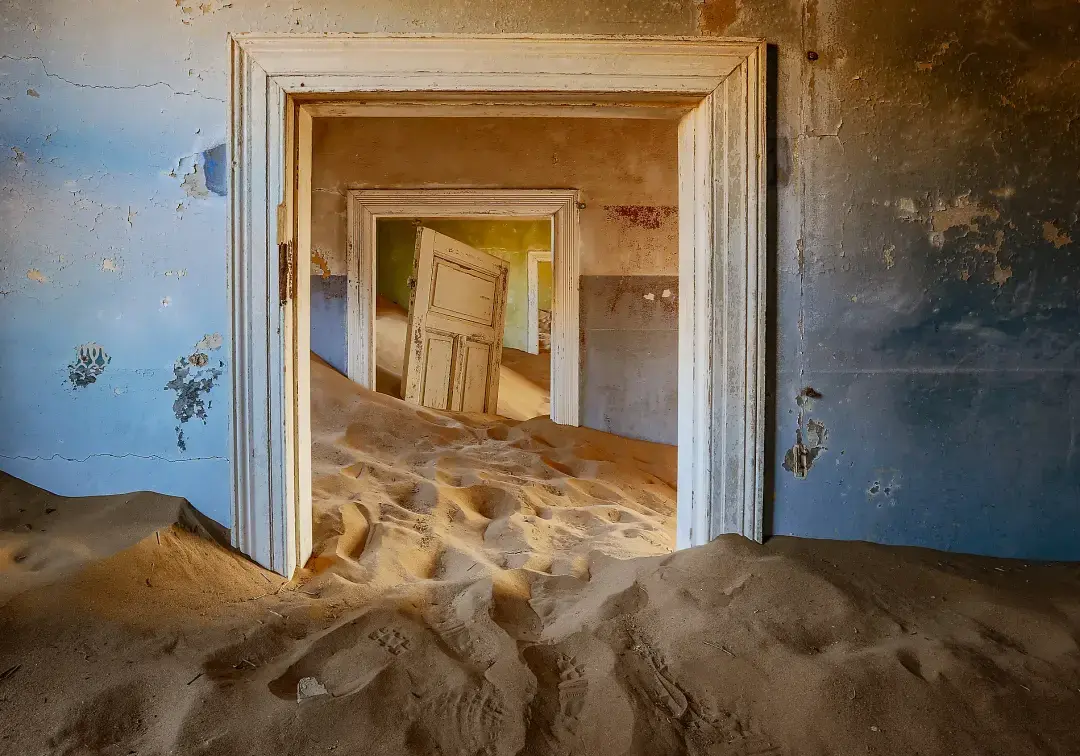
The Simplest Way to Safari: Africa's Southern Coast by Luxury Cruise
A cruise-based safari blends open-ocean expedition with wild game encounters and local exploration along Africa's southern coast. Here's everything you need to know before booking a voyage from South Africa to Namibia.
By Theodora Green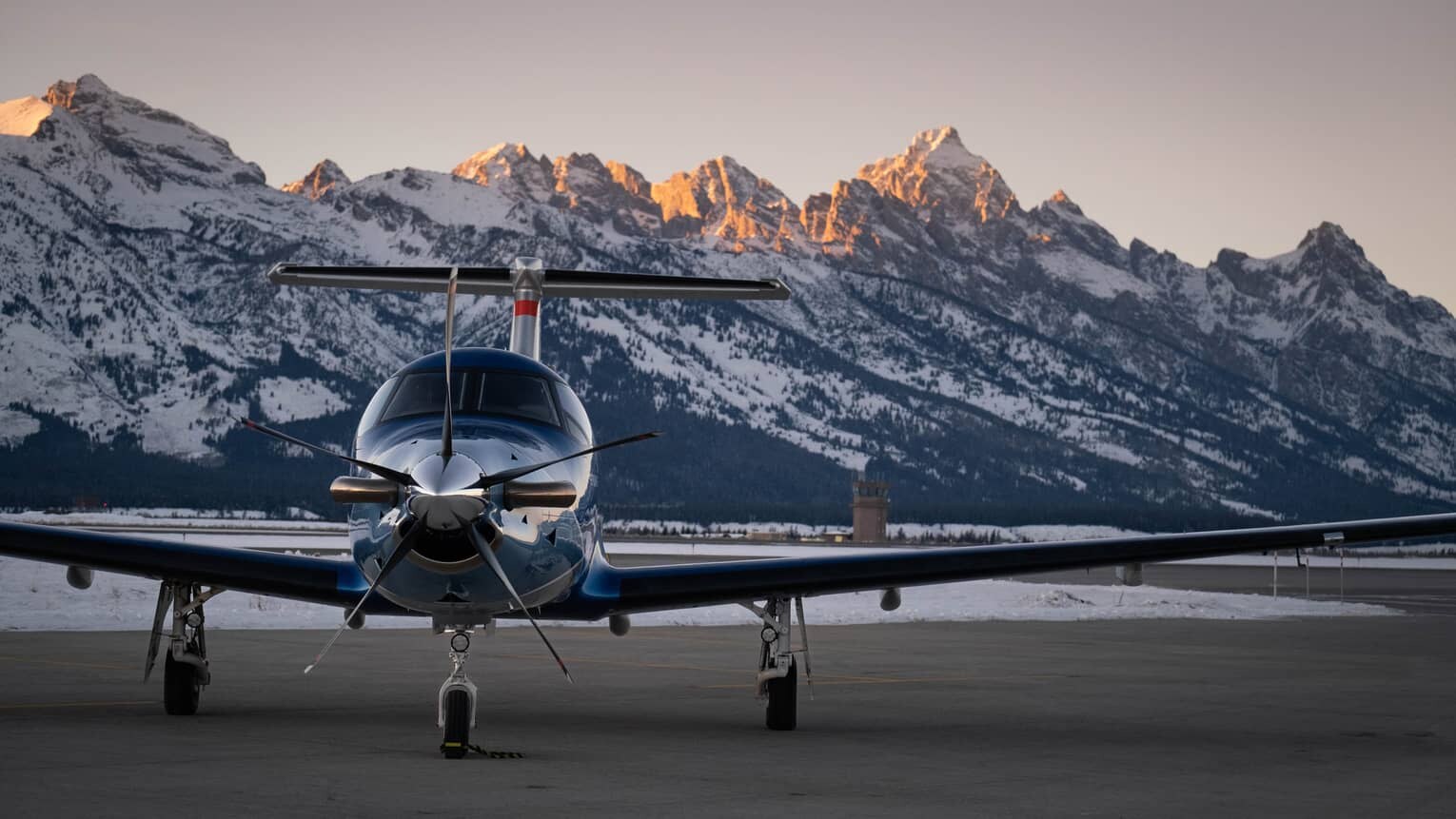
The Grand Tetons Are Calling: Ski Season with the Four Seasons Resort & Residences Jackson Hole
From ski-in, ski-out luxury at the Four Seasons to a hidden speakeasy bathed in moody red light, this curated roundup captures everything the discerning skier needs for the ultimate Teton Village experience.
By Amy Van Den Top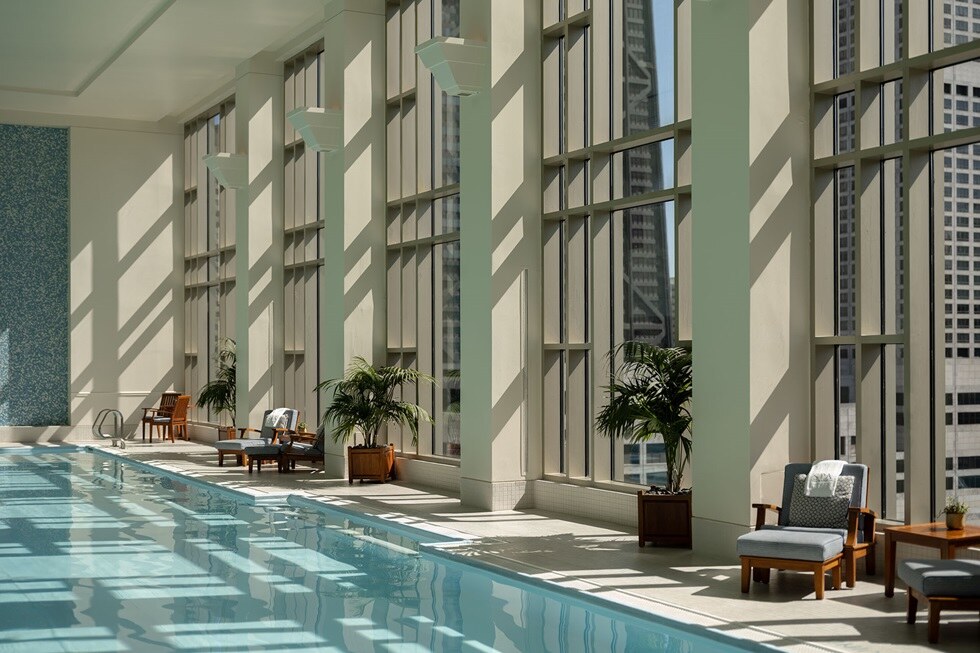
Local’s Guide to Chicago: America’s Most Underrated Luxury Family Escape
From a Chicago rooftop pool where snow falls beyond the glass, to afternoon tea that needs no occasion — this city rewards the traveler who slows down. Even after thirteen years, it's still a city that my family and I can discover anew.
By Natalia Semizarov