
The Galápagos Islands
Nine Days, Four Islands, One Unsolved Disappearance: Exploring the Galápagos by Land Tour
The Galápagos Islands are most often sold as a cruise expedition — but a land-based tour is an equally extraordinary way to experience them, and far less talked about.
September 2, 2026
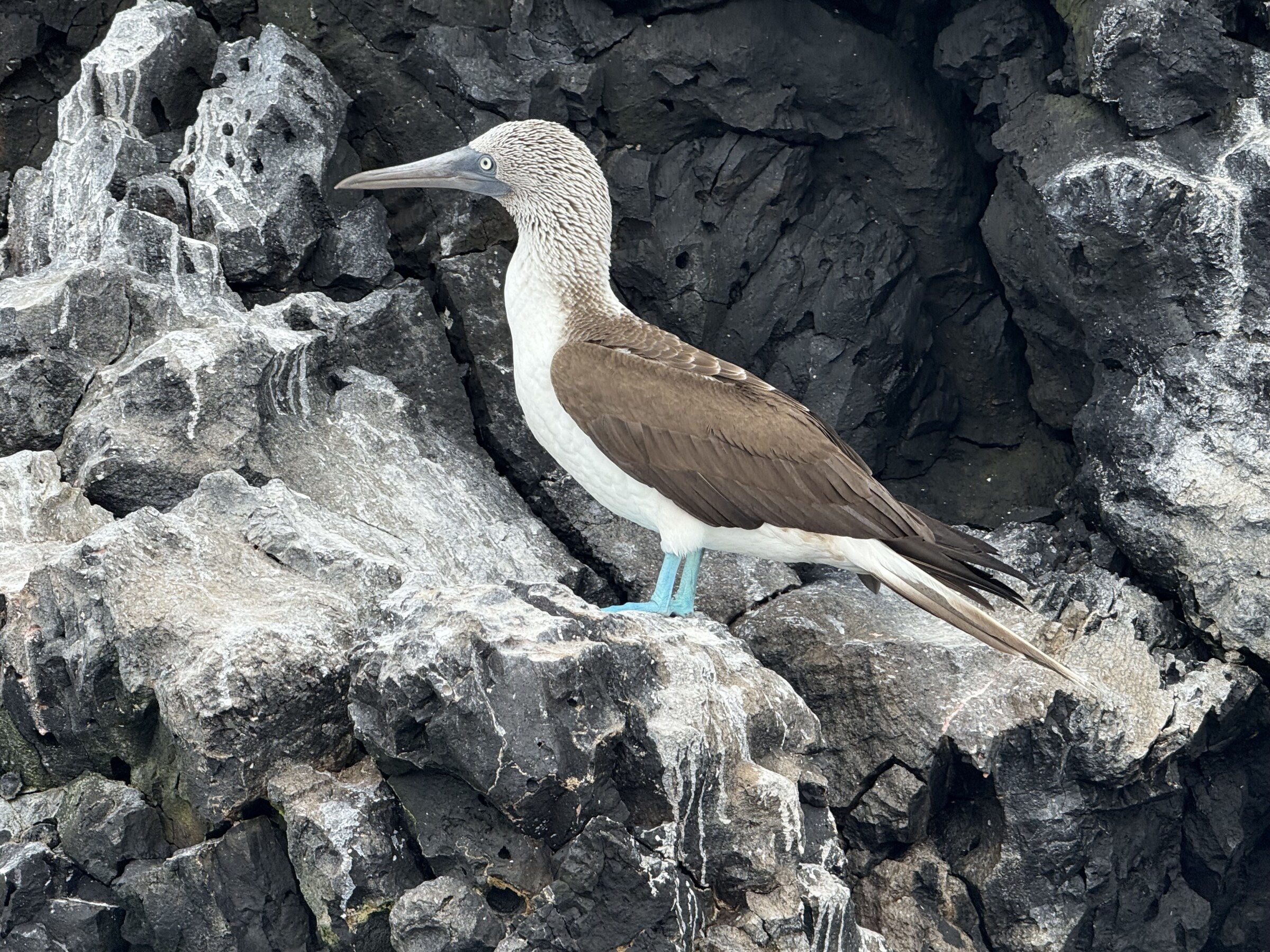
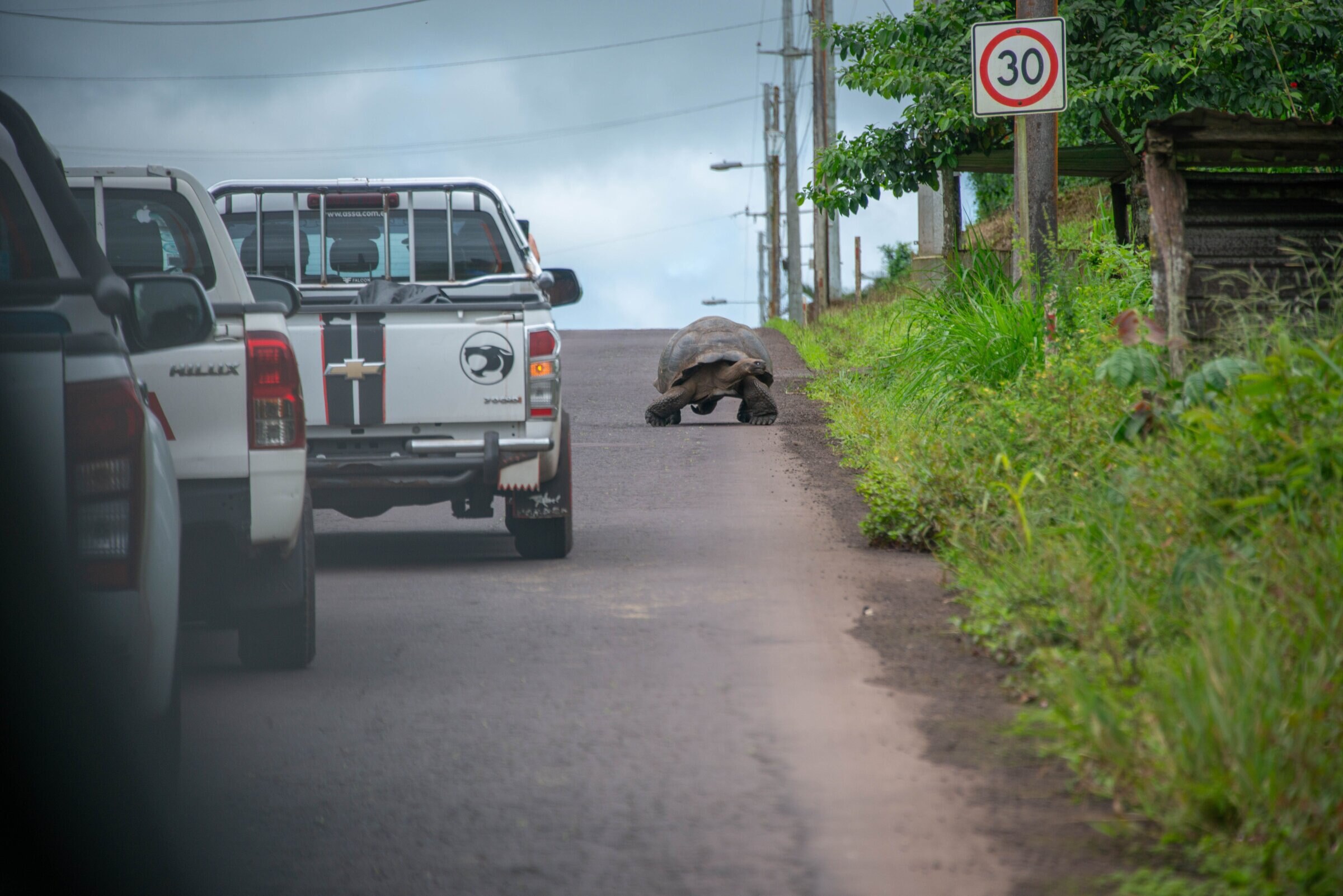
Sea lions own the sidewalks here. Giant tortoises roam freely through ranch lands. Sea turtles and sharks drift past in lazy currents while you try not to move. Blue-footed boobies stand on salt-bleached rocks as if posing for a portrait. The Galápagos Islands pull you straight into the deep end, and they do it every single day, like a National Geographic episode inviting you to play a part.
As a travel advisor, I'd always associated the Galápagos Islands with expedition cruises. But when I decided to experience them for myself, I chose a Galápagos land tour because I wanted to be on the islands, walk their streets at night, and feel the unique rhythm of each one. It turned out to be one of the best travel decisions I've ever made. The Galápagos quickly became one of the best destinations I have ever visited (and that's coming from someone who has visited every continent, multiple times).
This is what made the Islands so extraordinary — and why a Galápagos land tour is an equally rewarding way to experience them.
How My Galápagos Land Tour Was Structured
The Galápagos is most often sold as a cruise expedition — lines like Celebrity Cruises' Flora, Lindblad Expeditions' National Geographic Endeavour II, and Silversea's Silver Origin offer 10-day voyages ranging from roughly $3,000 to $12,000. My land tour came in at about $4,000 including my time in Quito, covering accommodations, domestic flights from Quito to the islands, ground and water transport, daily breakfast and some lunches, snorkeling equipment and flippers, and all excursions. Park and port fees, wetsuit rental, additional meals, and personal spending were extra.
I traveled with Intrepid Travel on a nine-day land itinerary, which started and ended in Quito, with seven nights on the islands: two in San Cristóbal, three on Isla Isabela, and two on Santa Cruz, with Isla Floreana as a day stop in between.
Accommodations were casita-style with central gardens — simple, comfortable rooms arranged around a lush open courtyard, which is typical of South American hospitality. They weren't luxury properties, but they were clean, welcoming, and perfectly suited to the pace of the trip. Just know that most had no elevators, so pack light and pack smart.
Our group of 11 ranged from age 16 to travelers in their 60s and 70s, including couples, solo travelers, and a family of four. Though some were older, they were probably more fit than I was. The tour was a nice pace for all ages. My fellow LuxRally Travel advisors and I work with tried and trusted partners like Intrepid Travel and National Geographic Lindblad Expeditions to provide these types of experiences to a range of travelers, from the explorer who's been everywhere to the curious youth.
Our native naturalist guide traveled with us the entire trip, staying at the same hotels and always on hand to identify wildlife and share what we were seeing. He has led tours in the Galápagos for nearly forty years. His signature move: announcing that a particular creature was rare to spot — and then watching one appear almost on cue. The deadpan delivery got us every time, but the wonder underneath it was real. After four decades, the islands could still surprise him.
Inter-island transfers were by private boat. The longest stretch was roughly five hours from San Cristóbal to Isla Isabela, broken up by our Floreana stop, keeping individual rides to two to three hours. One of those boat rides was a bit rough — I took a seasickness pill to be safe. On a smaller boat, you feel the water more than on a cruise ship, so come prepared.
Once on the islands, I was a little shocked by how affordable everything was. The seafood included extraordinarily fresh lobster, shrimp, octopus, and ceviche, and set lunches ran about $5 per person, which also included soup, an entrée, dessert, and juice. Cocktails were nearly always priced at two for $12 — and the Galápagos runs on USD.
With the logistics in hand, all that was left was to experience what I'd come for. And the islands delivered, every single day.
Getting to the Galápagos Islands: What to Do in Quito, Ecuador
To get to the Galápagos Islands, you'll most likely travel from Quito, Ecuador's capital, and it's worth arriving with a day or two to explore. Accommodations range from colonial-era historic mansions-turned-five-star-hotels to friendly, comfortable budget options near the Historic Centre, a UNESCO World Heritage site.
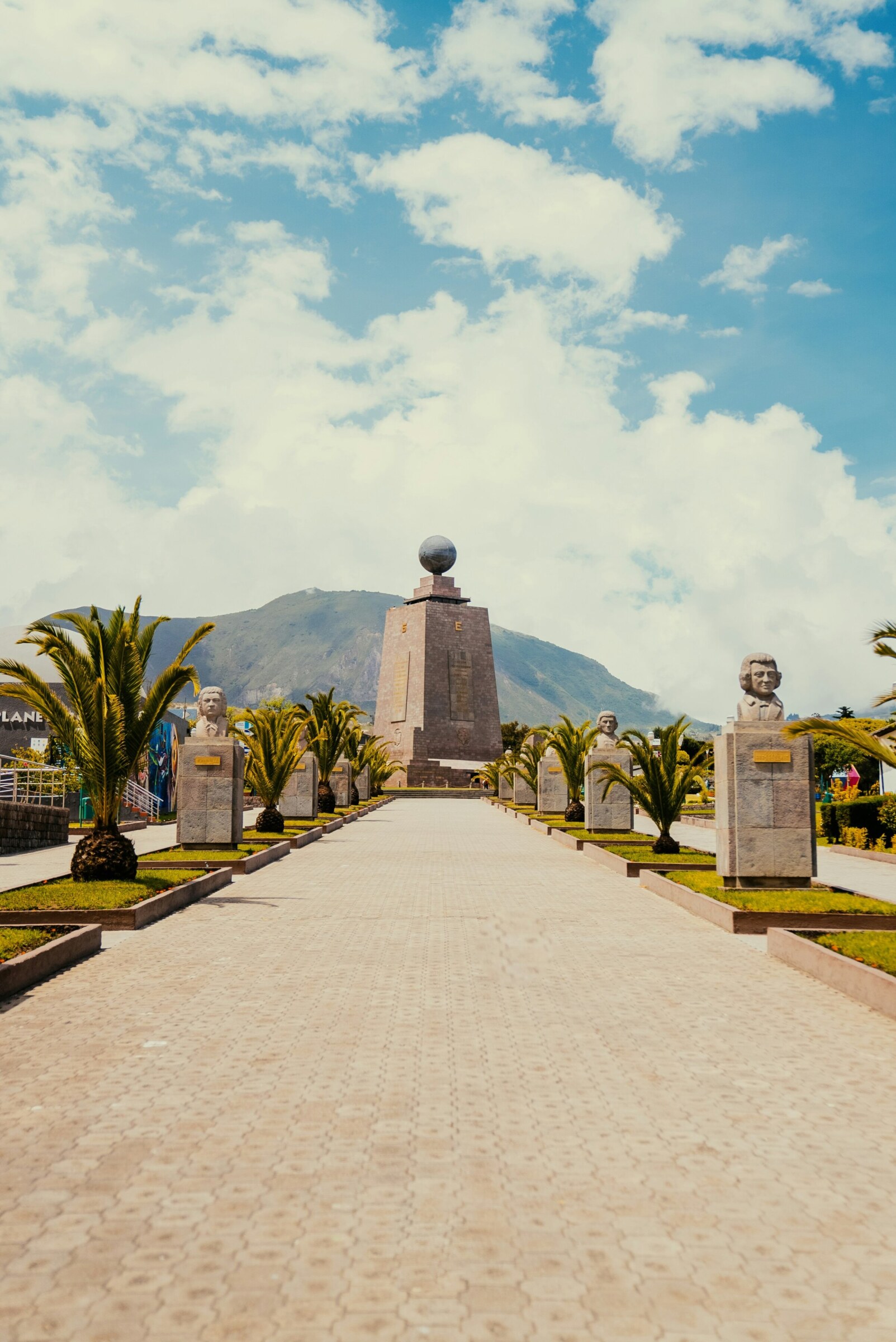
One of the highlights was standing at the Mitad del Mundo monument with one foot in each hemisphere at once — a small moment, but one that stays with you. The included city walking tour took us to the Basílica del Voto Nacional, a stunning Neo-Gothic church whose facade, instead of the usual gargoyles, features carved figures of Ecuadorian animals — a detail that perfectly sets the tone for the wildlife immersion to come.
I also learned that Ecuador is an original producer of cacao, courtesy of a delightful chocolate tasting stop. On my own, I tried a street art and food tour; the murals and every dish were remarkable, and many renowned artists travel from Colombia and Mexico to paint here.
San Cristóbal
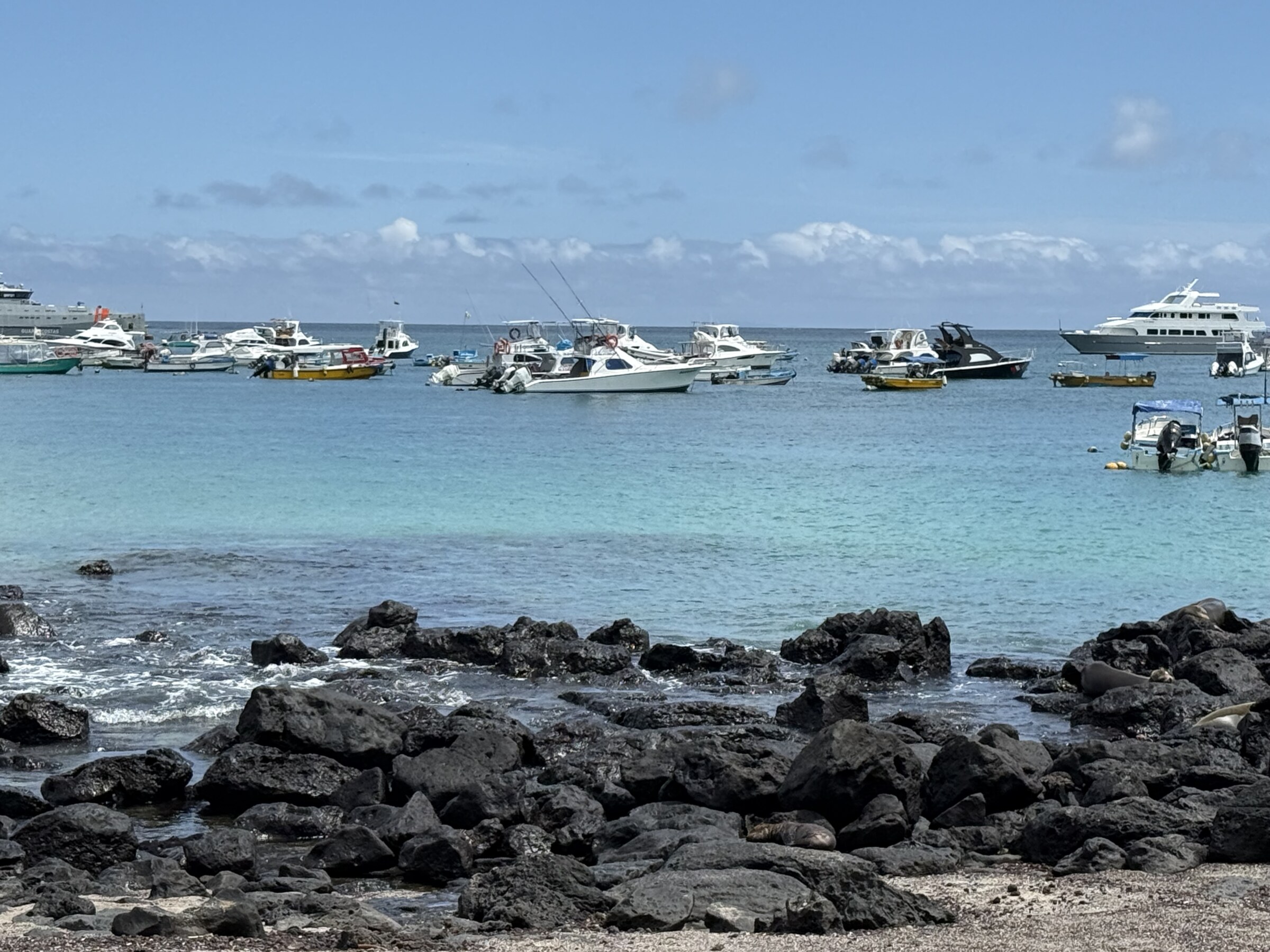
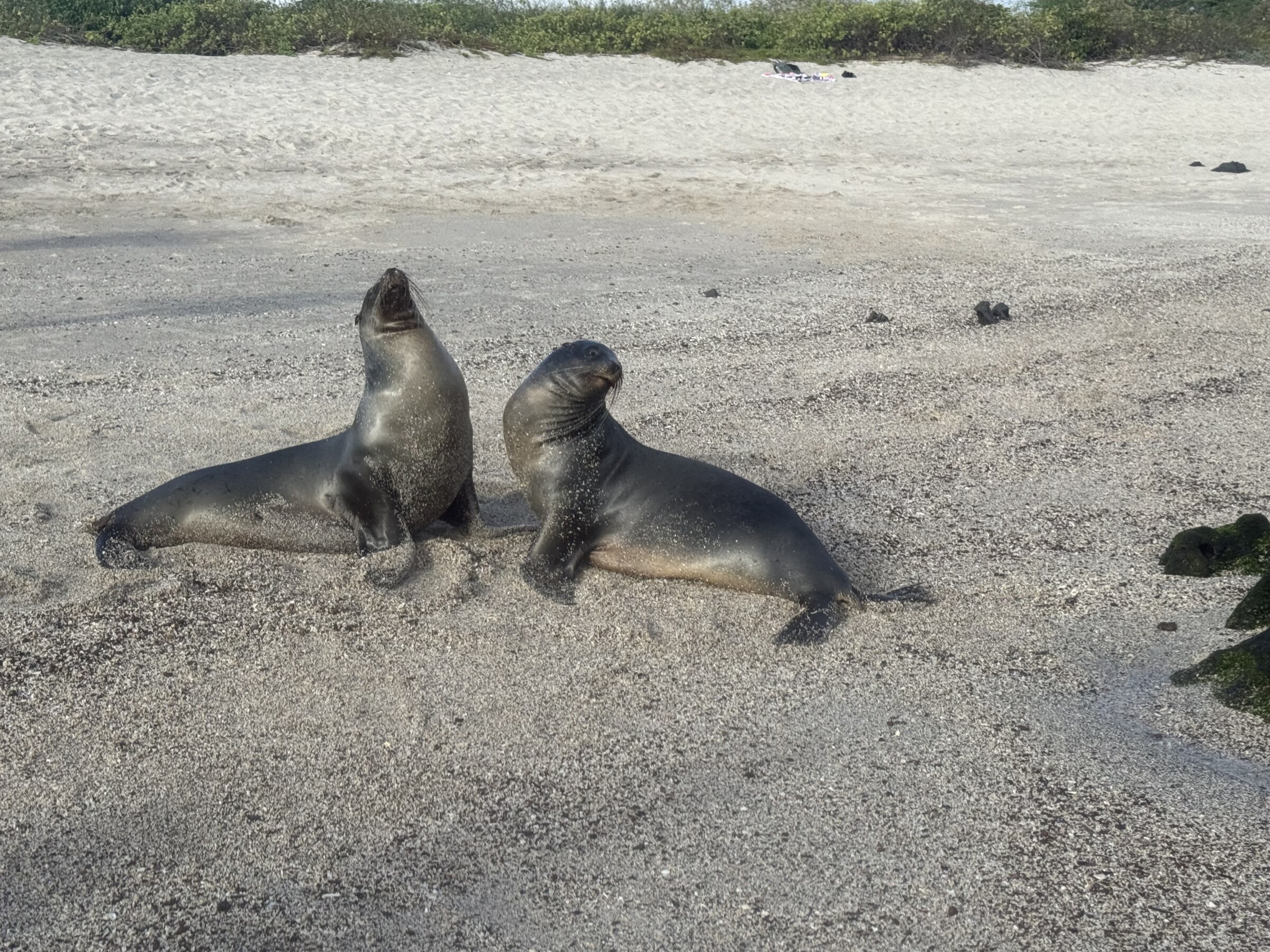
San Cristóbal is the capital of the archipelago, and it set the tone for everything to come. Our first stop was La Lobería — "land of the sea lions" — where we snorkeled alongside sea turtles, stingrays, a small octopus, and the sea lions themselves. It was scary and wonderful in equal measure. The sea lions don't confine themselves to the water, either — they're all over town, sprawled on benches, crossing streets, utterly unbothered.
We visited the Interpretation Center to learn the history and conservation story of the islands, which are themselves a UNESCO World Heritage Site, and 97% of which is a national park. If you're up for a 2-3 mile hike, Cerro Tijeretas offers sweeping views of the cove where Charles Darwin is said to have first landed. On my hike, I spotted the endemic San Cristóbal mockingbird and plenty of lava lizards, and a cove at the foot of the hill makes for a refreshing snorkel after.
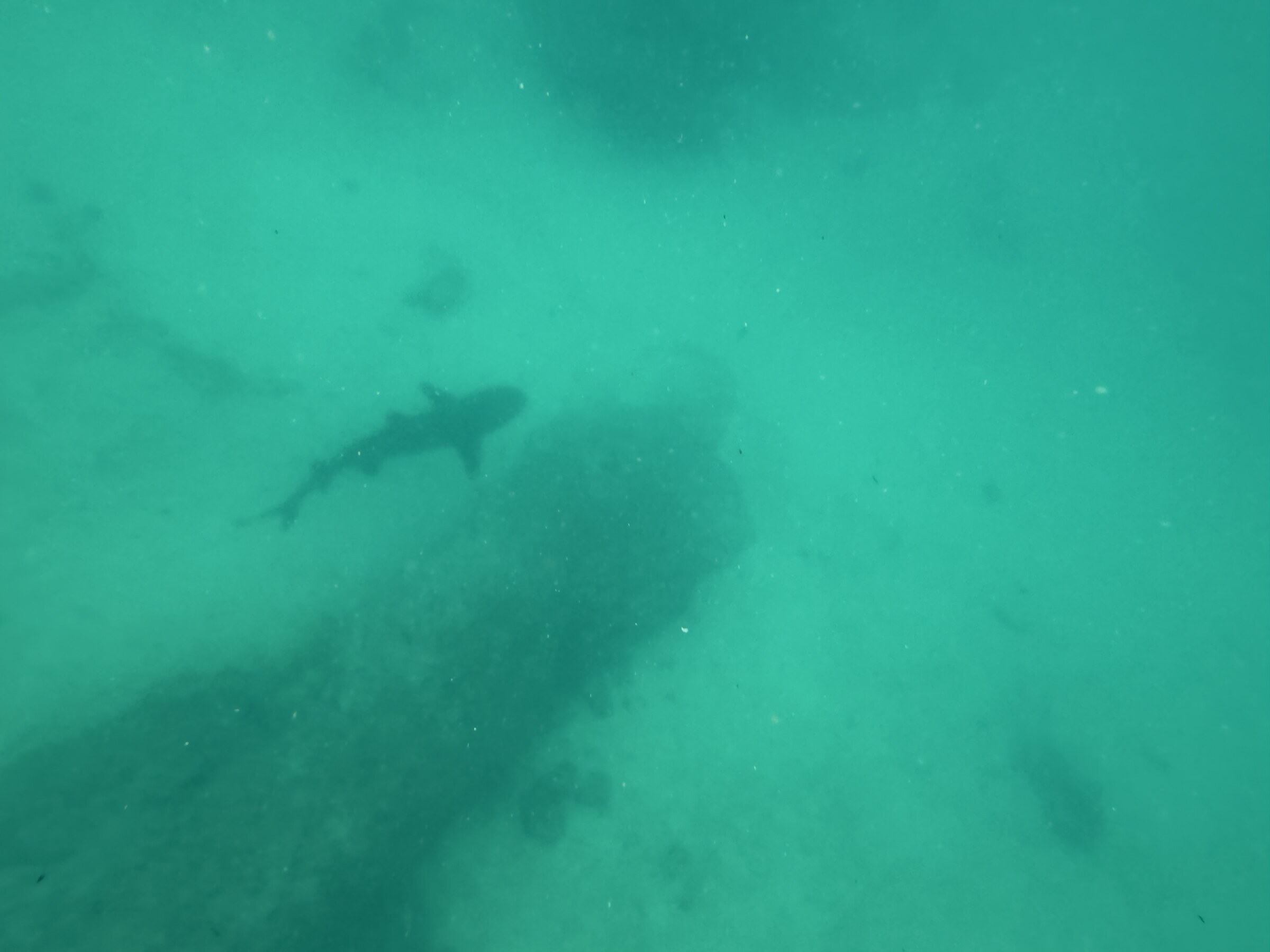
The standout day on this island was a boat trip to Sardine Bay and León Dormido (Kicker Rock). En route, we encountered bottlenose dolphins — one of my favorite animals — and on the return, we hit a pod of hundreds. At the bay, we snorkeled with blacktip sharks, pufferfish, and sea turtles. At Kicker Rock, the current was ferocious, but the payoff was extraordinary: hammerheads swimming in the water not far from us. Others in the group swam toward them with GoPros. We also spotted eagle rays and Galápagos sharks, making for literally the best day ever. That evening, with the cruise ships dark on the horizon and their passengers long returned aboard, we were still out — sitting at an open-air spot along the waterfront, replaying the day over plates of fresh ceviche.
That's the difference between a land tour and a cruise tour, condensed to one single image.
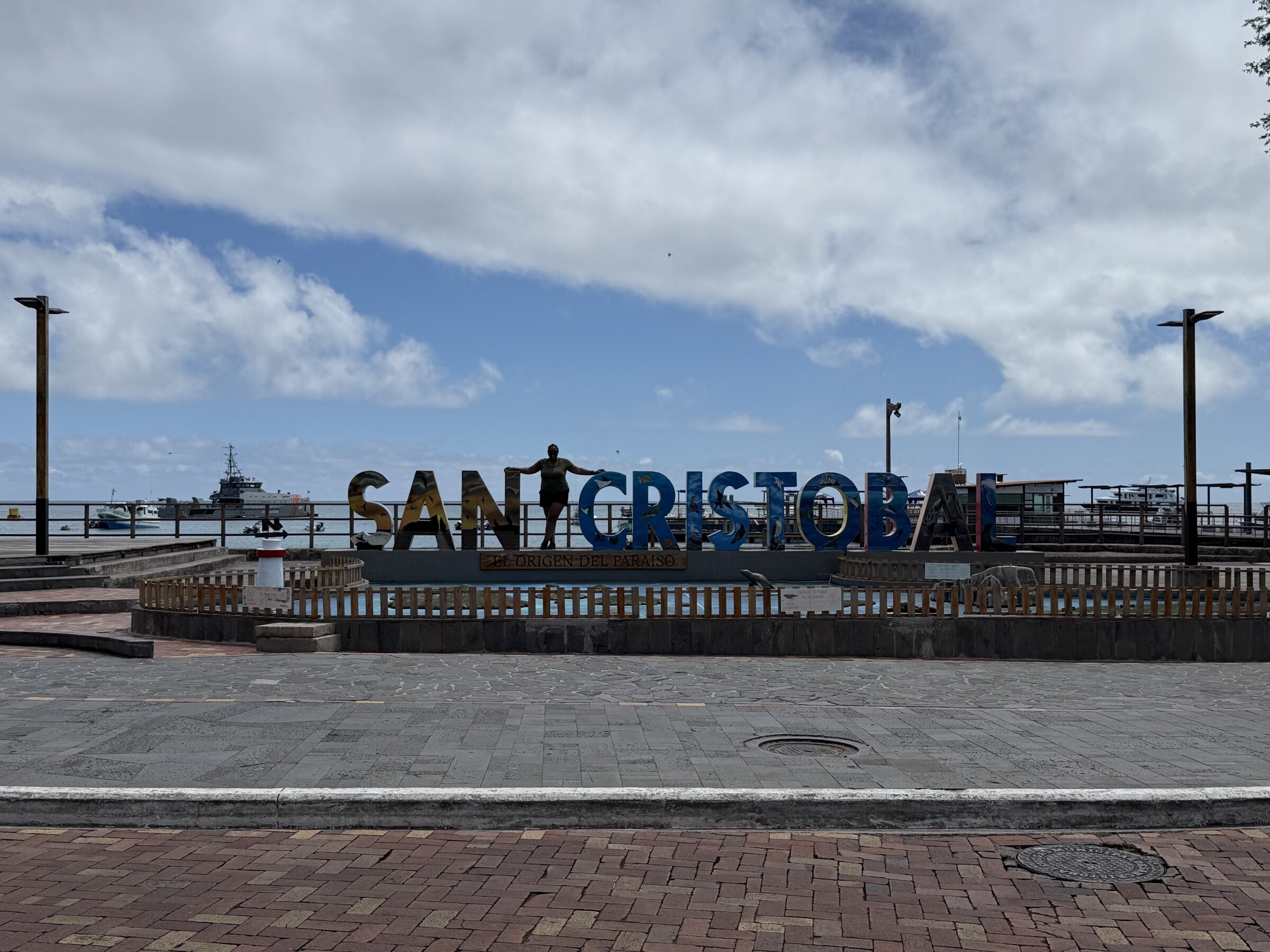
Isla Floreana
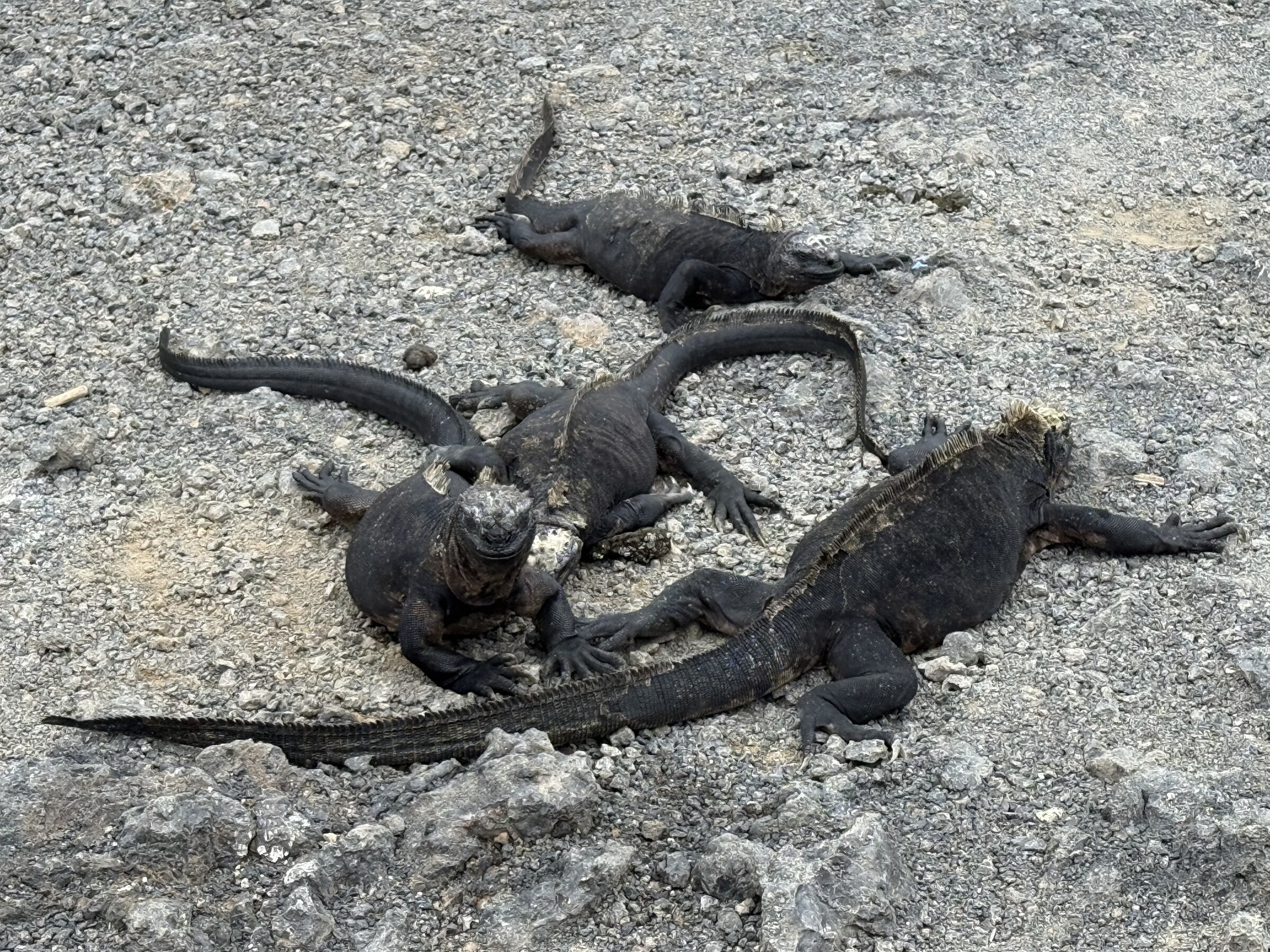
Floreana is home to about 130 residents, and stepping ashore, the quiet landed immediately — no crowds, no noise, just our group and the shifting movements of iguanas. We passed the Wittmer family home on our walk — the descendants of the island's first settlers still live there — and it had an odd, secluded feeling, as though it belonged to a different era entirely. About a ten-minute walk from the pier, we found the black sand beach: gritty enough that some of it worked its way into my wetsuit, but with water so clear you could see fish darting and sea turtles floating before your mask was on.
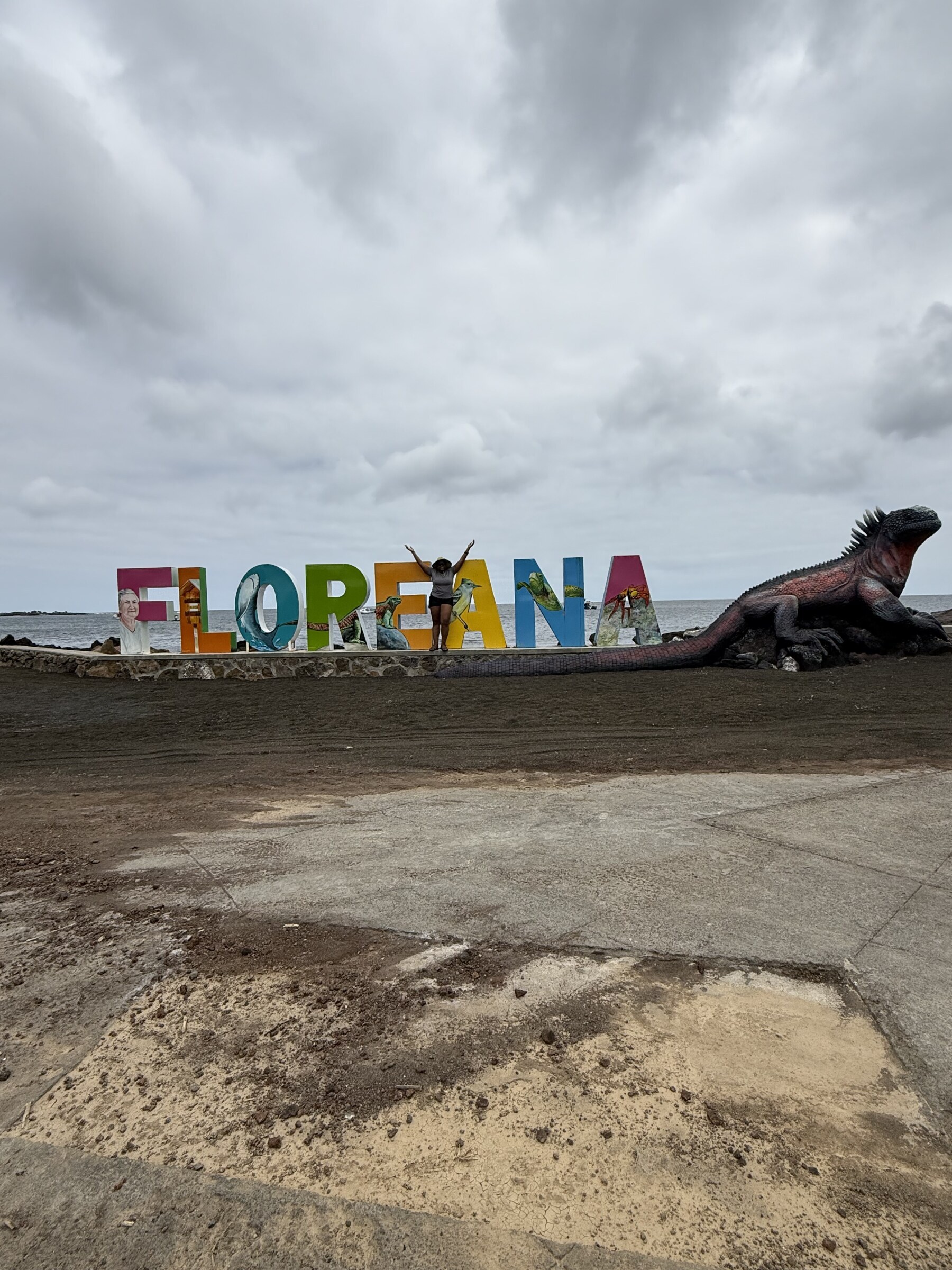
The story that stayed with me, perhaps because I love murder mysteries, was that of the Baroness: an Austrian woman who arrived with three lovers (two German, one Ecuadorian), intending to build a hotel for the wealthy. One day in 1934, she and one of the German lovers simply vanished. The Ecuadorian lover left for the mainland the next day; months later, the remaining German lover departed for San Cristóbal — and both were later found mummified on an island with no freshwater source.
Was it a jealous townsperson? One of the lovers? The Wittmer family? The truth has never been established, and that ambiguity is very much part of Floreana's eerie charm. What struck me was that the story didn't end at the beach — it followed us through every small museum we visited on the island, each one offering a different theory, a different conclusion. No consensus, no resolution. We walked back to the pier carrying the same unanswered questions the islanders have lived with for nearly a century.
Isla Isabela
This island stole my heart — and it started early. We woke up to birdsong outside the casita before breakfast, the kind of morning that simply isn't possible on a ship.
Kayaking around the island in the early sunlight, I spotted blue-footed boobies — and found a new favorite animal. Their vivid turquoise feet against white-stained rocks were almost comically beautiful; they stood utterly unbothered on the rocks, each one posed as if waiting for a close-up glamour shot. We also spotted Galápagos penguins, the only penguin species living in both hemispheres.
I'm not a hiker at home, but vacation me does it all. I went on a nearly six-hour, 10.5-mile hike up the Sierra Negra Volcano — one of the Galápagos' most active volcanoes, which last erupted in 2018 and boasts the world's second-largest crater. At the rim, the scale was humbling: a vast bowl of hardened lava fields broken by stubborn pockets of green vegetation, the path of the most recent flow still clearly visible. I was honestly just glad I survived the strenuous hike — but that view made every step worth it.
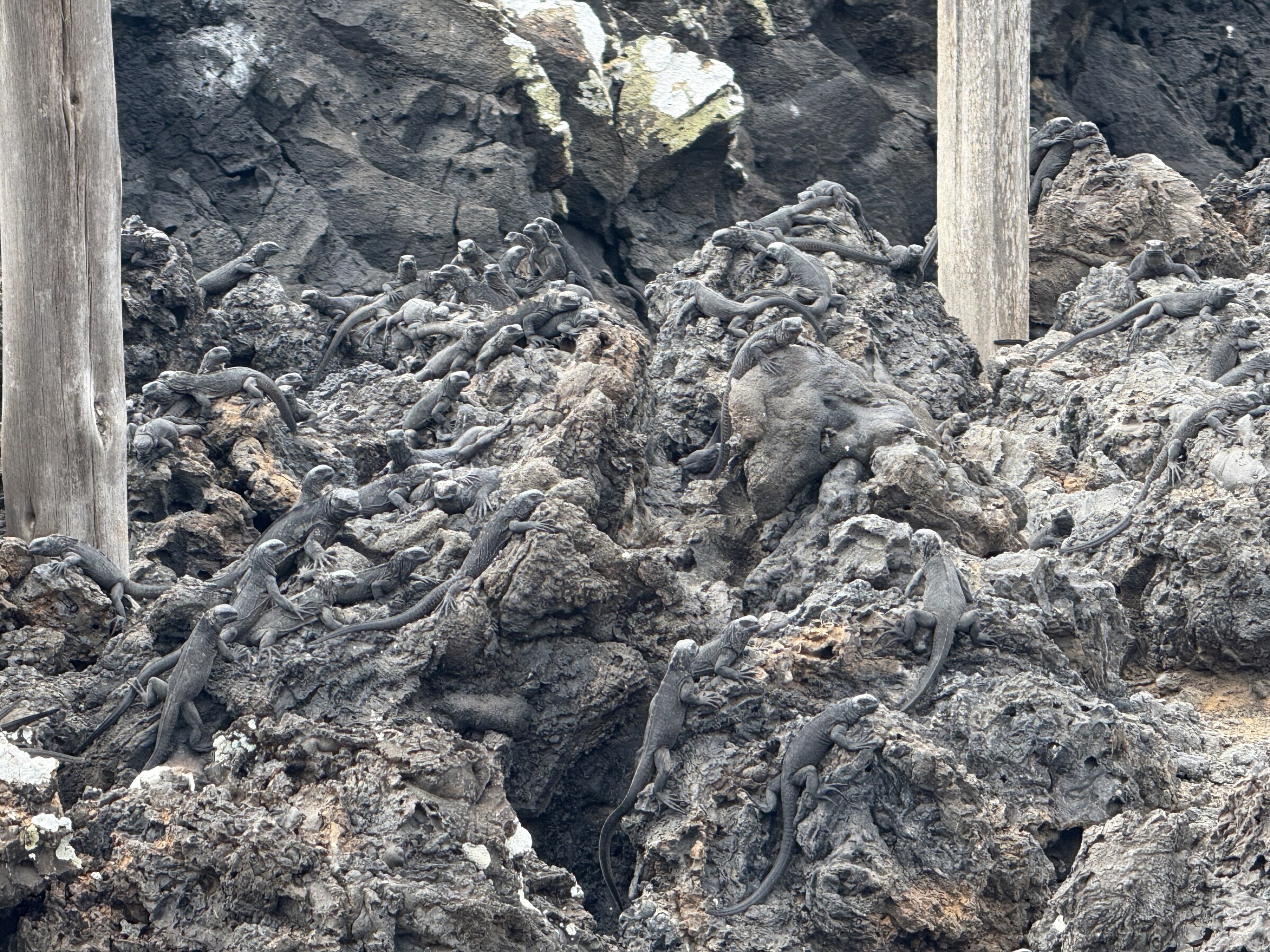
At Las Tintoreras (Shark Alley), we found a marine iguana nesting site teeming with iguanas of every size, plus a baby sea lion barely three weeks old. The snorkeling in the inlet was the clearest of the trip — sea turtles, chocolate chip sea stars, stingrays, and whitetip sharks resting motionless below us. I snapped a couple of photos of the sleeping sharks while staying very still, willing myself invisible.
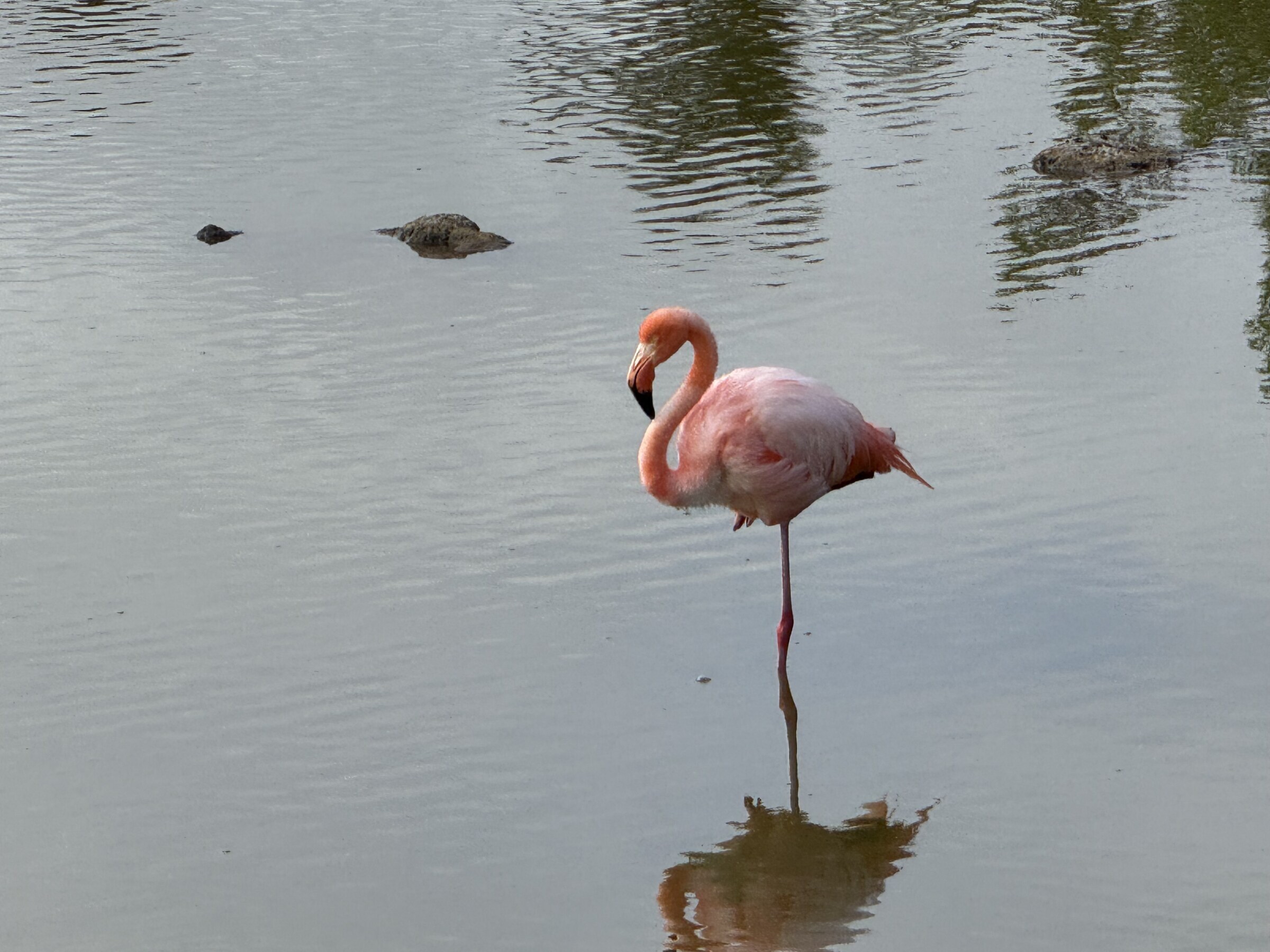
We also visited the Arnaldo Tupiza Tortoise Breeding Center, where we saw giant tortoises of all sizes. I found it interesting that they live 150 years and take a century to reach full size. We later caught a glimpse of the rare Galápagos flamingos (another of my favorite animals), our guide noting that fewer than 400 exist on Earth.
Santa Cruz
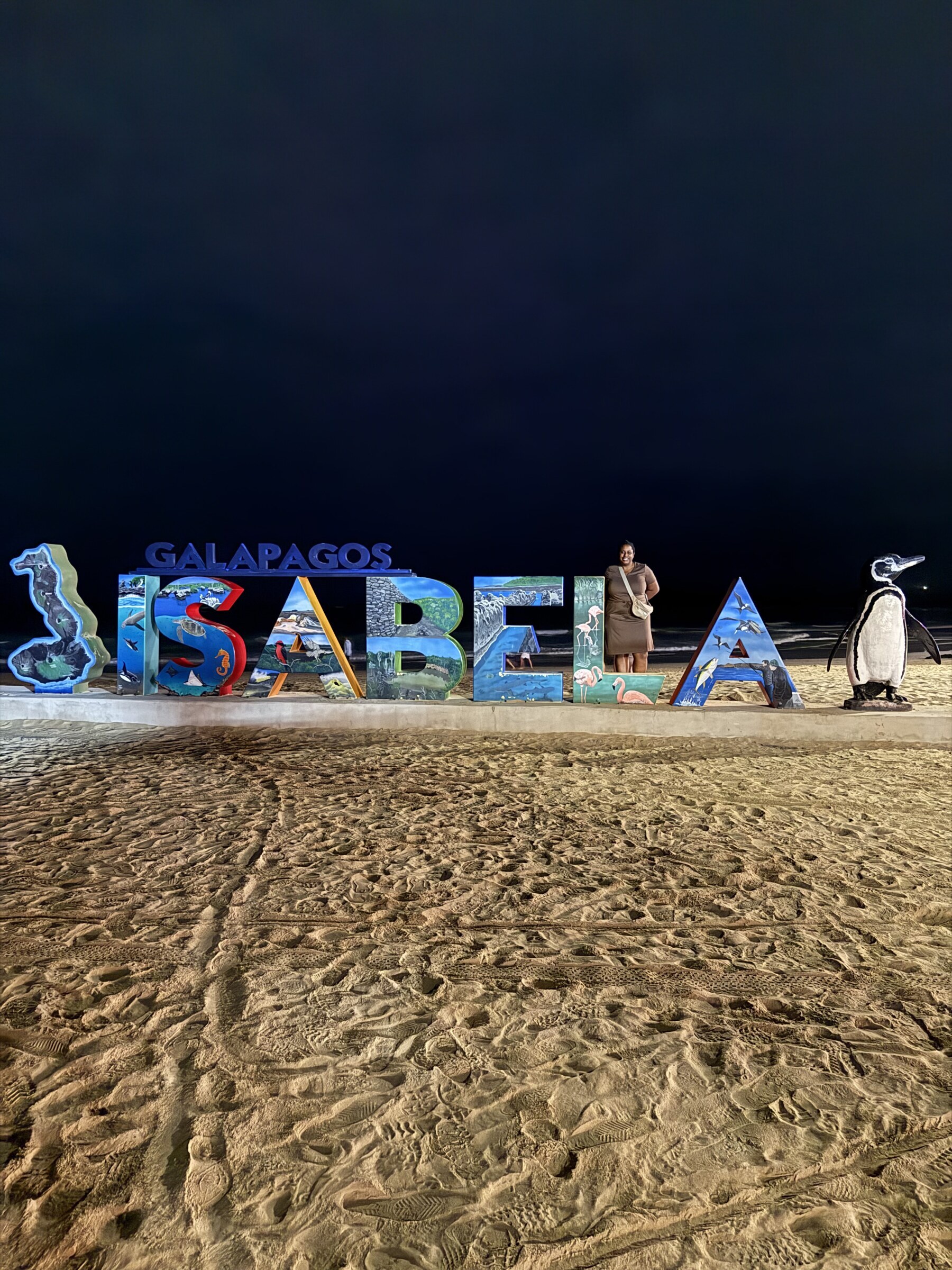
Santa Cruz has the biggest city feel of the inhabited islands — and after days on quieter Floreana and Isabela, its energy was a welcome shift. Our last evening on Isabela, I'd taken a slow walk through town after dark, passing sea lions dozing under benches while the last lights in the restaurants flickered on. By the time we reached Santa Cruz, I understood what makes a land tour irreplaceable: you don't just visit these islands. You spend enough time in each one to feel its particular rhythm.
We started with a cooking class at Rancho El Manzanillo, making encebollado — a local tuna soup and legendary hangover cure that was genuinely delicious — then walked the grounds where wild giant tortoises freely roam. A visit to a family sugar cane farm followed: raw sugar cubes, aguardiente (akin to moonshine), and trapichino — coffee, chocolate, and raw sugar combined into something like the best hot chocolate I'd ever tasted.
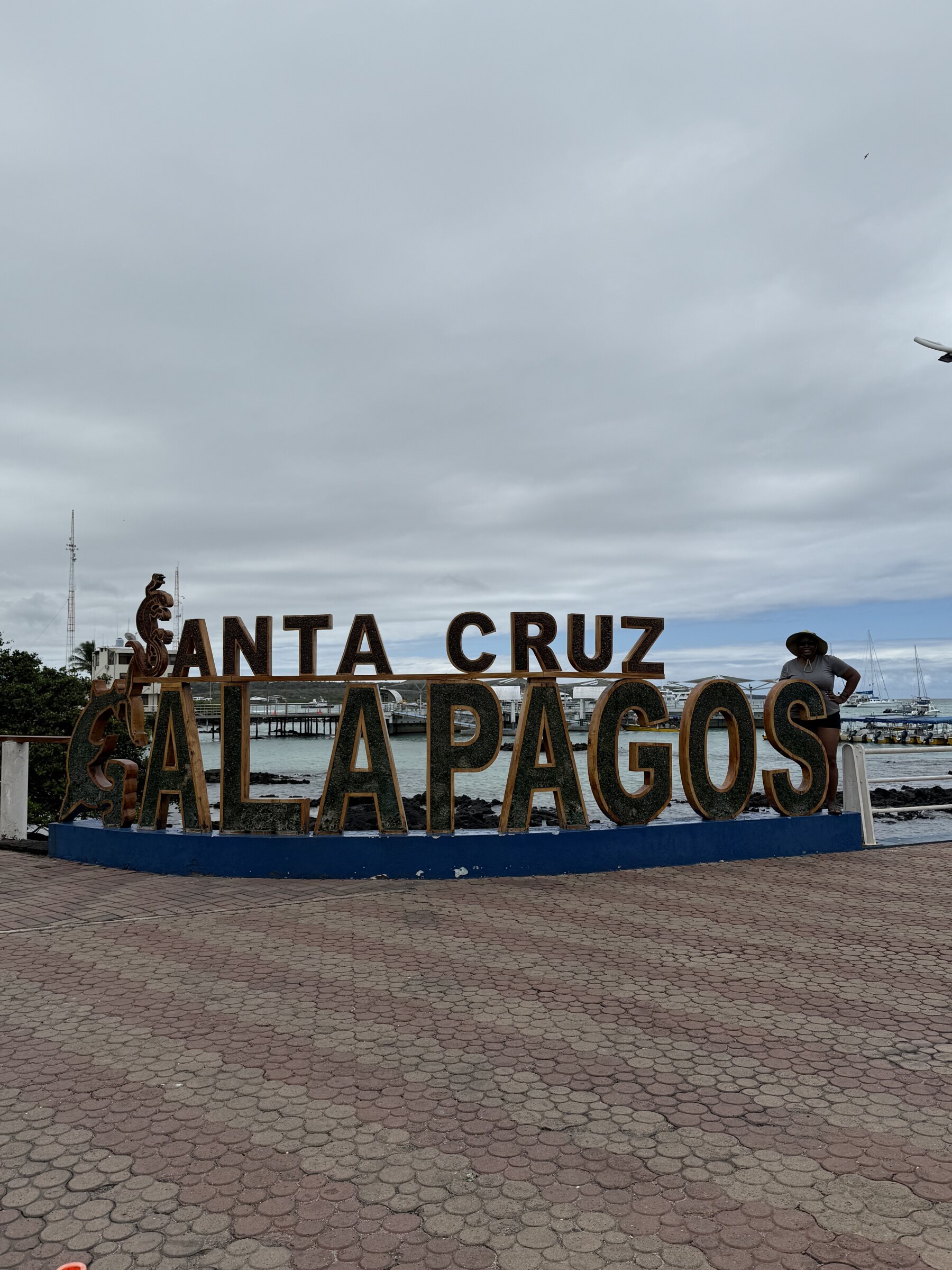
The day ended at the Charles Darwin Research Station and Fausto Llerena Tortoise Breeding Center, where we saw saddleback tortoises and tiny babies born just months before our visit — and paid homage to Lonesome George, the last of his species, who lived until 2012. Standing before him, I felt the full weight of what the Galápagos is really about: not just the spectacle of wildlife, but the fragility of it. A fitting place to end the island journey — and a reminder that the Galápagos gives you something no itinerary can fully capture: time enough to feel each island, not just see it.
Who Would I Recommend a Land Tour For?
If that kind of experience speaks to you, here's how the land tour fits into the bigger picture. A land tour is for you if you want deep island immersion — walking the streets at night, eating at local restaurants, waking up on the islands rather than on a ship. That kind of immersion is something a cruise simply can't replicate — and I felt it on every island, not just in the evenings. The islands are walkable, the beaches are never far, and wildlife meets you at every turn. It felt less like visiting a destination and more like briefly inhabiting one.
To be fair, a cruise offers things a land tour can't: access to remote, uninhabited islands, overnight travel between stops, all-inclusive meals, and more structured naturalist programming on board. But for me, none of that outweighed what the land tour gave back. Come physically prepared; this is not a lounge-on-the-beach vacation. It's so much better than that. The Galápagos Islands won't let you leave unchanged, and I mean that in the best possible way.
Planning your own Galápagos adventure? I can help build the trip that's right for you — whether that's a land tour, a cruise expedition, or something in between. Connect with me below for personalized planning, complimentary concierge access, and recommendations tailored to your travel style.
FAQ
What fees should I expect to visit the Galápagos?
All three required fees are priced per person and paid separately from your tour cost: - $20 Transit Control Card (obtained in advance by your tour guide after booking) - $200 Galápagos National Park fee (cash only, paid at the airport) - $10 Isabela Port fee (cash only)
What gear should I bring to the Galápagos islands?
An underwater camera or phone case helps get those wildlife shots; snorkels and flippers were included in the tour. Wetsuits were rented through the tour on day one — $40 total for the trip. Even in July the water felt cold, so the wetsuit was worth it. Short and long-sleeve options were available.
How fit do I need to be to visit the Galápagos?
More than you might expect. Daily snorkeling meant daily full-body swimming, and there's significant walking beyond just the volcano hike. I needed a mid-trip massage to keep up — but I don't regret a moment of it.
What should I pack for a trip to the islands?
Hiking shoes, breathable clothing, sunscreen, and bug spray are all essential. Pack a small or medium suitcase — you'll be getting on and off boats, and most hotels don't have elevators. Airlines also impose luggage weight restrictions.
Is Wi-Fi and cell service available?
Yes — and better than you'd expect. Wi-Fi was surprisingly strong throughout, even on the long boat rides between islands. Cell service worked fine too. T-Mobile offers solid free international coverage, with an optional paid plan for faster speeds.
Do I need travel insurance?
Absolutely. Medical facilities on the islands are limited — pharmacies are around, and larger islands have small clinics for minor issues, but there is no full hospital. A serious emergency would require evacuation to Quito. Make sure your policy includes emergency medical evacuation coverage.
When is the best time to visit the Galápagos islands?
The Galápagos is rewarding year-round. I went in July. December through May brings warmer water and better snorkeling visibility; June through November is cooler but prime for larger marine animals like whale sharks. Wildlife events — sea lion pups, nesting seasons — vary by month, so share your must-see list with your travel advisor when planning.
What do I need to book in advance?
Beyond flights and tours, nothing. Everything was included in my Intrepid Travel package, as is the case with most expeditions I recommend. Beyond the required cash fees listed above and the wetsuit rental, almost everything is booked and included in your tour. Work with me or any advisor to line up additional excursions that aren't included in your itinerary.
Do I need a visa to visit the Galápagos?
U.S. travelers do not need a visa to visit Ecuador or the Galápagos. Valid passports are required for both.
What vaccinations are recommended before a trip?
Hepatitis A and B and Typhoid are recommended for the Galápagos. Yellow Fever vaccination is only required if you are traveling to the Amazon region of Ecuador — not for the islands themselves. That said, requirements can vary depending on which countries you transit through, so check with a travel doctor before your trip. I make a point of seeing a travel doctor before any remote trip, and I'd recommend you do the same. Also note: Quito sits at roughly 9,350 feet above sea level. I brought altitude sickness medication; if you're sensitive to altitude, discuss it with your doctor beforehand.

Plan your next journey with
Shebna GarconShebna Garcon is a fully licensed travel advisor with LuxRally Travel — trained, insured, and accredited to plan and book travel anywhere in the world. Shebna has personally traveled to all 7 continents & is happy to help her clients see the world!
Related Stories
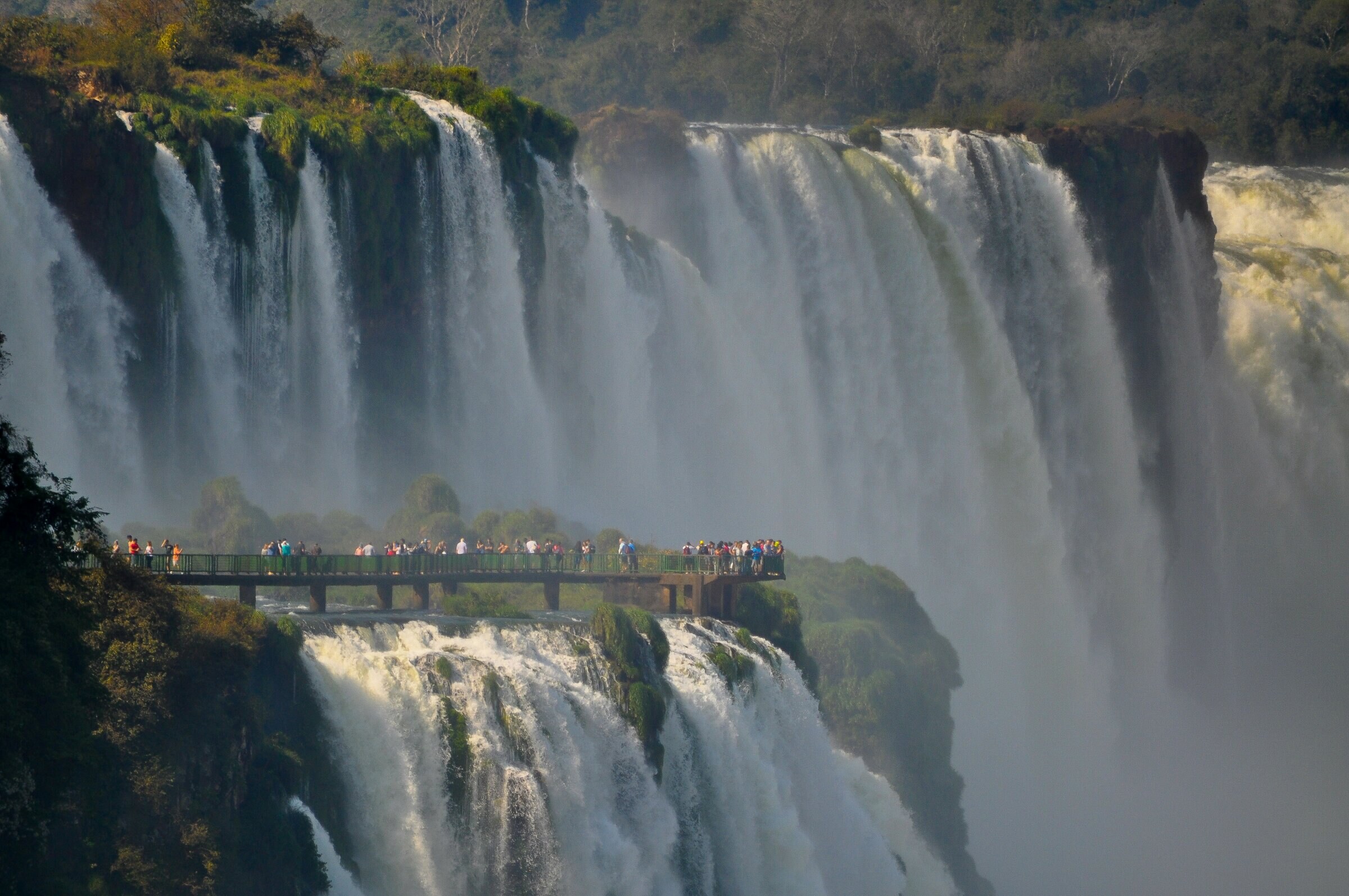
An Advisor's Quest to the World's Most Famous Waterfalls: Niagara, Victoria, and Iguazú Falls
“There is a hidden message in every waterfall. It says, if you are flexible, falling will not hurt you.” ~ Mehmet Murat Ildan
By Shebna Garcon
Four Types of Solo Trips to Take When You're Done Waiting on Someone Else
After over a decade of waiting on others, I decided to see the world for myself, alone. Here are four types of solo trips, personally tested by a luxury travel advisor — from group expeditions to fully private tours.
By Shebna Garcon
Why Hải Phòng, Vietnam Should Be on Every Luxury Traveler's Itinerary
French colonial architecture, extraordinary multi-story cafés, and the quiet beauty of Tam Bạc Lake — Hải Phòng is Vietnam's best-kept secret, especially for solo travelers and couples seeking luxury off the beaten path.
By Stephcynie Curry
The Simplest Way to Safari: Africa's Southern Coast by Luxury Cruise
A cruise-based safari blends open-ocean expedition with wild game encounters and local exploration along Africa's southern coast. Here's everything you need to know before booking a voyage from South Africa to Namibia.
By Theodora Green
The Grand Tetons Are Calling: Ski Season with the Four Seasons Resort & Residences Jackson Hole
From ski-in, ski-out luxury at the Four Seasons to a hidden speakeasy bathed in moody red light, this curated roundup captures everything the discerning skier needs for the ultimate Teton Village experience.
By Amy Van Den Top
Local’s Guide to Chicago: America’s Most Underrated Luxury Family Escape
From a Chicago rooftop pool where snow falls beyond the glass, to afternoon tea that needs no occasion — this city rewards the traveler who slows down. Even after thirteen years, it's still a city that my family and I can discover anew.
By Natalia Semizarov