
Japan Itinerary Strategy
One Day in Osaka is a Mistake: Here's What I Would Do Instead
Osaka is too often treated as a day trip or one-night add-on. Four Seasons Osaka showed me why this city deserves more time, especially for travelers who care about food, movement, comfort, and easy access to the region.
September 1, 2026
Before I visited Osaka, I thought I understood what it was.
A big city. A concrete jungle. A place you add to a Japan itinerary because you feel like you're supposed to, not because it's the part you're most excited about.
So I gave it one night.
At the time, that felt reasonable. Osaka was logistically useful for us, especially with Nara in the plan, and I assumed one night would be enough to check the box. As a luxury travel advisor, I've seen people make the same choice all the time. They give Osaka one night, skip it entirely, or treat it as a day trip from Kyoto.
I understand the instinct. On a first trip to Japan, Tokyo already fills the “big city” category, and Kyoto feels like the obvious emotional center: temples, gardens, ryokan, history, and stillness. Osaka can sound less romantic by comparison. But that's exactly where travelers get it wrong.
Osaka is not just another big city. And if you love food, it's definitely not a place to rush through.
We had eaten well in Tokyo and Kyoto, and later in other parts of Japan too. But looking back, some of the best sushi we had on the entire trip was in Osaka. Not just good-for-a-random-night good; some of the best sushi we had ever had in our lives.
That was when the mistake became obvious. One night was enough to realize Osaka had more to offer us, but not enough time to actually experience it. If someone tells me, “I’m not a city person,” I understand. I’m not either.
Osaka won me over.
The Osaka as a Base Strategy
Osaka is not only a place to visit. It can be the place you move from.
Kyoto can be a wonderful base for certain trips. If you want to explore Uji, smaller towns, temples, gardens, and the slower cultural rhythm, it makes sense to stay there and give it your full attention.
But especially on a first trip, I think Kyoto should be allowed to be Kyoto. If every day turns into a train day, you miss out on what makes it so special.
Osaka is the perfect base for a different kind of Japan itinerary. It has movement built into it. Staying there gives the trip a more flexible center of gravity, especially if you want to go beyond the traditional golden route and reach farther into Kansai and western Japan.
From Osaka, Nara and Kobe are easy day trips. Himeji is entirely realistic. Hiroshima and Miyajima are absolutely possible by Shinkansen, either as a long day trip or, better yet, as a one- or two-night extension. Sakai, known for its knives and its connection to tea culture through Sen no Rikyū, is close enough to build into the trip. Wakayama is also possible, though I would treat that as something to add when you have more time.
Inside Osaka itself, the city needs time, too. You can use the Osaka Loop Line to explore different neighborhoods instead of treating the city as one neon postcard. You can take a proper food tour. You can go deeper into markets, seafood stalls, thrift shops, underground shopping centers, local streets, and the kind of everyday discoveries you miss when you're rushing in for one dinner.
That is where Four Seasons Osaka — one of the top luxury hotels in Osaka, Japan — makes the strategy feel easy. You have the energy of the city around you, but you also have a calm, polished place to return to: a real room, a proper bath, a spa, breakfast, concierge guidance, and the sense that the city is not something you have to survive.
The Hotel That Changed My Mind About Osaka
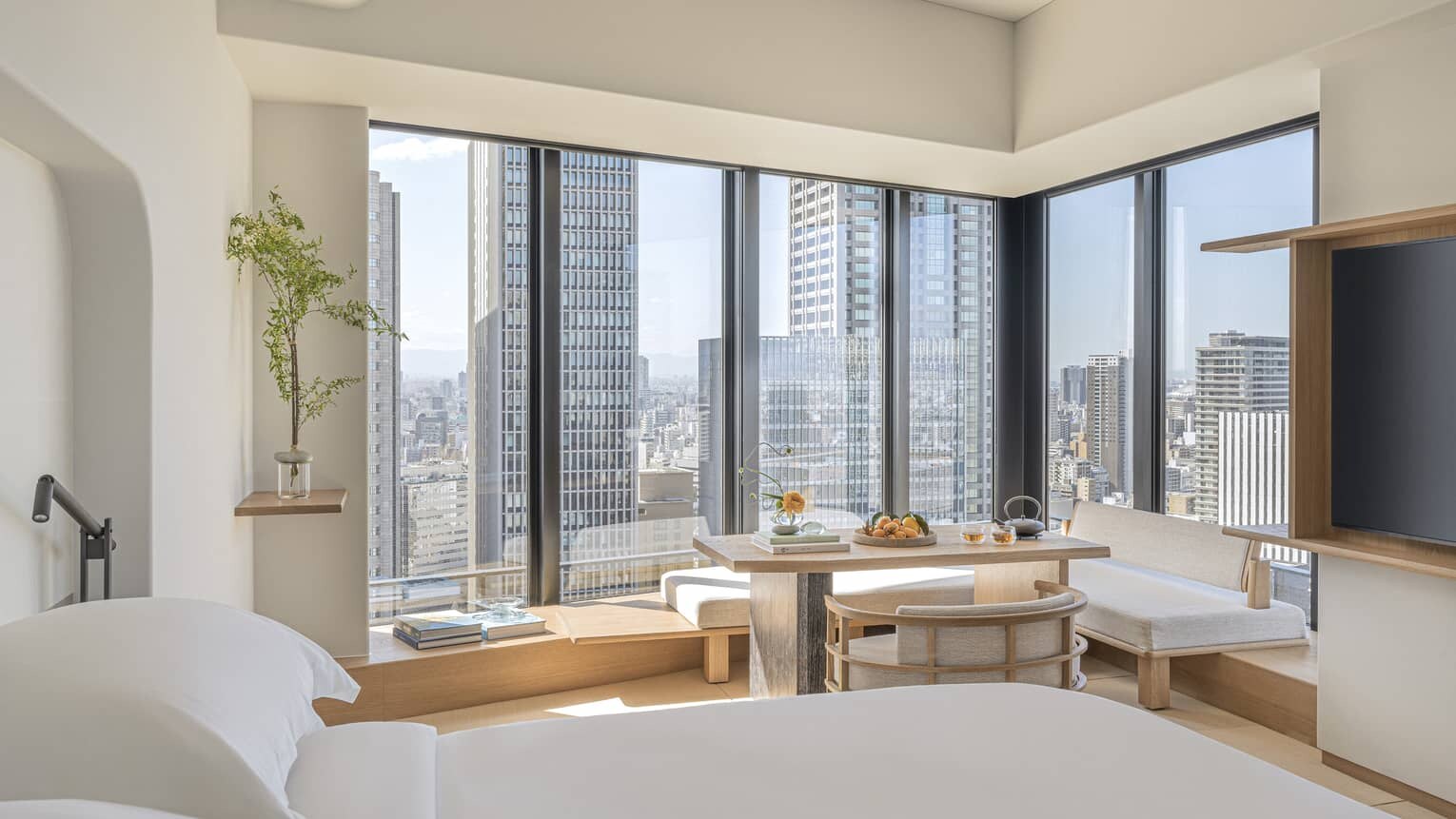
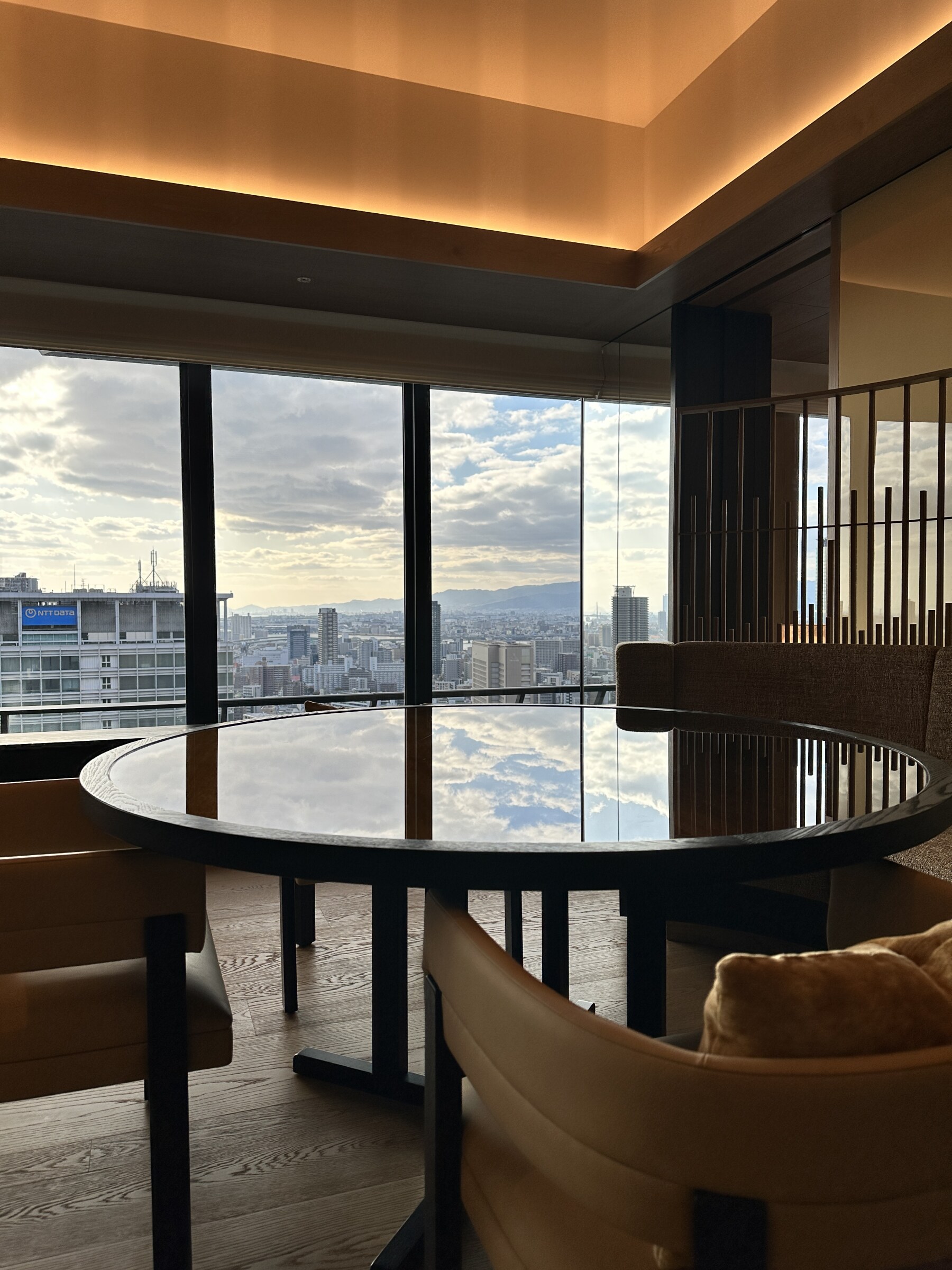
Four Seasons Osaka is the reason I started to understand the city differently. At first, it was the view.
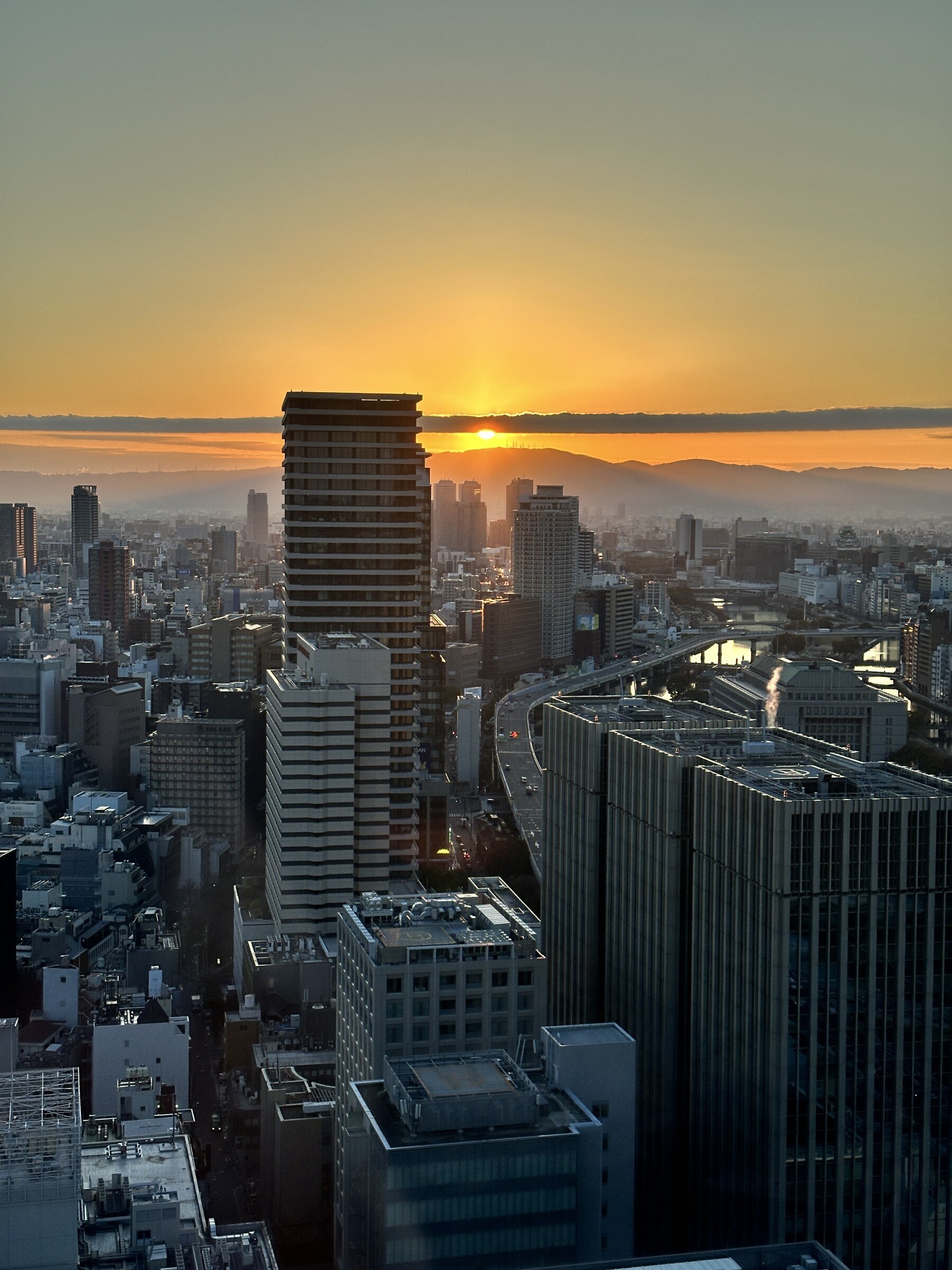
We checked in, settled into our room, and watched the sunset reflect through the surrounding buildings. Later, the city lights came on one by one. The next morning, I opened the blackout curtains and the room went from pitch black to flooded with light. The sun was rising over the mountains, Osaka Castle visible in the distance, and the city was already moving below us.
There was something in the air — not chaos, not the heavy, exhausting version of a city I had imagined, but something more like momentum. Hustle and happiness. Like everyone had somewhere to be, but in a way that made me want to be part of it.
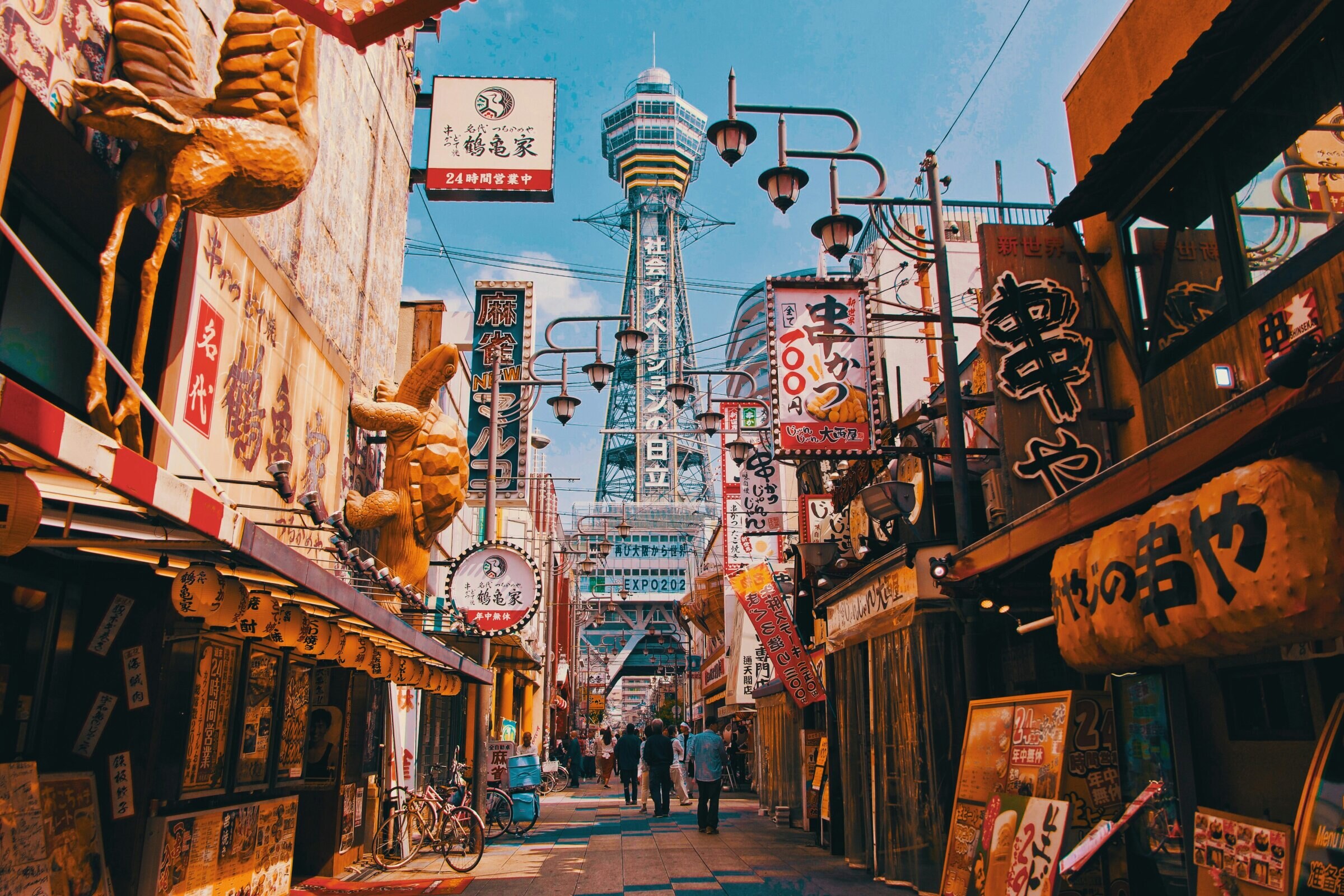
The night before, we walked around the city and stumbled into the underground world beneath Dōjima. It was cold outside — and then suddenly we were inside a layered system of walkways, restaurants, shops, and train connections. The neon was softer down there. The food smelled incredible. We had nowhere to be, and nowhere to go but further in. It felt like finding a second city under the first one.
That is part of Osaka’s charm. It keeps revealing itself.
But the real shift happened during my property tour. The sales director started explaining how Osaka works as a base: how easy it is to reach other parts of Kansai, how often travelers overlook the city, and how much more becomes possible when you stop treating Osaka like a quick add-on.
I remember thinking, I wish I had known this before.
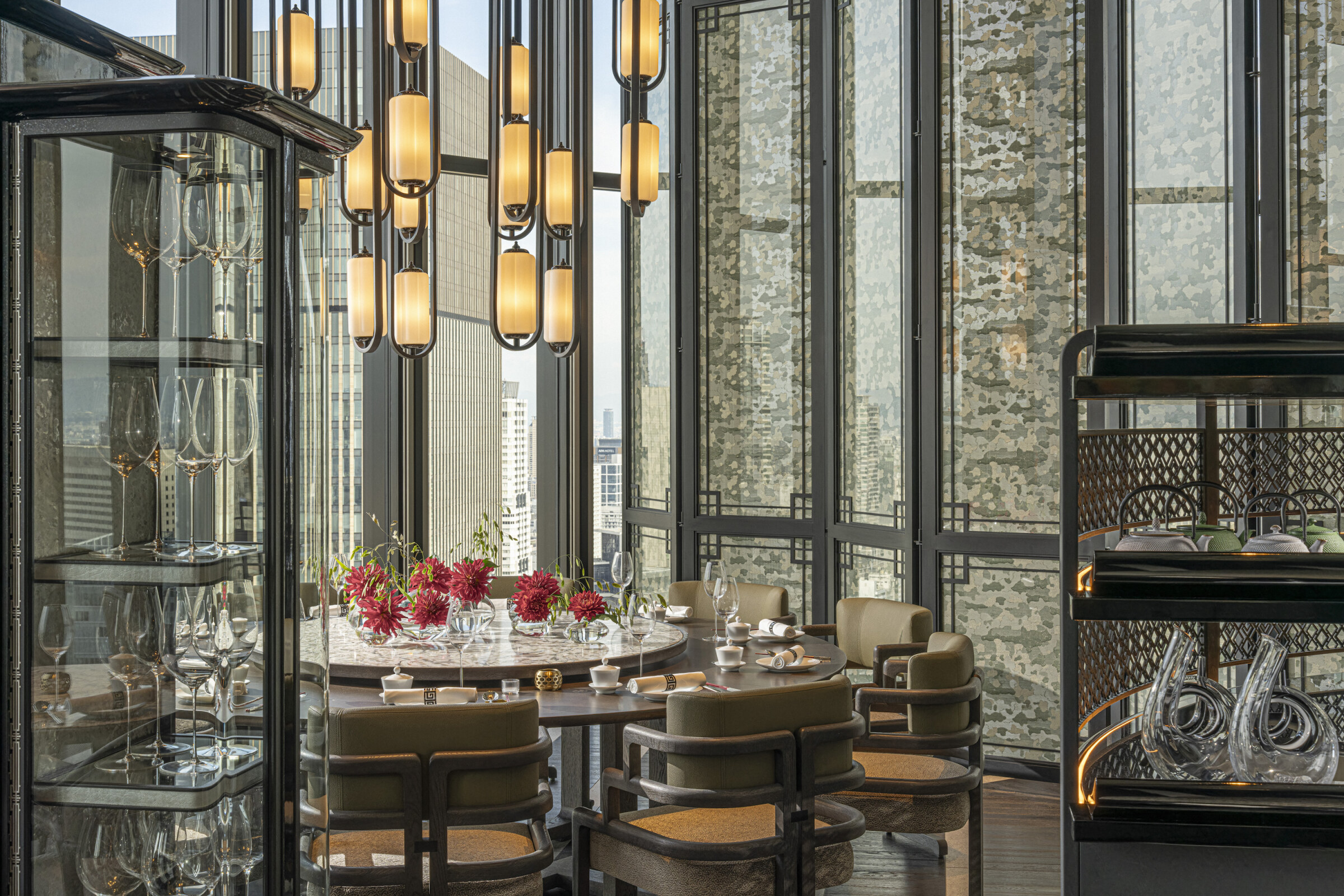
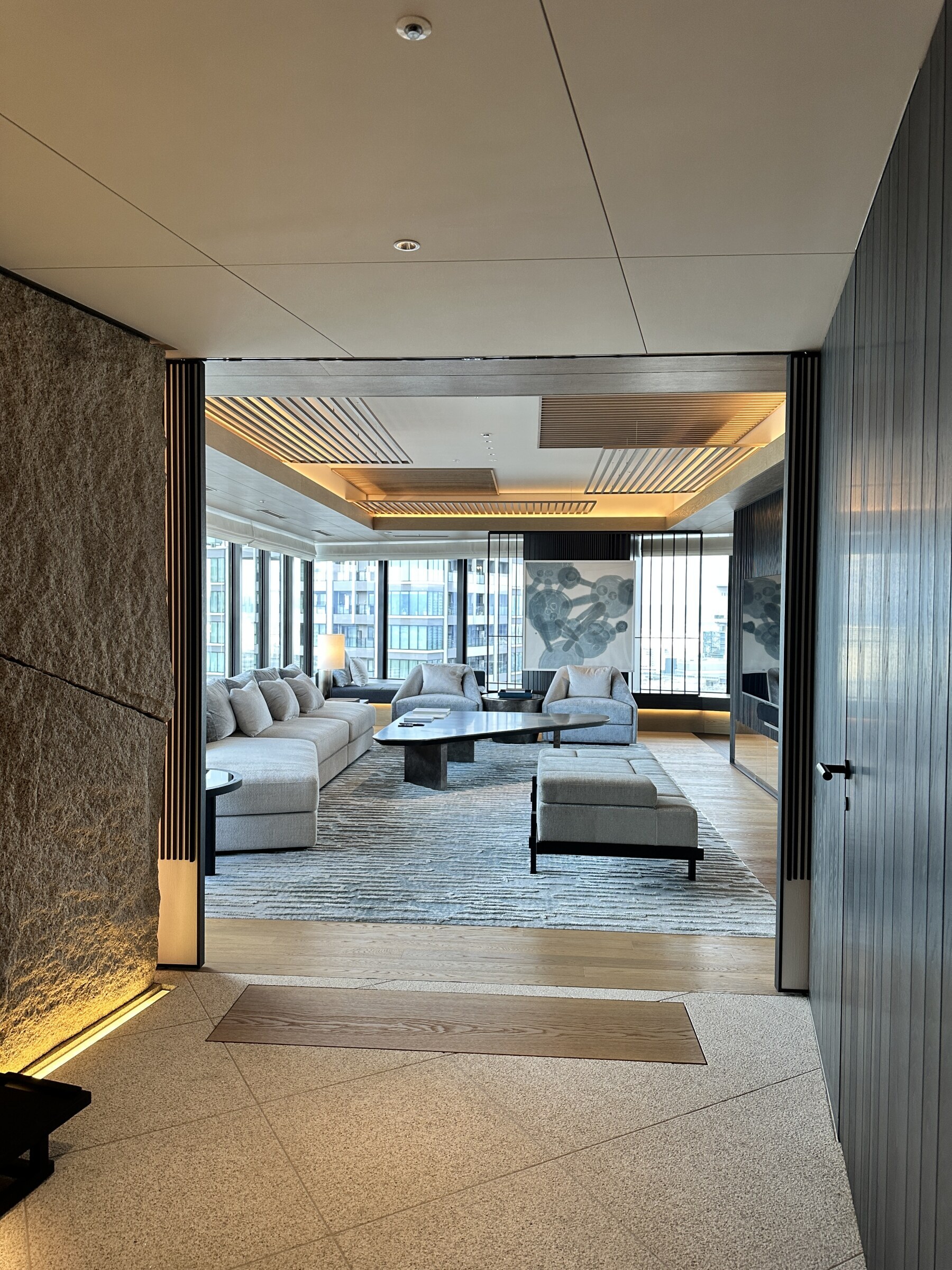
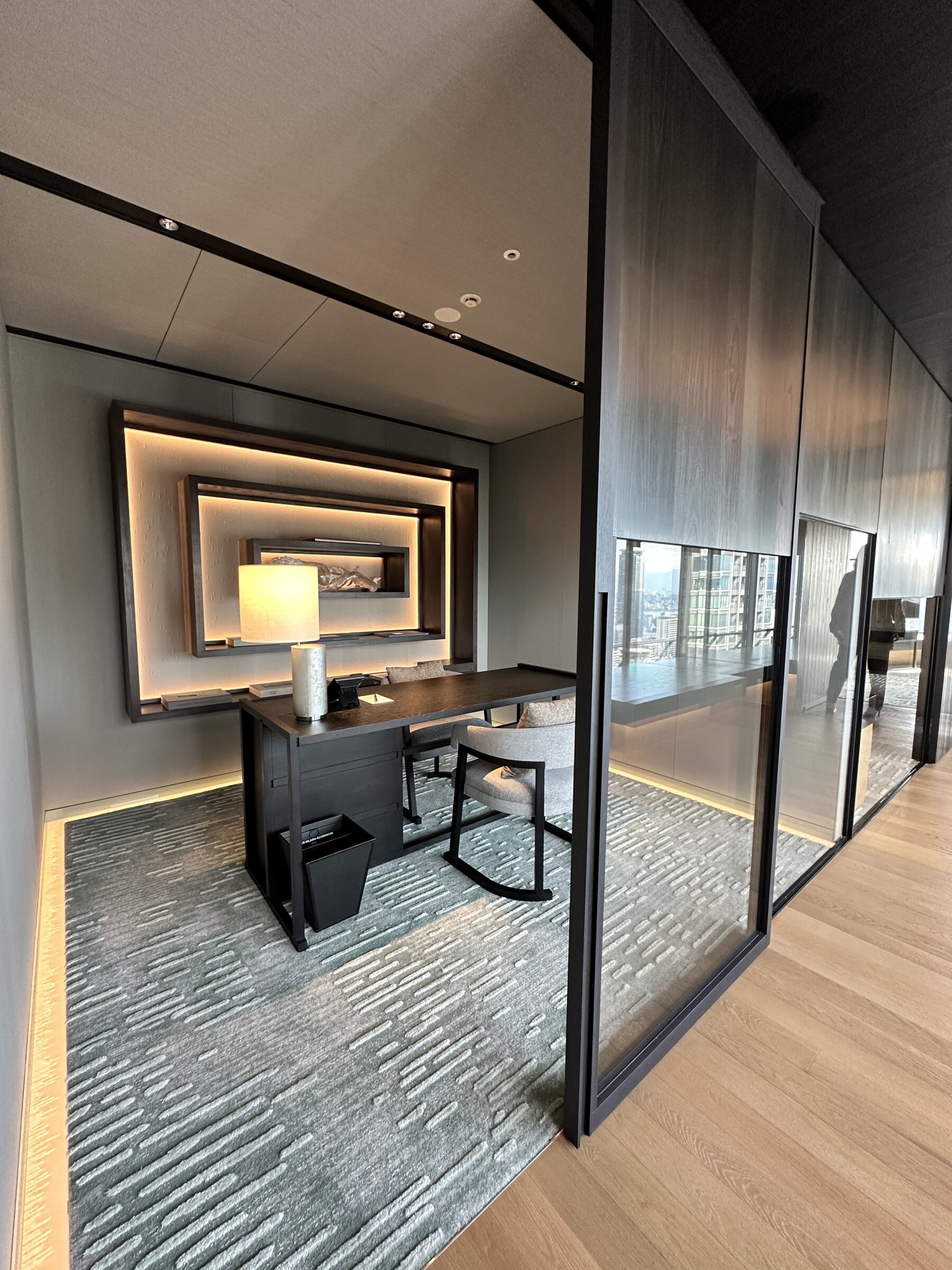
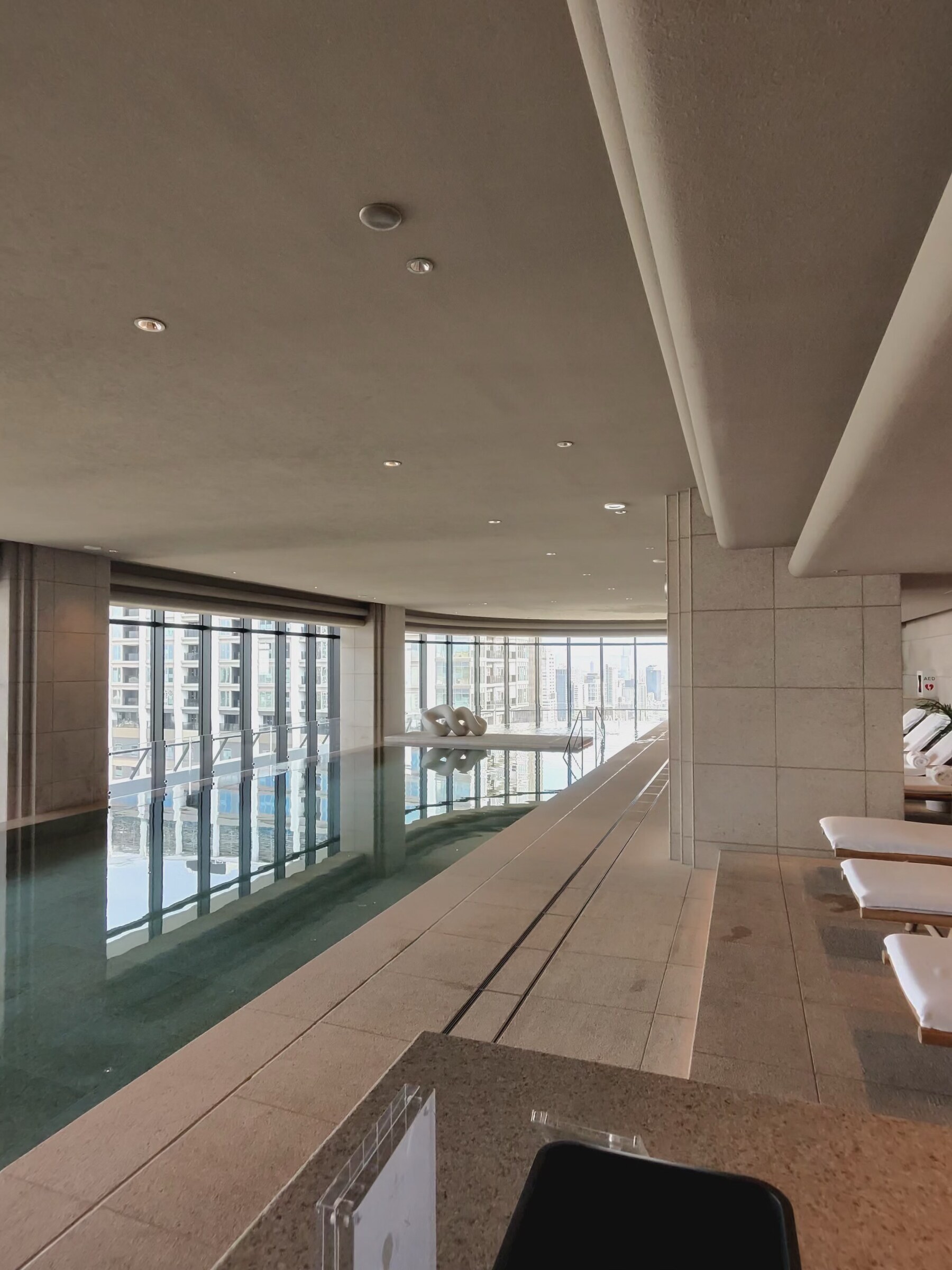
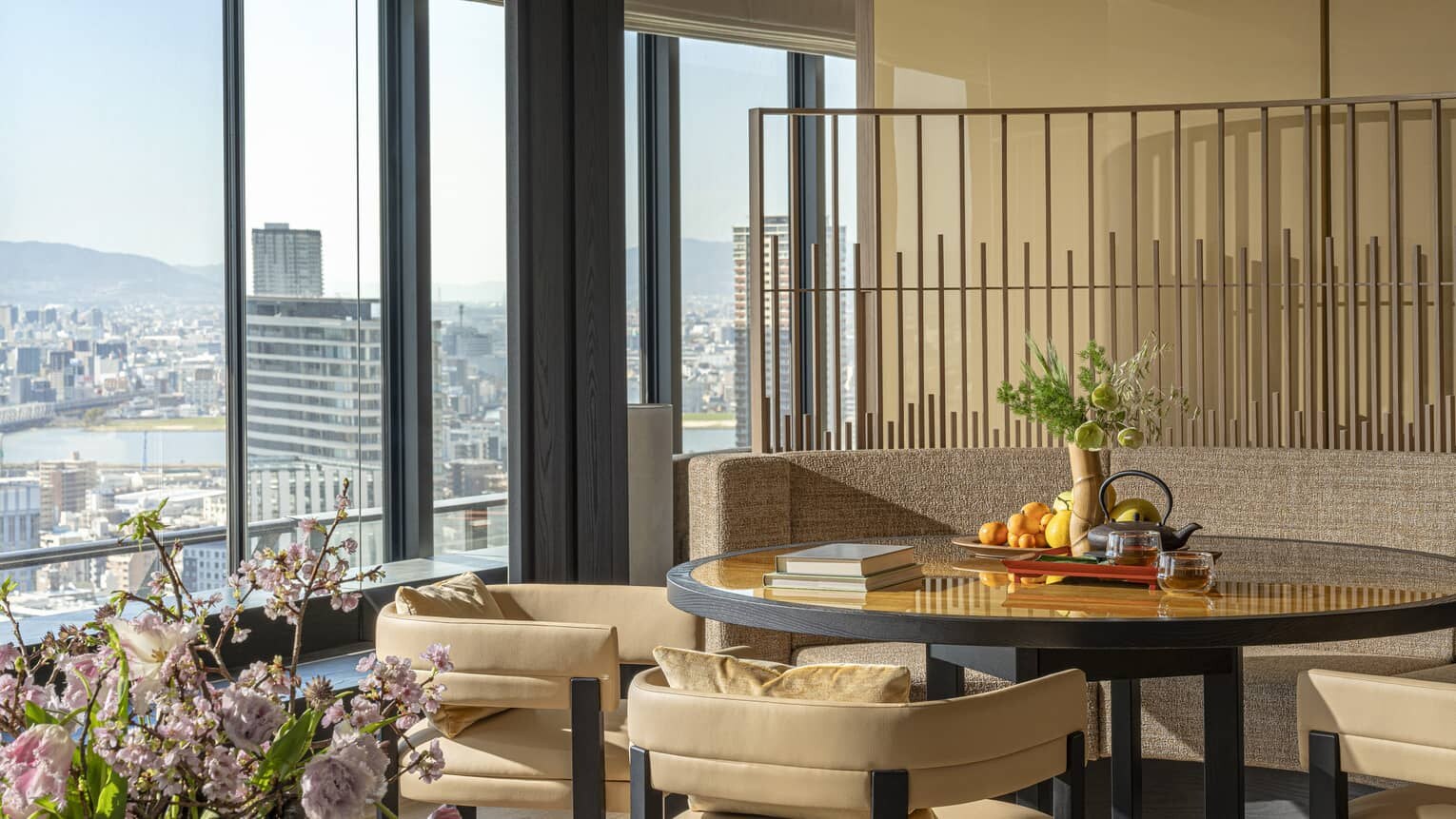
The hotel itself made the idea feel even more convincing. Four Seasons Osaka sits high inside the One Dōjima Project, with rooms and public spaces filled with light. The spa is bright and elevated, with frosted windows, a pool, ofuro, a sauna, and steam. The restaurants and lounges feel open and alive. The service is exactly what you would expect from Four Seasons, but the mood is more relaxed, warm, and unhurried.
By the time we left, Osaka no longer felt like a city I had to tolerate for one night.
It felt like a place I wanted to move to. And for someone who doesn't usually consider herself a city person, that was powerful.
How I’d Build Osaka Into a Japan Itinerary
I would give Osaka at least three nights.
If you have five, that gives you real room to breathe. But three feels like the minimum if you actually want the city to become part of the trip instead of something you passed through.
For a first-time Japan itinerary, I'd typically recommend three nights in Kyoto and three in Osaka — or four and three if you have the time. Kyoto still deserves real time, but Osaka deserves to be planned with the same level of intention.
Osaka works well after Kyoto, especially if you want the trip to open up and feel more expansive. But there are several ways to route it. You could fly into Tokyo, go to Kyoto, then Osaka, and either leave from Osaka or take the Shinkansen back to Tokyo. You could also fly into Osaka, continue to Kyoto, and end in Tokyo. Or you could land in Tokyo, go straight to Osaka, then work your way back through Kyoto before returning.
The point is not that there is one perfect order. The point is that Osaka deserves to be planned intentionally.
You can spend your first couple of nights just experiencing Osaka itself: dinners, food tours, neighborhoods, markets, underground passages, seafood, shopping, and the Osaka Loop Line. Then, if you have more time, the day trips start to make sense.
Nara is easy, though I love spending the night there. Kobe is close, and it's not only about the beef. Arima Onsen, one of Japan’s oldest hot spring towns, is in the Kobe area. Himeji is worth it for the castle alone. Sakai is close enough to include for knives and tea culture. Hiroshima and Miyajima can be done as a long day trip by Shinkansen, but I would rather give them one or two nights if the itinerary allows.
Wakayama is the one I would save for travelers with more time, more flexibility, and the budget for a private driver. The logistics take more effort, but the reward is huge: beach towns, incredible seafood, and a part of Japan many travelers never reach.
That is what Osaka gives you as a base: not just more city, but more Japan.
Who This Strategy Works Best For
This strategy works best for first-time Japan travelers, food lovers, city skeptics, families, and couples who want their itinerary to feel a little more open.
If you are already unsure whether Osaka deserves more time, that is exactly why I would look at it seriously. This is not just a city for nightlife and one famous food street. It is a place for eating well, moving easily, exploring neighborhoods, and using the city as a launch point for more of the region.
It also works especially well for families. Universal Studios Japan and the Osaka Aquarium Kaiyukan are great activities, and the city has the kind of transit, food, and hotel infrastructure that makes busy days easier. That matters.
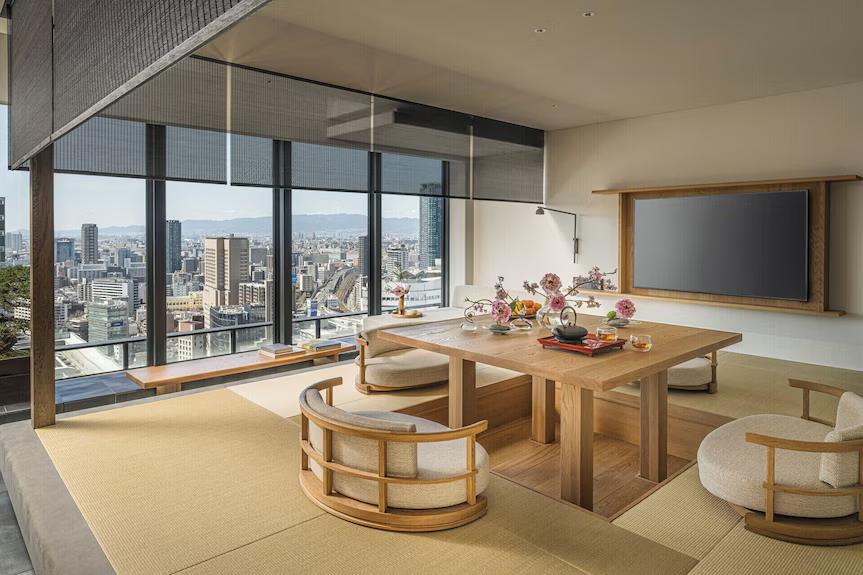
Four Seasons Osaka is a strong choice because it gives you both versions of the city stay. You can have the bright, modern, high-rise hotel experience with skyline views, serious comfort, and Four Seasons service. Or you can stay on GENSUI, the ryokan-inspired floor with tatami rooms, a more traditional atmosphere, daily tea, cultural programming, and benefits reserved for guests staying on that floor.
Room choice matters here. The Deluxe Room was stronger than I expected, especially for a shorter stay. For something more special, I would look at the Grand Tatami Suite on GENSUI, the Grand Osaka Suite, or the Presidential Suite for families and travelers who want real space.
The on-site concierge is also a major reason to book here. Four Seasons is well connected, and in Osaka that matters. The concierge can help you make sense of the city, secure reservations, plan meals, navigate transit, and build the kind of Osaka Japan itinerary that turns the city from “maybe one night” into one of the smartest choices of the trip. And if you're planning Tokyo, Kyoto, and Osaka, ask me about current Four Seasons benefits across all three properties — staying within the portfolio can unlock additional perks depending on timing and availability.
This strategy is not for someone who already knows Osaka well and has intentionally decided to spend their time elsewhere. This is for the traveler who is about to underestimate it. And if that's you, Osaka may be the part of Japan you didn't know you needed.
Connect with me below to start the conversation.
Plan your next journey with
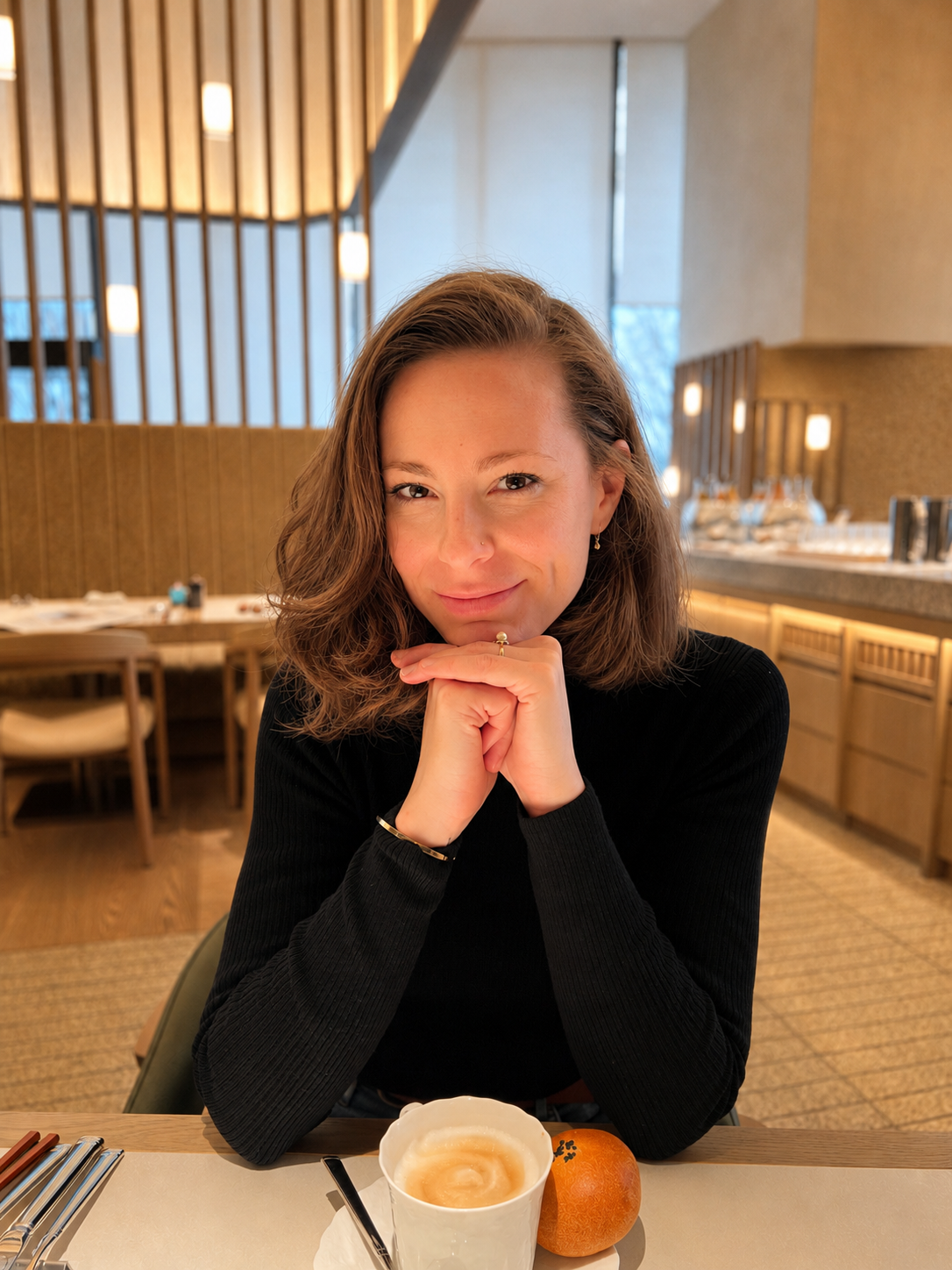
Krystal ArielKrystal Ariel is a luxury travel curator and writer with a particular love for exceptional hotels, restorative experiences, and the small details that can transform an entire journey. Through Shibui Travel, she curates deeply personal trips for private clients who value thoughtful pacing, beautiful places, and feeling completely taken care of from start to finish. Originally from Miami and now based in Mexico, Krystal brings a local’s perspective to both destinations, alongside a particular depth of interest in Japan. She is especially drawn to hospitality with soul: intuitive service, a strong sense of place, nourishing food, thoughtful design, and the moments of care guests remember long after they return home. Before entering luxury travel, she spent more than a decade in public relations, marketing, content, and brand partnerships within the technology industry, working across startups, growing companies, and global enterprises. She is also a 500-hour yoga teacher and has studied positive psychology, stress management, and well-being through Stanford University, experiences that continue to shape the way she thinks about travel, rest, and human connection.
Related Stories
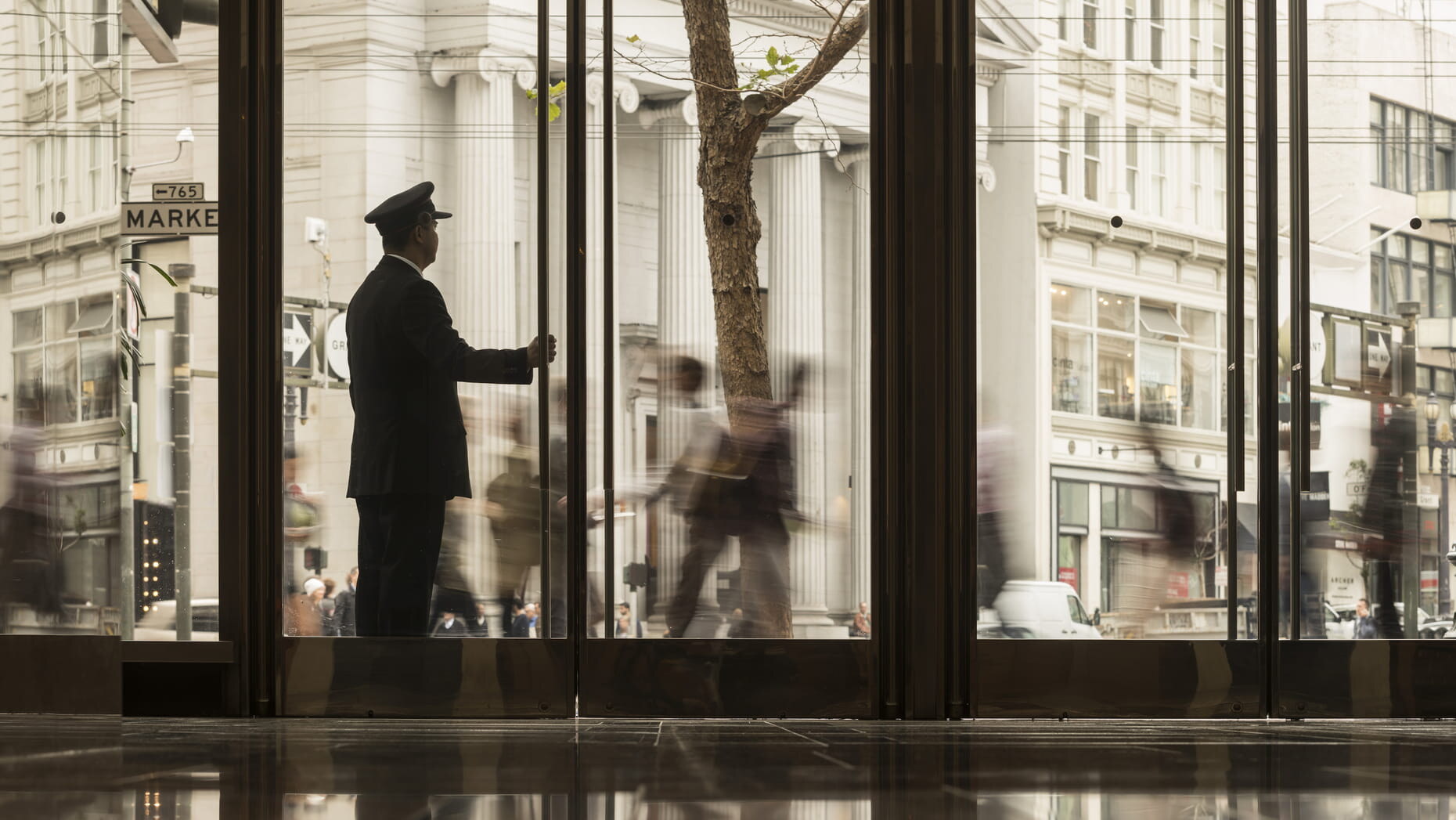
Fixing the Worst Part of a Napa Valley Trip: Four Seasons San Francisco
Driving from Napa to San Francisco International Airport takes at least two hours , which means an 8 a.m. flight translates to a 3 a.m. alarm on your last morning in wine country. Here's a much better way to end a Napa Valley trip.
By Krystal Ariel
Four Seasons Kyoto: Why a Ryokan Isn't Always the Better Kyoto Stay
Four Seasons Kyoto is for the traveler who wants to be near Kyoto's old soul but knows that a world-class bed and breakfast flexibility are not moral failures. A first-person review of the garden, the ofuro, and why you should stay three nights.
By Krystal Ariel
The Brando's Private Motu: One Island Marlon Brando Kept for Himself
A short flight from Tahiti, one islet sits apart from Marlon Brando's own resort, reserved by request for a single party at a time. It is the closest a traveler can get to the man who built this atoll, it's resort, and the private oasis even further from the main retreat.
By Alina Moretti
Kona Meets Sedona: Inside Black Desert Resort, Southern Utah's Luxury Escape
Deep black volcanic basalt, emerald fairways, and red sandstone cliffs that shift from terracotta to burnt sienna by the hour — Black Desert Resort shouldn't work as a landscape, but it does, spectacularly. I pulled up on an October morning and realized I was looking at something I'd never seen before in a place I call home.
By Megan Saldibar
The New Science of Living Longer: 5 Anti-Aging Retreats Redefining Luxury Wellness
Five destinations where longevity, biohacking, and genomic medicine have become the most compelling luxury on earth. From Swiss clinics to Mediterranean retreats, the future of travel is biological.
By Alina Moretti
Confessions of a Converted Cruiser: How Alaska and Oceania Changed Everything
A self-proclaimed non-cruiser boards Oceania for an Alaskan voyage — and discovers that breaching humpbacks, foie gras-topped filets, and glass-smooth mornings can change a traveler's mind entirely.
By Cassie Bacon