
THE UNLISTED — NO. 03
The Brando's Private Motu: One Island Marlon Brando Kept for Himself
A short flight from Tahiti, one islet sits apart from Marlon Brando's own resort, reserved by request for a single party at a time. It is the closest a traveler can get to the man who built this atoll, it's resort, and the private oasis even further from the main retreat.
November 3, 2026
He did not build a resort here to be found.
Actor Marlon Brando first saw Tetiaroa in the early 1960s, filming Mutiny on the Bounty a few miles away in Tahiti. He came back years later and bought the entire atoll, a dozen motus scattered around one lagoon, and by every account of the people who knew him, it was the first place in his adult life where nobody was watching.
In 1999, five years before he died, he partnered with hotelier Richard Bailey to turn part of it into something the public could eventually visit. The Brando resort in French Polynesia opened in July 2014, ten years to the day after Brando's death, and kept, deliberately, one island back for himself.
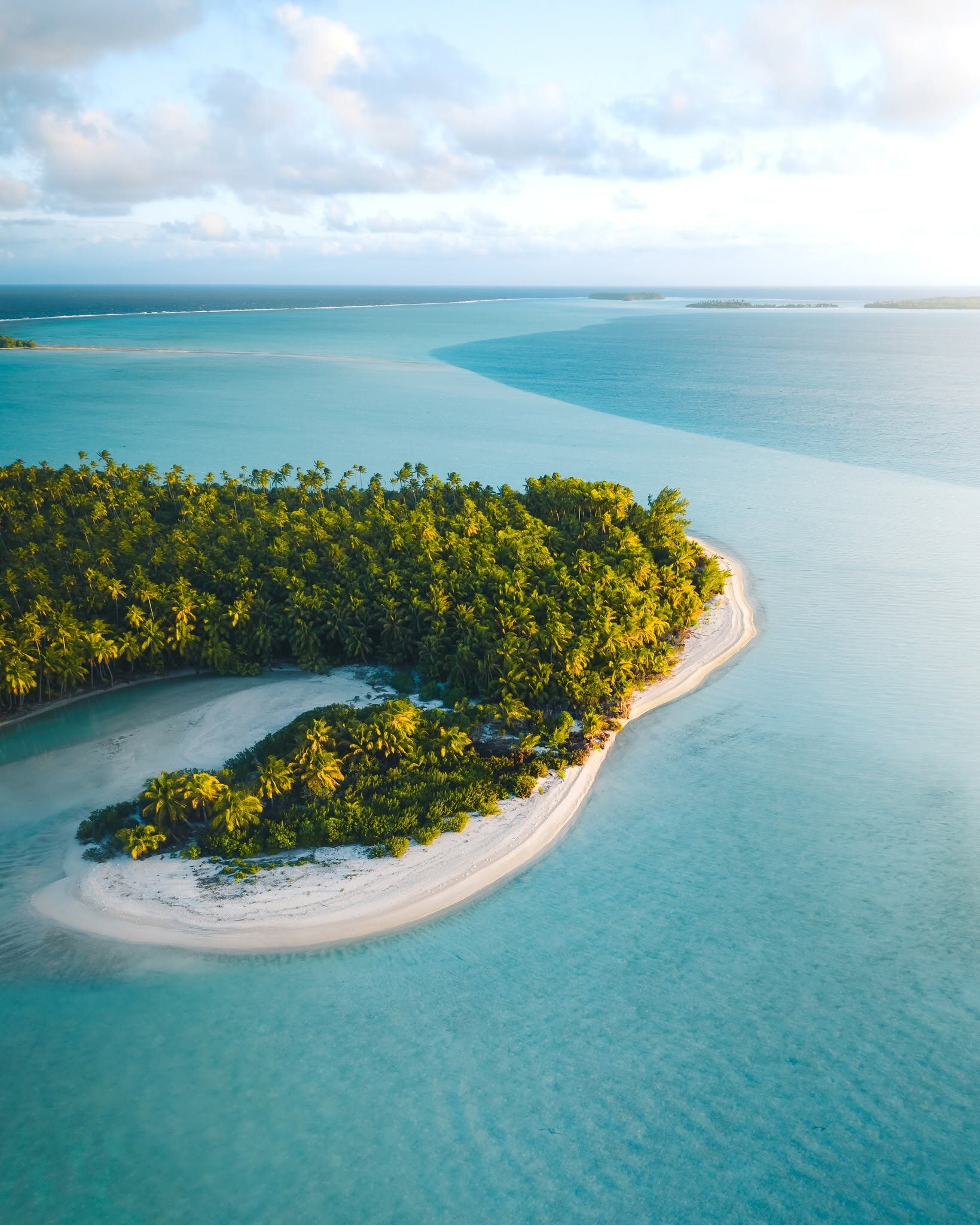
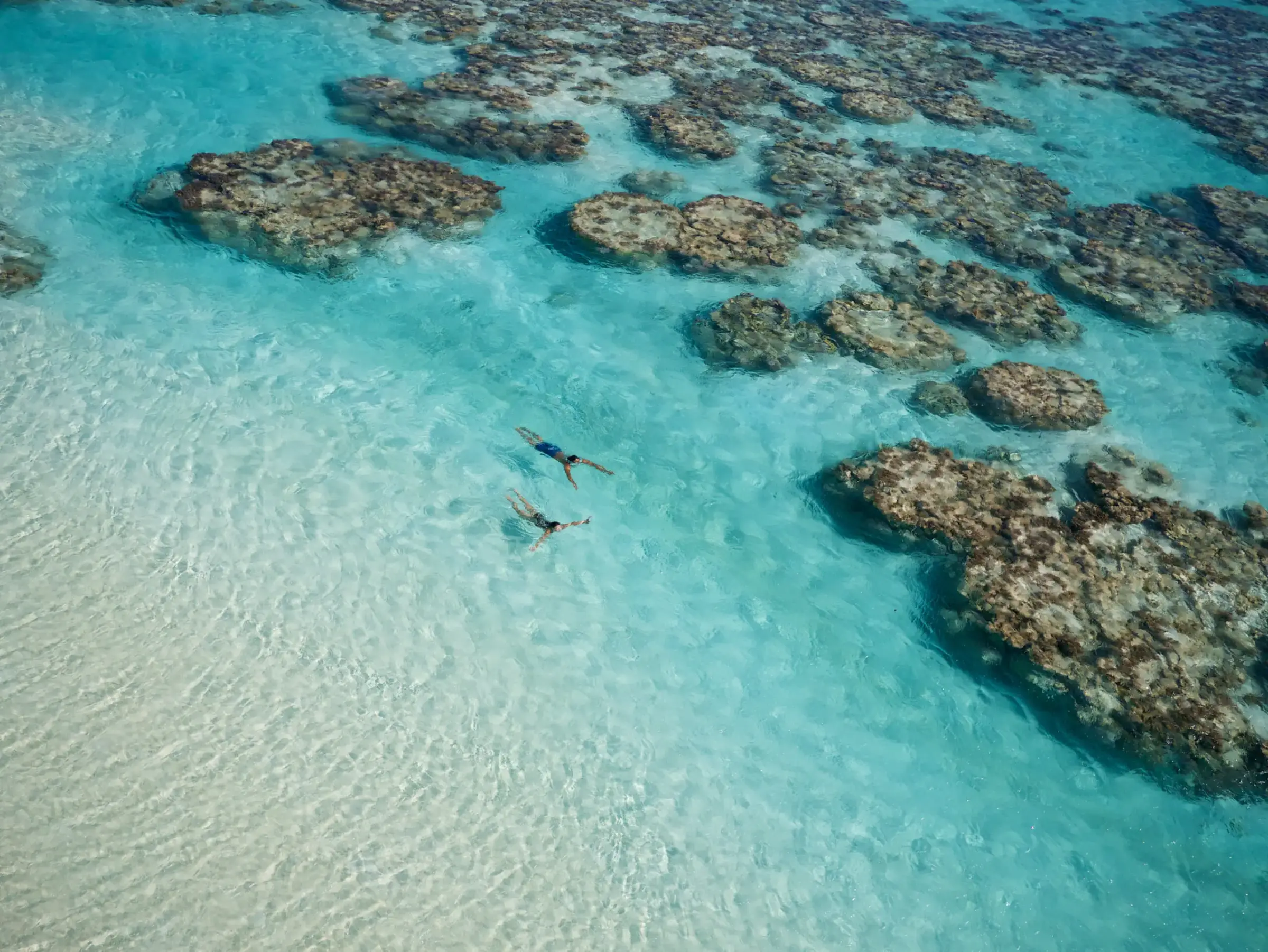
That island is Rimatu'u. A short boat ride from the resort's thirty-five villas, it has a freshwater lake at its center, coconut palms grown wild rather than manicured, and the quiet remnants of the life Brando actually lived there before any of it belonged to travelers. It is where he went when the rest of the atoll, including the resort built in his name, felt like too much.
What The Brando Actually Is
The Brando sits on Tetiaroa, a private atoll thirty miles north of Tahiti, reachable only by Air Tetiaroa's twenty-minute flight from Papeete. There is no other way in. Guests check in at a private lounge in Tahiti before boarding, and the resort's private aircraft handles the rest.
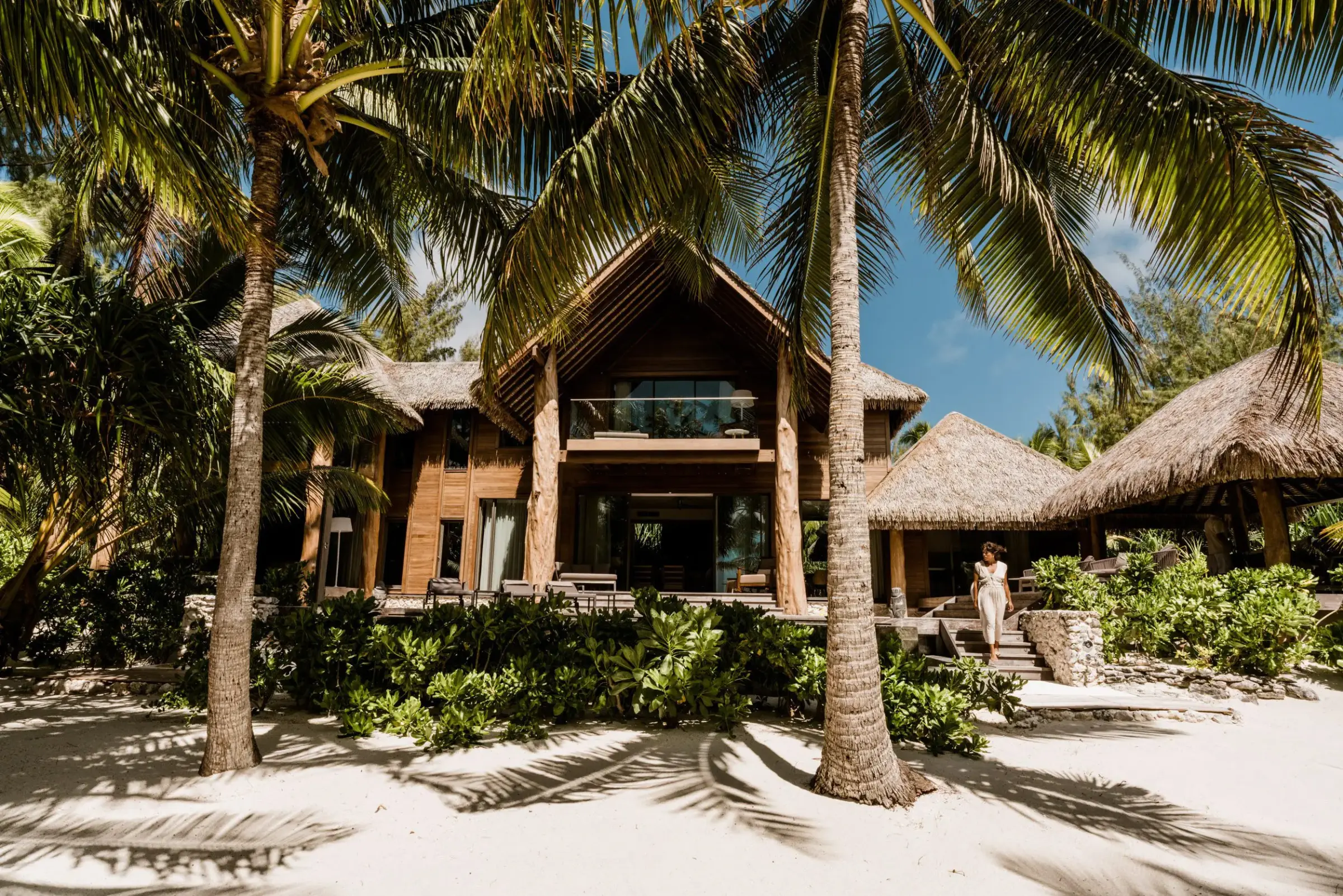
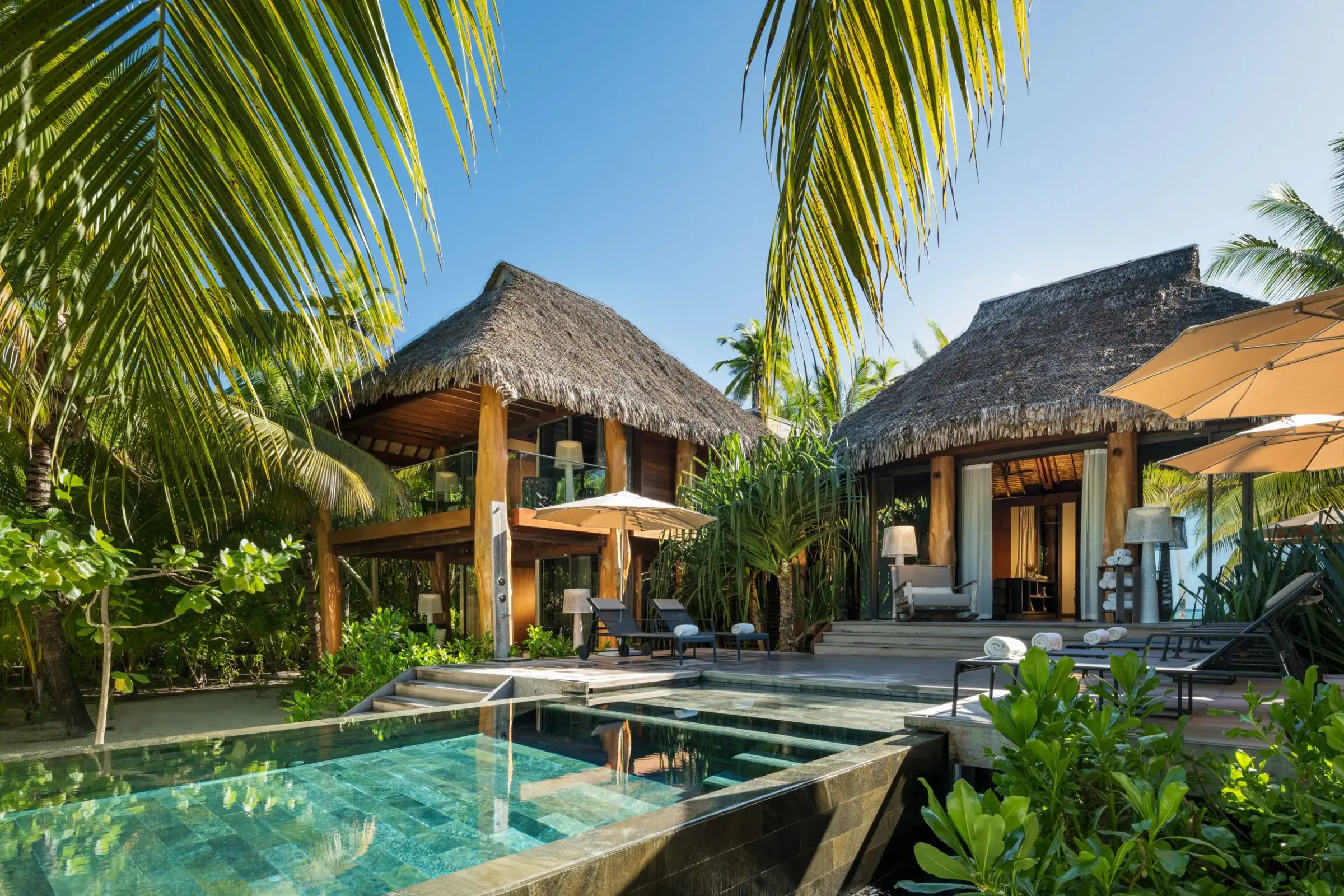
Thirty-five oceanfront villas run along one crescent of white sand — spaced far enough to have your own expanse of beach, and deliberately unremarkable against the landscape Brando wanted protected. The resort draws on a seawater air-conditioning system that pulls water from nearly three thousand feet down in the ocean to cool every building, cutting energy use by roughly ninety percent — a figure that sounds invented until you feel how quietly the villas breathe.
What power remains is drawn from solar panels lining the airstrip and a generator fueled by locally pressed coconut oil. The Brando holds LEED Platinum certification — one of a handful of resorts in the world to have woven sustainability this deep into its design rather than retrofitting it as an afterthought. None of this is performed for guests. It runs whether or not anyone is watching, which is precisely in keeping with the man who insisted on it.
The Island Within the Island
Rimatu'u is not hidden in the sense of being secret. It appears, briefly, on the resort's own excursion list, one line among many. What almost no one does is stop treating it as a stop along a longer boat tour and start treating it as a destination in its own right: a full day reserved entirely for one party, with nobody else's schedule sharing the boat.
For a couple, this is the day the trip is actually for. Not the villa, not the spa, though both are extraordinary. It is standing at the edge of the lake Marlon Brando swam in, with no other travelers in sight and no itinerary pulling at the hours. I have watched this become the moment a couple stops narrating their vacation to each other and starts actually having one.
For a family, the same motu becomes something else entirely. Children can run the length of it without a parent tracking them through a crowd, because there is no crowd. The old stone foundations become something to climb on and ask about. A ten-year-old who has been patient through two long dinners gets an entire island that, for one afternoon, behaves like it belongs to them.
Multi-generational groups are where a private motu earns its keep the most. A grandmother who cannot walk far can sit in the shade near the lagoon while her grandchildren swim thirty feet away, and everyone is still, technically, doing the same thing together. Most itineraries force a family to choose between what the eight-year-olds want and what the eighty-year-olds can manage. Rimatu'u does not ask anyone to choose.
For an executive traveling with a small circle, or simply trying to remember what a vacation feels like without a phone in hand, the value is blunter. No one else's villa within earshot. No possibility of being recognized or approached. A full day with nothing scheduled on it, on the one island a famously private man kept for himself, tends to land harder than any spa treatment could.
None of this happens by simply asking for "the motu excursion" at check-in. I request it well ahead of a client's arrival, specify that the day belongs entirely to their party, and confirm there is nothing shared — no other boat, no overlapping group. Tides and weather still have a vote, and I plan around that rather than promising something the ocean has not agreed to yet. It sits outside the standard excursion program and is priced and confirmed separately, best arranged at the time of villa booking.
Choosing Your Villa
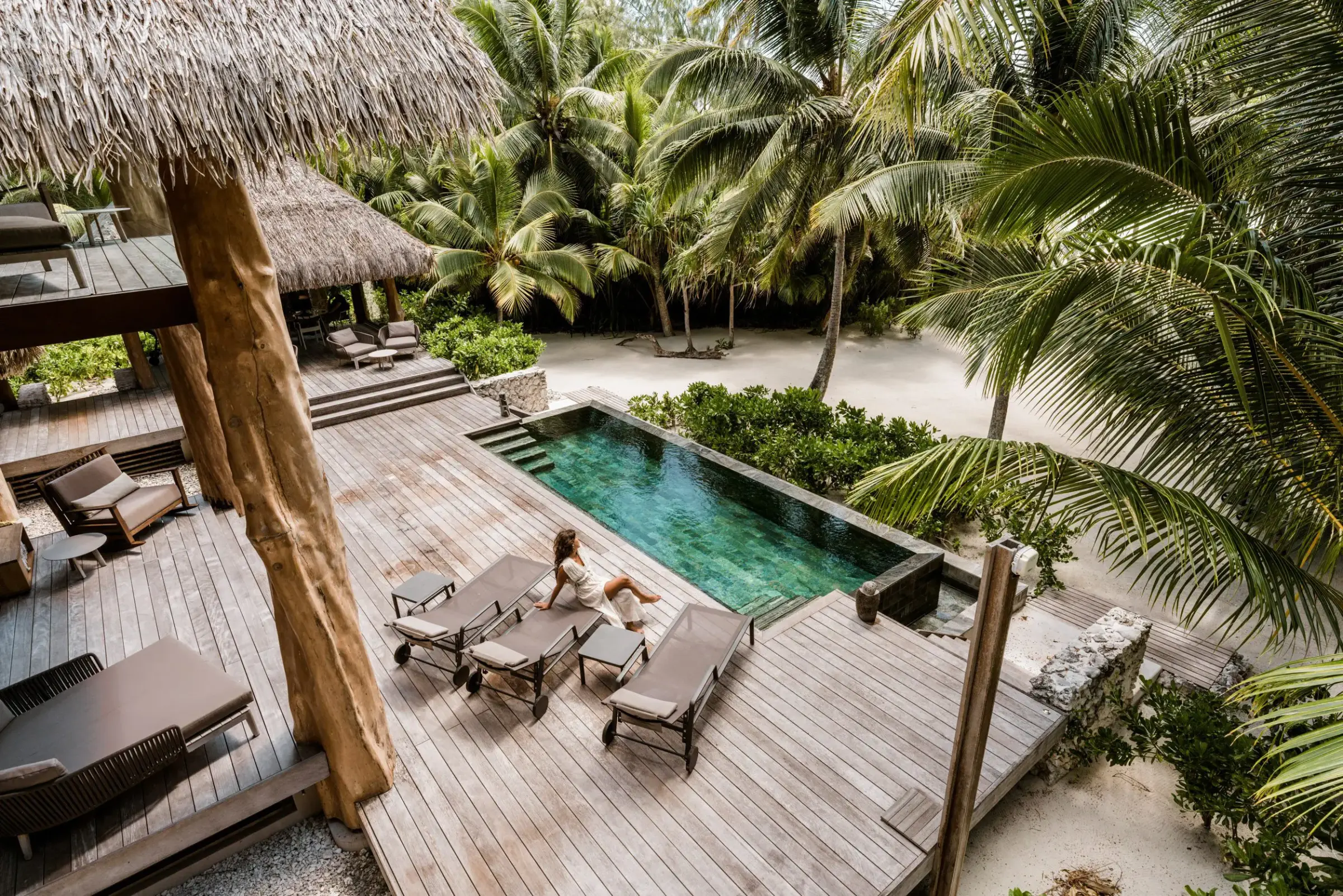
The Brando has thirty-five villas in total: thirty one-bedroom villas at roughly 96 square meters, four two-bedroom villas at around 168 square meters, and a single three-bedroom villa at 246 square meters on its own stretch of beach. Every villa, regardless of size, comes with a private plunge pool, an outdoor bathtub, a media room, and butler service.
The one-bedroom villas suit a couple perfectly: private, self-contained, close enough to the water that the sound of it never fully disappears. For multi-generational groups or larger families, the two- and three-bedroom villas offer a proper dining table, a second floor, and enough separation that a grandparent's early bedtime and a teenager's late one never have to collide. The resort's single three-bedroom villa, the largest on the island, tends to become the unofficial gathering point for a family staying across several villas at once, a place for one long dinner together before everyone scatters back to their own quiet.
Where to Eat, Where to Disappear
The Brando runs three restaurants and two bars, a meaningful density for an island resort this size. Beachcomber Café handles breakfast and lunch in the open air, close enough to the beach that sand is never far from your feet. Les Mutinés, the resort's fine dining room, takes its theatrical cues from Mutiny on the Bounty itself and its menu from chef Jean Imbert. Nami, an eight-seat teppanyaki counter, is the most intimate table on the island, worth requesting early given how few chairs there are.
Bob's Bar — named for Brando's longtime factotum — keeps things looser: rum drinks, a club sandwich, sand underfoot. Te Manu, tucked into the palm canopy above the lagoon, is where I send people at sunset who want a drink and nothing on their schedule after it.
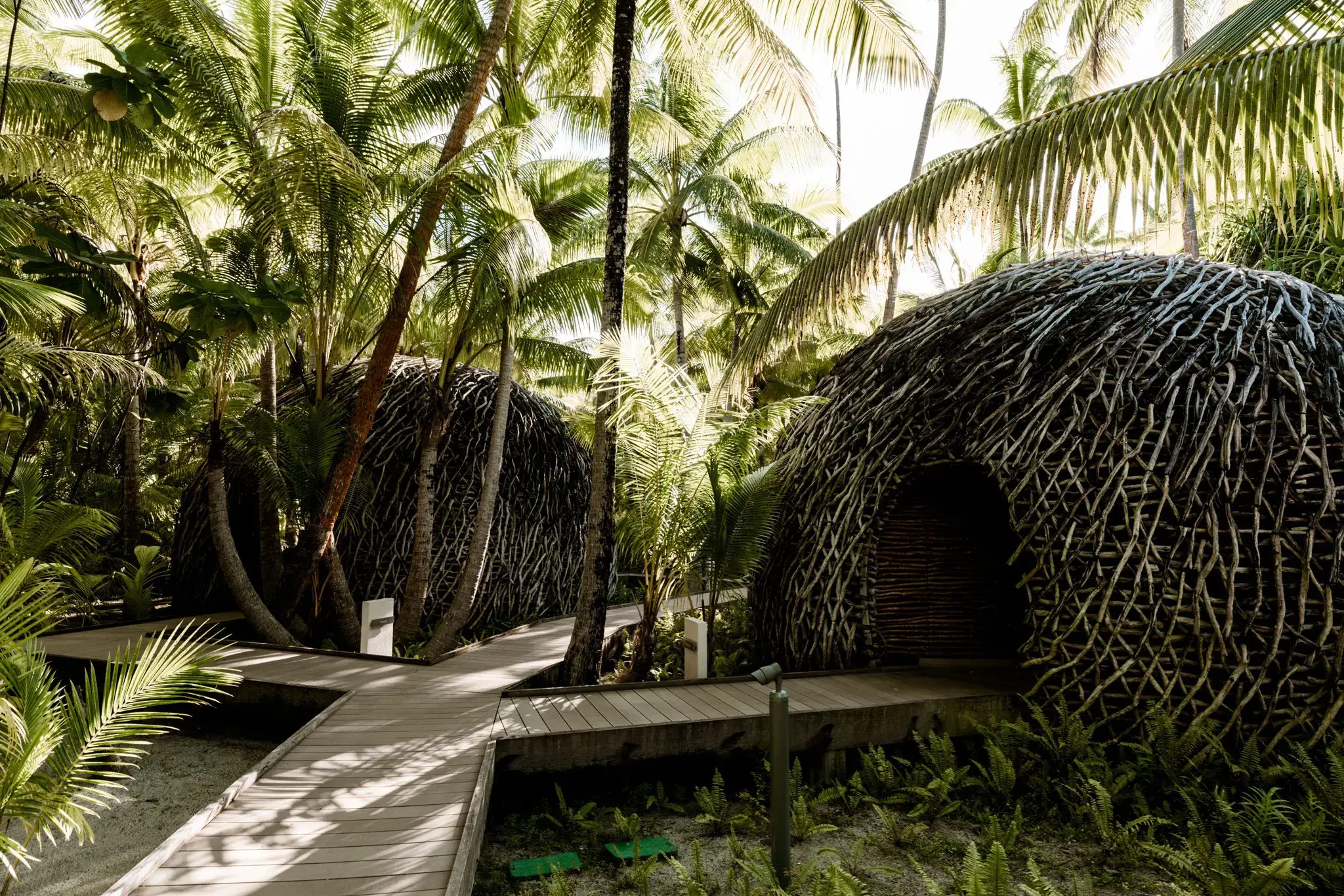
The Varua Te Ora Polynesian Spa sits around a lily-covered pond at the center of the resort, its signature treatment space, Fare Manu, built as a treetop bungalow shaped like a bird's nest — you lie suspended above the canopy, the lagoon visible between the palms, listening to something that isn't quite silence and isn't quite sound. Treatments draw on Polynesian tradition rather than an imported menu, and one is included daily with most villa packages.
Families and the Lagoon School
One mother told me her son spent an afternoon with the naturalist guides at The Brando, learning to identify reef fish by sight. Eight months later, he was still correcting people at dinner.
The Brando runs a supervised program called the Lagoon School for children ages six to twelve, built around the same conservation work that shapes the rest of the atoll: reef walks, junior naturalist sessions, and hands-on time with the resort's marine and sustainability team. It gives parents a genuine, unhurried few hours, and it gives children something better to bring home than a suntan.
This Private Island Is Not for Everyone
Not every traveler falls in love with this island. It is not a destination for anyone who wants a lively social scene, nightlife, or shopping within reach. There is one runway in and out, thirty-five villas total, and long stretches of the day where the loudest sound is the reef. Travelers used to a resort that performs energy back at them can find the first day here disorienting rather than relaxing.
I once arranged a stay for a couple accustomed to busier European resorts — the kind with a pool bar that never quiets. They spent their first evening unsure what to do with themselves. But by the third day, they had stopped checking their phones. The ones who fall hardest for The Brando want unhurried time without an agenda and privacy that feels real rather than staged. When that is your goal, few places compare.
Planning Your Stay at The Brando
Rates typically begin around $3,700 per night on the all-inclusive plan for two travelers, rising toward $6,000 or more per night for a family in one of the larger villas. A villa-and-breakfast-only rate is available for travelers who prefer to arrange dining themselves. Air Tetiaroa flights run twice daily from Papeete, and arrival and departure times are built around that schedule rather than the other way around, so guests arriving on late international connections typically overnight in Tahiti before flying out to the atoll the next morning.
The Rimatu'u day visit, villa category, and dining reservations at Nami all reward early attention — arranged before arrival, not requested on the ground. I handle all of this so it's seamless, day-of.
What stays with people afterward is rarely the lagoon, the ruins, or the food. It is the specific, uncommon sensation of an island having nothing else to do that day but hold them. Couples remember the quiet. Families remember the room to run. Grandparents remember being included rather than accommodated. And in their own way, each of them carries away the same thing Marlon Brando came here for in the first place.
When you're ready to explore Tetiaroa, or simply want to talk through what this kind of trip might look like, connect with me below. We can start planning from the first conversation.
Frequently Asked Questions
Do I need to fly through Tahiti to reach The Brando?
Yes — all guests fly into Papeete's Faa'a International Airport first, then board Air Tetiaroa for the twenty-minute hop to the atoll. There is no other way in. If your international connection lands late, plan to overnight in Tahiti and fly out to the resort the following morning.
What makes Rimatu'u different from a standard excursion?
Rimatu'u is Marlon Brando's own island within the atoll — the one he kept for himself, separate from the resort. What makes it worth arranging is the privacy: a full day reserved entirely for your party, no shared boat, no overlapping group. It sits outside the standard excursion program and needs to be confirmed before you arrive, not requested at check-in.
Is The Brando genuinely all-inclusive?
Rates start around $3,700 per night and cover accommodation, meals across all five dining venues, non-motorized water sports, and a daily spa treatment with most villa categories. A villa-and-breakfast-only rate also exists, running roughly $800 to $1,000 less per night — worth considering only if you plan to eat lightly, since the dining is genuinely part of what makes the atoll worth the flight.
What age does the Lagoon School accept, and is it supervised?
The Lagoon School runs for children ages six to twelve and is fully supervised by the resort's marine and sustainability team. Sessions center on reef walks, junior naturalist activities, and hands-on conservation work — closer to a field program than a kids' club.
Is The Brando a good fit for multi-generational travel?
It is one of the better options I know for groups spanning generations. The villa categories scale from one bedroom to three, the private motu can hold everyone without forcing anyone to keep pace with anyone else, and the overall rhythm of the atoll — unhurried, unscheduled — tends to work across age ranges in a way that busier resorts do not.
How far in advance should I book?
As early as possible. The resort has only thirty-five villas, and the Rimatu'u private day, Nami reservations, and specific villa categories all fill well ahead of the season. I arrange these before a client's arrival rather than on the ground — the difference in what you actually get is significant.
What is the sustainability story, and does it affect the guest experience?
The resort holds LEED Platinum certification and runs on seawater air conditioning, solar power, and coconut-oil biofuel — cutting energy use by roughly ninety percent. None of it is performed for guests: the systems run quietly, the villas breathe cool without a sound, and the conservation work folded into the Lagoon School means children leave the atoll knowing something real about it.
Plan your next journey with
Alina MorettiMy name is Alina Moretti, and honestly, travel chose me before I ever chose it. As a fully licensed travel advisor with LuxRally Travel, I still think about my first trip to Cuba. The coral reef. A coffee plantation in the middle of nowhere. The ocean so blue it didn't look real. That was years ago and I can still feel it. That's the thing about certain moments — they just stay. I became a travel advisor because I couldn't stop collecting those moments, and along the way I realized I was good at creating them for other people too. I personally visit every destination I recommend. I have relationships and access that open doors most travelers never even see. And every trip I design starts with one question: what do you want to feel? I work with couples, families and solo travelers who are done with ordinary and ready for the kind of travel that changes something in them. If that sounds like you, let's connect.
Related Stories
The New Science of Living Longer: 5 Anti-Aging Retreats Redefining Luxury Wellness
Five destinations where longevity, biohacking, and genomic medicine have become the most compelling luxury on earth. From Swiss clinics to Mediterranean retreats, the future of travel is biological.
By Alina Moretti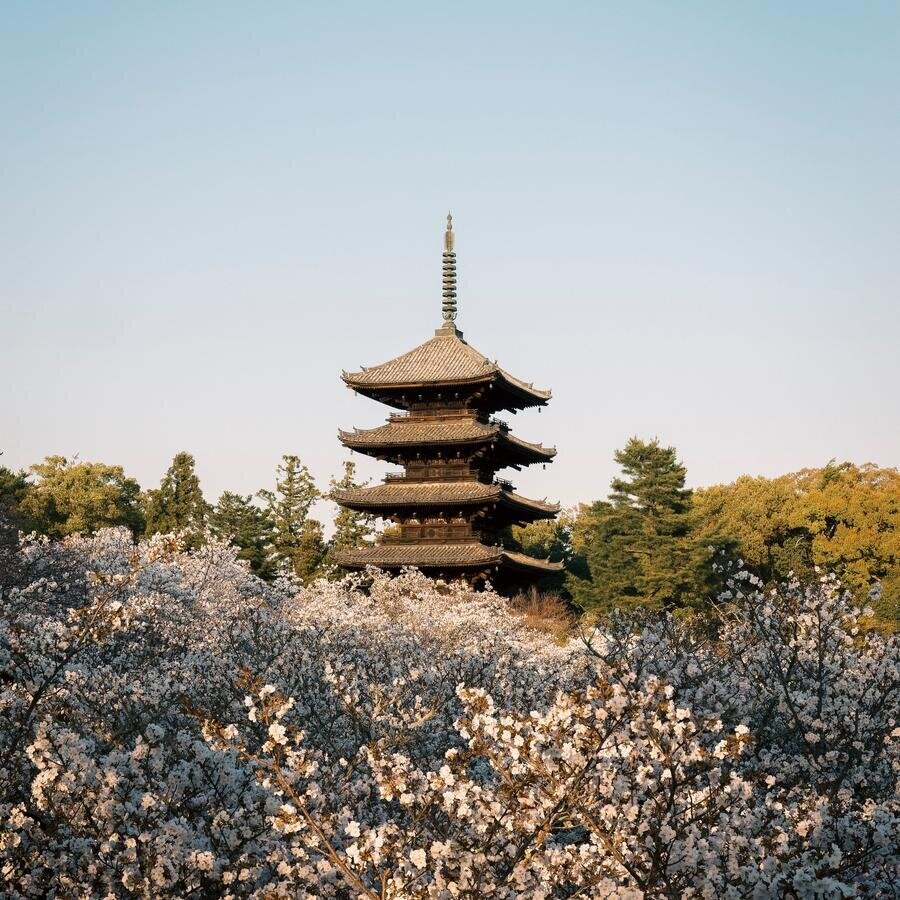
Listening to Incense: A Private Kōdō Ceremony at Aman Kyoto
A private kōdō ceremony with one of Japan's Living National Treasures, arranged exclusively through Aman Kyoto. Inside a room never opened to the public.
By Alina Moretti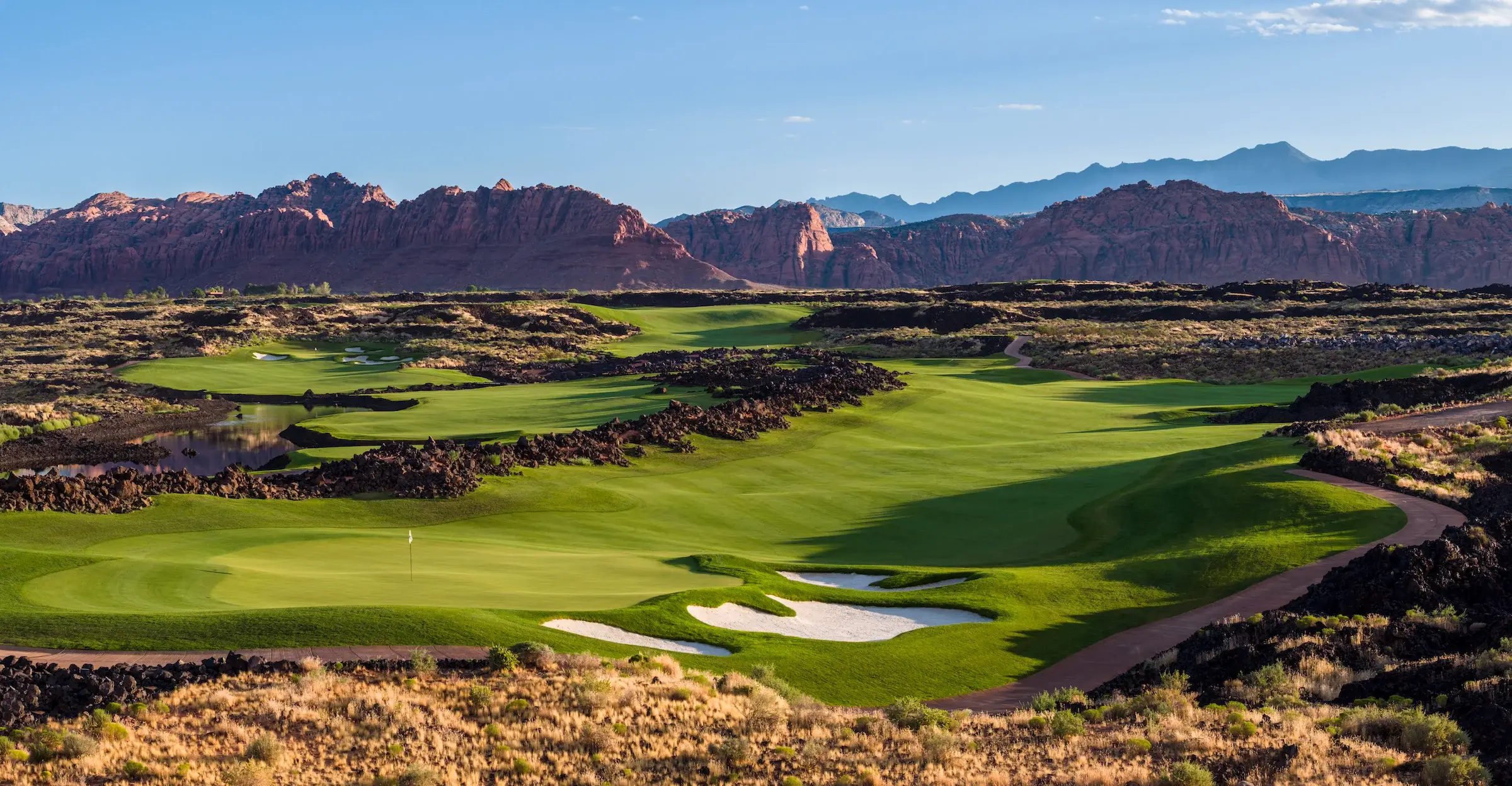
Kona Meets Sedona: Inside Black Desert Resort, Southern Utah's Luxury Escape
Deep black volcanic basalt, emerald fairways, and red sandstone cliffs that shift from terracotta to burnt sienna by the hour — Black Desert Resort shouldn't work as a landscape, but it does, spectacularly. I pulled up on an October morning and realized I was looking at something I'd never seen before in a place I call home.
By Megan Saldibar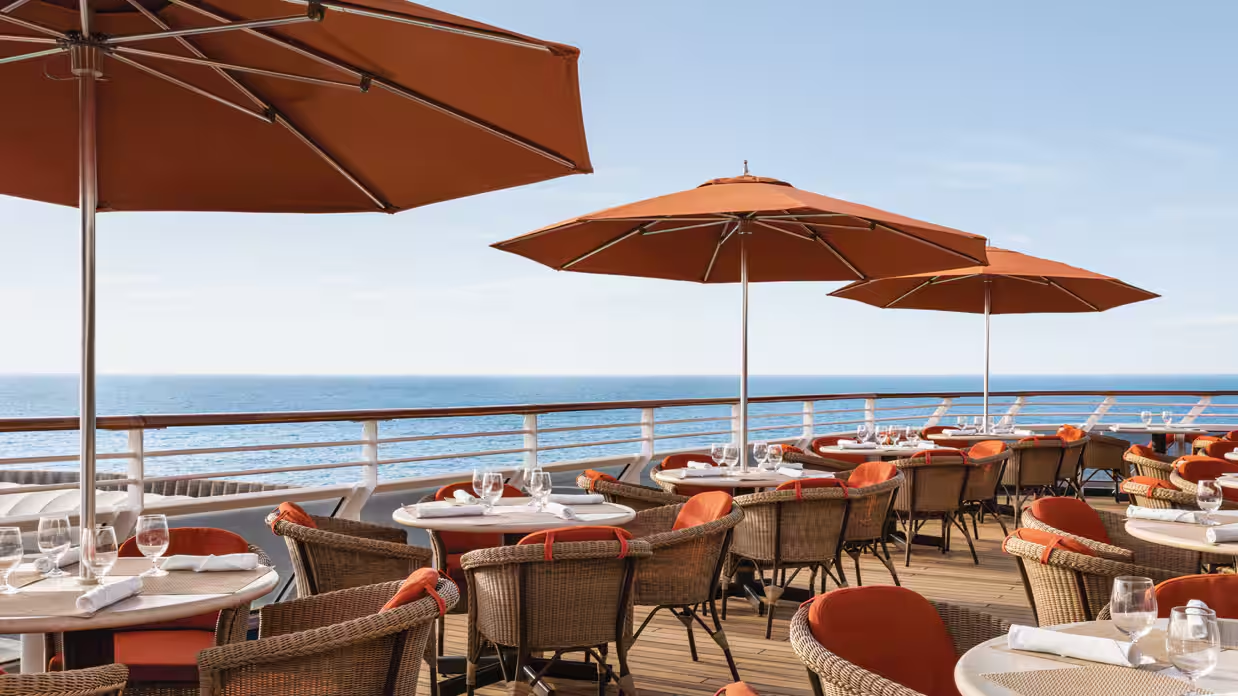
Confessions of a Converted Cruiser: How Alaska and Oceania Changed Everything
A self-proclaimed non-cruiser boards Oceania for an Alaskan voyage — and discovers that breaching humpbacks, foie gras-topped filets, and glass-smooth mornings can change a traveler's mind entirely.
By Cassie Bacon
The Lesters of Travel: Luxury Hotels Where Doormen and Butler Service Set the Standard
Inspired by Lester's character on "Only Murders in the Building," a celebration of the real-world doormen and butlers who transform luxury hotels and cruise ships into places that feel like home.
By Sarah Garza
A Tale of Two Palaces: Mandarin Oriental vs. Rosewood Vienna
I stayed at two of Vienna's newest luxury hotels, doing a split-stay experiment that revealed two completely different sides of the city. Here's the honest verdict on the Mandarin Oriental Vienna and the Rosewood Vienna.
By Emily Payne