
One of a Kind
Wieliczka Salt Mine: Poland's Underground Masterpiece
This salt mine survived wars, changing borders, and centuries of political change to become one of the most mysterious and well-preserved UNESCO World Heritage sites. Discover the best ways to experience Wieliczka.
By Gena Zak
April 16, 2026
Even after visiting Kraków's enormous underground gem, the Wieliczka Salt Mine, I've found that much like its cavernous chambers, my curiosity only deepens with every descent. What happened here during World War I and World War II? How did these elevators get here?
As a LuxRally Travel advisor and Kraków local who spent her summers growing up in Poland, I'm often asked what makes this place so extraordinary. One of my earliest memories is descending those wooden stairs as a child, clutching my grandmother's hand as the cool saline air filled my lungs. In this article, I'll share the remarkable history behind these mines and three distinct ways you can experience Wieliczka for yourself.
A Brief 7-Century History of the Wieliczka Salt Mine
Long before it became one of Poland's most visited UNESCO World Heritage Sites, Wieliczka was the quiet engine of a kingdom. Salt was once as valuable as silver, and the wealth drawn from these mines funded everything from royal coffers to cultural institutions. King Kazimierz the Great famously used revenue from Wieliczka to establish the Jagiellonian University in 1364—now one of the oldest universities in the world—cementing the mine's role as a source of national prosperity and intellectual legacy.
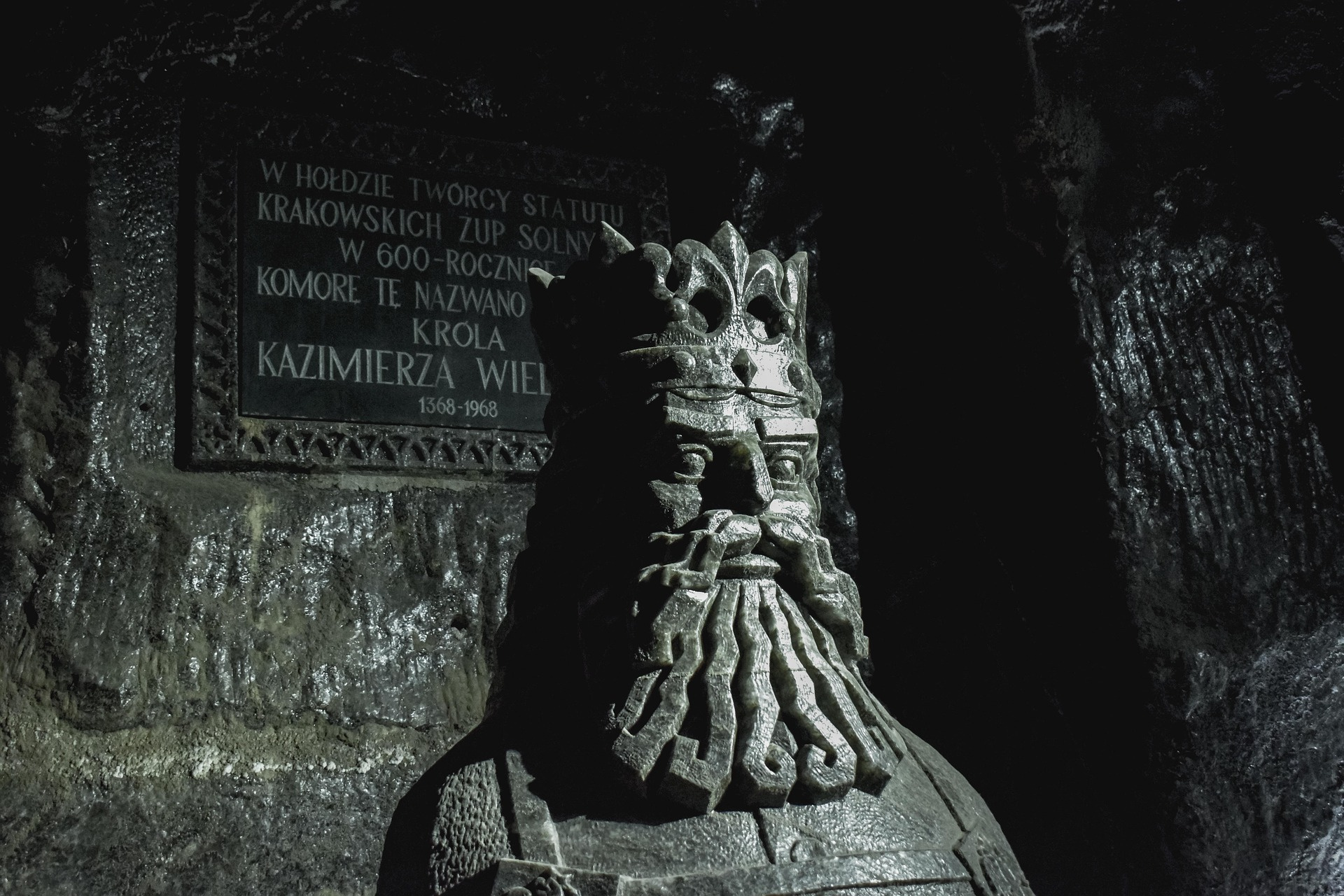
Historically, the mine was a prestigious, elite destination visited by kings, princes, and prominent figures, including Nicolaus Copernicus, Johann Wolfgang von Goethe, and Fryderyk Chopin. Organized tourist-oriented sightseeing began in the late 18th century, under Austrian rule following the partition of Poland in 1772. In the 19th century, the mine saw increasingly structured visits, with the first now-defunct tourist routes being developed. The Habsburgs invested heavily in a modern industrialized operation and even established a mining school here.
When the Austro‑Hungarian Empire collapsed in 1918, the mine finally returned to Polish hands. Its beauty and value, however, made it a target once again: in the early days following the invasion of Poland in 1939, German forces seized the mine. Atrocities of war followed. Pogroms, labor camps, and even an underground facility for manufacturing military aircraft came next. Unsurprisingly, the site also served as a storage area for stolen goods.
Post-WWII, the mine was revitalized as a state-run industrial and tourist destination under the new regime. Wieliczka, as a town, has experienced a profound transformation since the fall of communism in 1989, embracing a market-oriented, tourism-driven center that strives to honor the legacy and memory of this salt mine.
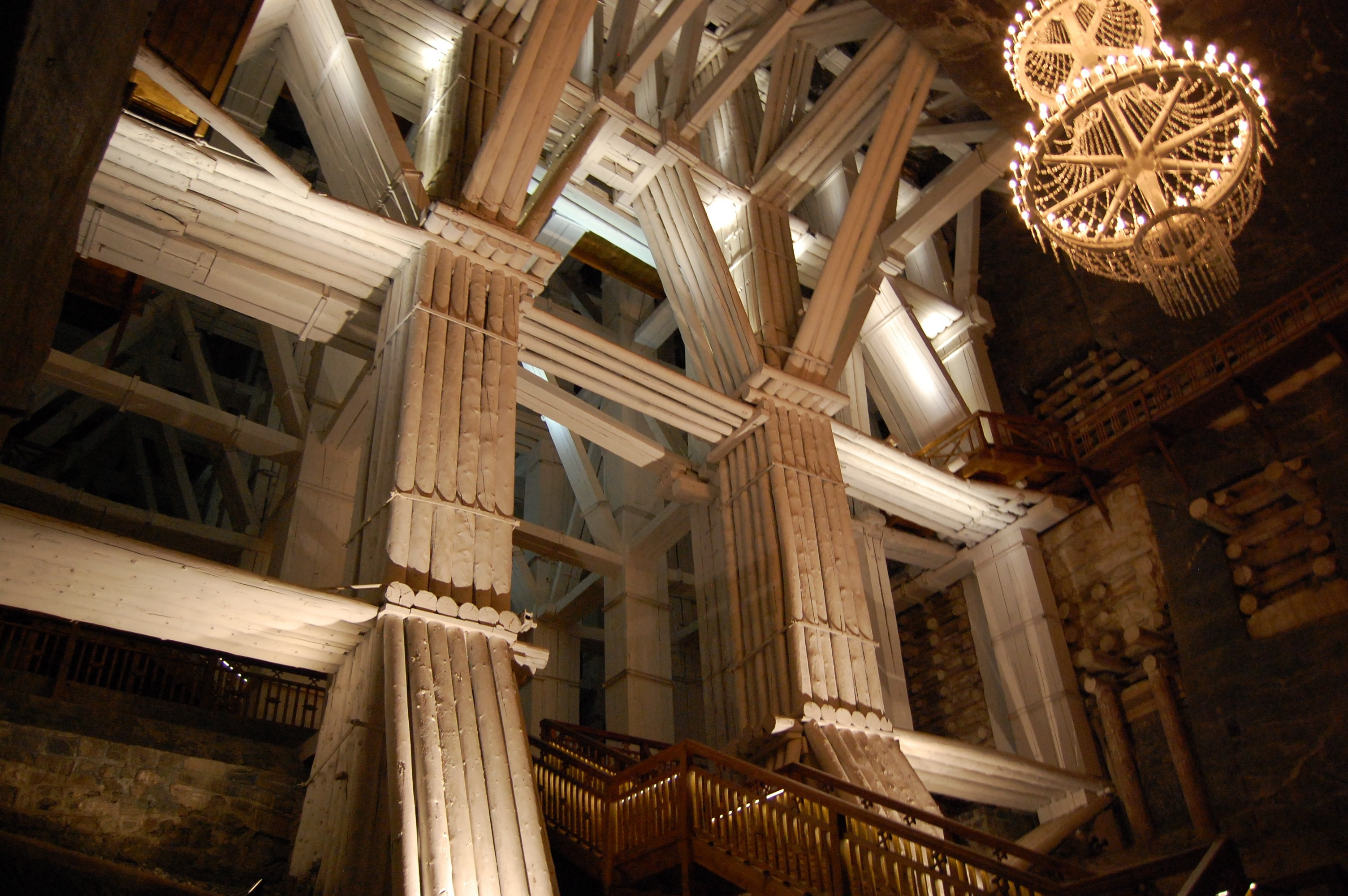
This long arc of shifting rulers underscores how strategically vital Wieliczka has always been. Its wealth placed it squarely at the crossroads of European power. For over 700 years, alongside the business of mining salt, generations of miners carved out not just tunnels but chapels, sculptures, and entire halls, transforming raw geology into a living cultural archive.
The salt mine survived wars, changing borders, and centuries of political change, emerging as one of the rare places where medieval industry, religious devotion, and artistry remain preserved in a single, continuous story.
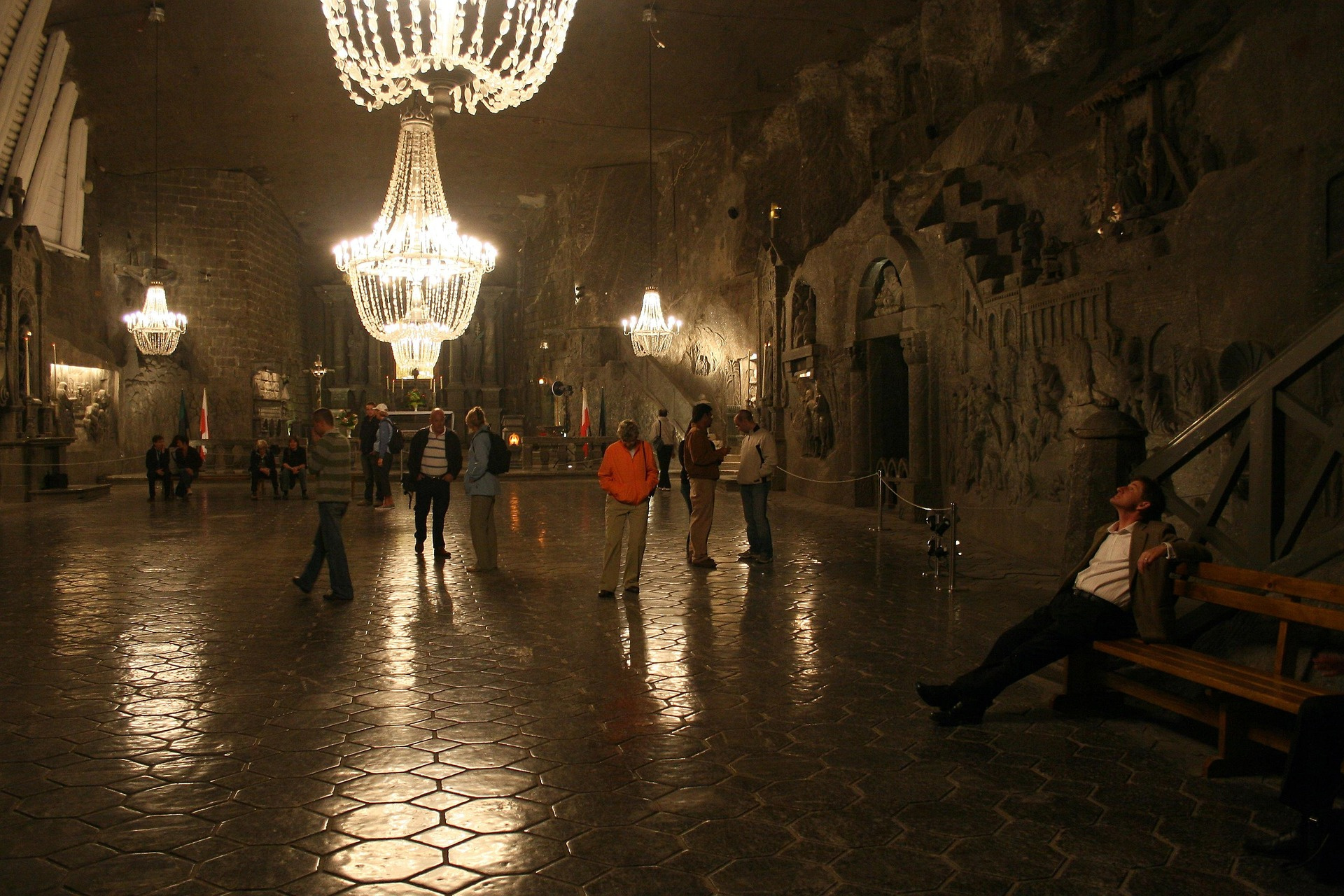
For centuries, this vast underground world has drawn travelers from around the globe, each one descending into the depths to witness its enduring wonder.
Wieliczka by the Numbers
The most remarkable part: visitors can only see about 2% of the entire salt labyrinth. Wieliczka's enormous scale is staggering — with over 245 kilometers of tunnels, 2,040 chambers across nine levels, and depths reaching 327 meters.
- 9 levels
- 152 miles of galleries
- 1073 feet at its deepest point
- 26 shafts sunk over the centuries
- 318 million cubic feet of post excavation voids carved out by hand
These numbers hint at the enormity of what lies beneath the surface—an underground world so vast that even multiple visits barely scratch the surface.
The Three Best Ways to Experience the Wieliczka Salt Mine
1. The Classic Wieliczka Tourist Route
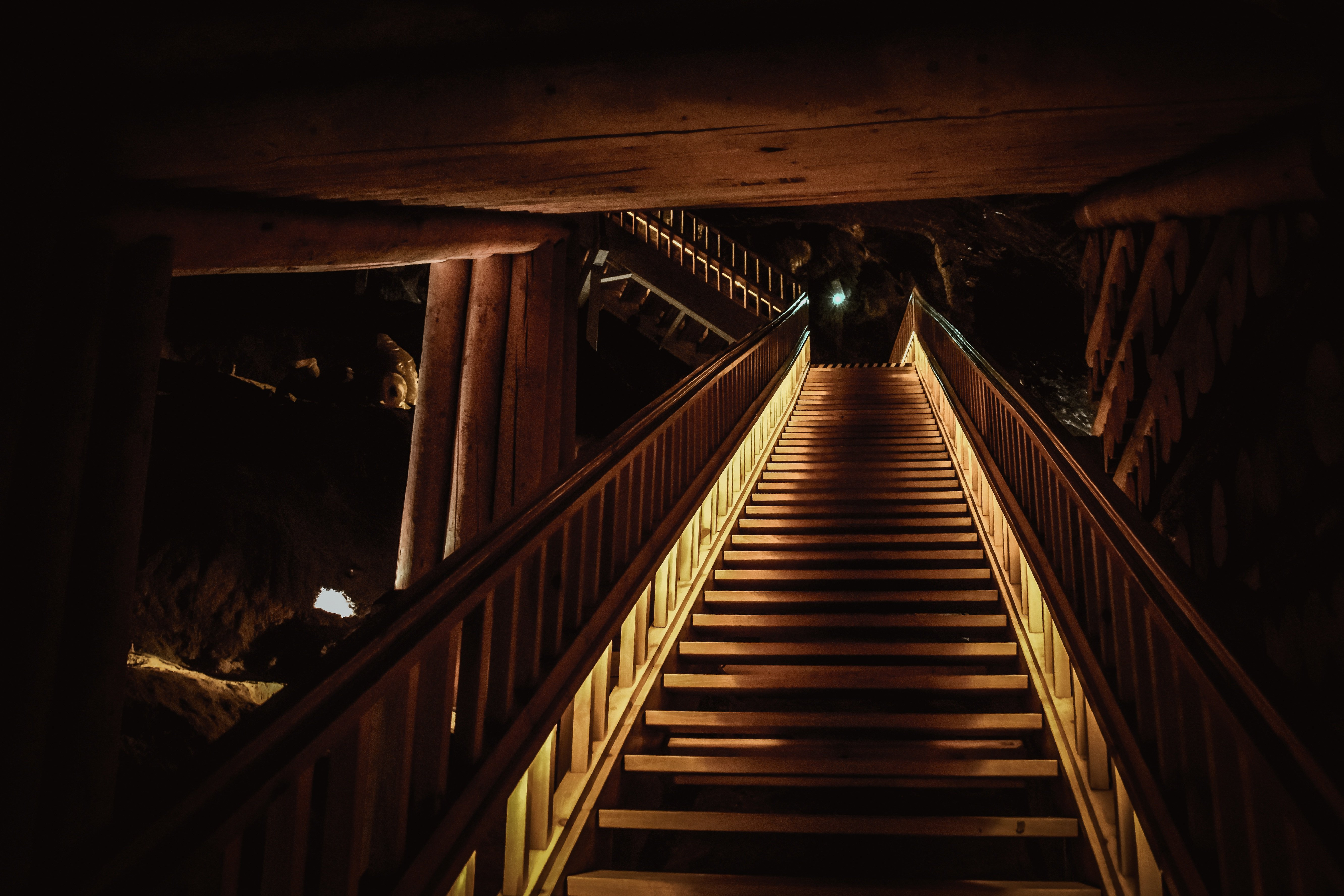
This is the most iconic way to explore the mine—and the route millions of travelers from around the world choose. You descend into the earth via a long wooden staircase and follow a guided path through illuminated corridors, underground lakes, and the breathtaking Chapel of St. Kinga. The experience is atmospheric, accessible, and ideal for travelers who want to explore the mine's most celebrated spaces.
Tourist Route by the Numbers
- 2 - 3 hr average tour time with museum visit
- 63–64ºF temperature underground
- 2.2 miles route length
- 443 ft — the depth you will reach
- Visitors descend approx. 380 steps to level I (210 ft) to enter the Mine
- The return to the surface is by lift from Level III
2. The Wieliczka Miners' Route
For those craving a more immersive adventure, the Miners' Route offers a hands-on journey into the mine's working past. You suit up with a helmet and lamp, take on the role of a novice miner, and explore more rugged, less polished sections of the underground labyrinth. It's an intimate way to understand the physicality of the work and to see Wieliczka as the miners once did—raw, dark, and mysterious.
- Starting point: Regis Shaft
- Minimum age: aged 10 or older
- Group size: max. 20 people
- Duration: 2 - 3 hours
- Closed-toe footwear with full coverage is required
3. The Graduation Tower: A Hidden Wellness Experience Near Kraków
Few travelers realize that Wieliczka is also home to a ground-level health oasis: an open-air salt inhalation experience perfect for respiratory wellness. Visitors can walk around or sit on benches in the shade of the tower, inhaling a misty, mineral-rich brine that mimics a seaside microclimate. They can also ascend for panoramic views. Visitors can also book wellness sessions, participate in respiratory therapies, or simply breathe deeply in a space unlike any other on earth. It's a serene, restorative counterpoint to the mine's dramatic history—especially for those accustomed to urban pollution.
- 50 — the number of people who can be in the Graduation Tower at a time
- 34,445 ft² — the surface area of the Blackthorn construction
- 74 ft - height of the observation tower
- 30 minutes — recommended visit duration
You don't just tour it; you feel it. The scale, the silence, the improbable beauty carved from darkness—it all lingers long after you return to the surface.
Wieliczka is more than a mine—it's a testament to endurance, ingenuity, and craftsmanship. As a must-visit destination in any Poland travel guide, it's a place where history isn't displayed behind glass; it surrounds you.
With a front-row seat to history, the Wieliczka Salt Mine invites you into a realm shaped by centuries of human hands and geological wonder. Whether you're drawn to its legacy, its artistry, or its sense of mystery, this is a destination that rewards curiosity at every turn.
Headed to Poland? I've written a guide to Krakow, Poland full of recommendations and tips for the first-time or returning visitor. Of course, as a travel agent, I am more than happy to help you plan your trip directly. Connect with me below and we can start chatting via text or hop on a quick call.

Plan your next journey with
Gena ZakGena Zak is a fully licensed travel advisor at LuxRally Travel, a Forbes Travel Guide Endorsed agency, bringing her expertise and passion for travel to readers through guides, destination inspiration, and industry insights. She blends 20+ years of hospitality management experience with a global perspective, curating elevated journeys defined by intention, access, and seamless execution. Her background in operations, guest experience, and luxury travel planning allows her to anticipate needs, streamline logistics, and deliver itineraries that feel thoughtfully designed from start to finish. In addition to her work as an advisor, Gena writes travel features that highlight the beauty, culture, and character of destinations around the world. She enjoys sharing her own adventures and offering knowledgeable insight shaped by her love of wine, hospitality, and the places that inspire her most—from the historic landscapes of Poland to the vibrant Washington, DC region. Her articles often draw from her hands‑on experience crafting luxury and approachable‑luxury bookings for clients, giving readers an insider’s perspective on how elevated travel can feel both aspirational and accessible. Her writing reflects a storyteller’s eye and a deep appreciation for meaningful, place‑driven experiences. When she’s not exploring destinations for clients, spending time in Poland, or visiting family in South Florida, Gena is likely considering her next tee time, volunteering, or invested in seasonal hobbying, all the while delighting in country living in Rappahannock County, Virginia.
Related Stories

Crystal Cruises' Ultra-Luxury Glow-Up is Making Waves (Literally)
Nobu's Japanese-Peruvian fusion at sea, butler teams who memorize your exact coffee order, and suites reduced from 800 to 600 guests for more elbow room — Crystal Cruises has quietly engineered one of the most refined ocean experiences afloat.
By Gena Zak
The 6 European River Cruise Lines Worth Knowing — and How to Choose One
European river cruising has never offered more choice or comfort. From boutique luxury to wellness-focused small-ship voyages, here's how six top cruise lines compare—and how to find your perfect match.
By Gena Zak
The Grand Tetons Are Calling: Ski Season with the Four Seasons Resort & Residences Jackson Hole
From ski-in, ski-out luxury at the Four Seasons to a hidden speakeasy bathed in moody red light, this curated roundup captures everything the discerning skier needs for the ultimate Teton Village experience.
By Amy Van Den Top
Local’s Guide to Chicago: America’s Most Underrated Luxury Family Escape
From a Chicago rooftop pool where snow falls beyond the glass, to afternoon tea that needs no occasion — this city rewards the traveler who slows down. Even after thirteen years, it's still a city that my family and I can discover anew.
By Natalia Semizarov
Multigenerational Travel Is Having a Major Moment: Here's The What, Why, Where, and How
Multigenerational trips are the fastest-growing travel trend — and for good reason. From grandparents initiating the adventure to Gen X bridging generations, families are trading scattered getaways for one unforgettable shared experience.
By Sara Ryburn
Hotel Xcaret México Review: Everything You Need to Know Before You Book
With eight distinct Casas, five adventure parks, and over 20 restaurants, Hotel Xcaret México is the Disney of the Riviera Maya. My biggest takeaway? Don't arrive unprepared.
By Alexis Dunfee