
Family Office Travel Strategy
HNW Travel Advisors are an Executive Assistant's Best Friend: The Case Against the In-House Travel Desk
For most Family Offices, managing an in-house travel desk often becomes one of the most expensive operational choices they make. Travel at this level requires access, expertise, relationships, and leverage that an assistant can't be expected to have.
By Alisha Myers
June 4, 2026
The call came in the middle of a multi-continent itinerary. A principal with back-to-back critical meetings across three time zones, a schedule with zero margin for error, and a travel desk running it all that had hit the edge of its competency. The logistics were booked. The execution had quietly come apart.
When a connection was disrupted and ground arrangements in a second city failed to adjust in real time, the in-house coordinator had done literally everything they could. The problem was having no one with the supplier relationships to make an immediate call, no leverage to move a car, a suite, or a meeting room change on short notice. The principal was left managing the problem personally — precisely what this level of infrastructure is supposed to prevent.
I stepped in after a late-night call for help. Within the hour, ground transportation was rerouted, the hotel briefed on the changes, and the principal's local contacts notified of the adjusted arrival window. The meeting held. The day recovered. But the vulnerability that created that moment, the gap between what an in-house travel desk can sustain and what a seasoned advisor can execute, was never more visible.
This is not a staffing failure. It is a structural one.
Most family offices that build a travel desk do so from a legitimate instinct. At a certain volume of travel, with multiple principals, overlapping itineraries, business and leisure running simultaneously across time zones, travel begins to feel like a management problem. And when something feels like a management problem, the instinct of a well-run family office is to hire for it. Own the function. Control the output.
The logic has three parts. Someone on staff is accountable to you, knows your protocols, and is not dividing attention across a client roster. A dedicated employee builds institutional knowledge over time — the carrier one principal refuses, the suite configuration another requires, the second adult contact on file for every children's itinerary. A single salary looks like a fixed, legible line item against commission structures and booking fees.
Each of these makes sense on paper. None of them survive reality.
Control is not the same as capability. An in-house coordinator can be accountable to you every hour of the day and still have no leverage with a hotel when something goes wrong at midnight in a city they have never worked in. Accountability without access is just proximity to the problem. Consistency is real, but fragile. It lives in one person. When that person leaves, the institutional knowledge walks out with them. You are not rebuilding a process. You are rebuilding a relationship network from zero, at your own expense, on your own timeline.
And the cost math rarely survives scrutiny. A competitive salary for someone qualified to manage travel at this level runs six figures before benefits, technology, vendor memberships, and management overhead. Then factor in what they cannot access: industry technology and training, Forbes Travel Guide endorsements, exclusive rates, luxury loyalty programs, suite upgrade paths, the supplier relationships that take years to build — and the fixed cost ends up buying you less than the alternative ever could. As for fees, my agency's philosophy is simple: no fees, ever. I make money when I do my job well.
The in-house desk does not fail because the people are wrong. It fails because the model misunderstands what travel management at this level actually requires. It is not a coordination problem. It is a relationships and access problem. Those relationships cannot be hired. They have to be built, or borrowed from someone who already has them.

UHNW Specialized Travel Advising: What the Alternative Actually Looks Like
The relationship does not look the way most people expect it to.
There is no onboarding period. No ramp time or ninety days of learning the family's preferences while real travel happens around them. When a family office brings me in as its advisory partner, the infrastructure I bring is already built: the supplier relationships, the pricing access, the 24/7 support structure, the proprietary technology that benchmarks cost and availability in real time. All of my expertise is live on day one.
The Chief of Staff or Executive Assistant becomes the single point of contact on the family office side. They send a briefing. I execute. When something changes — and in complex, multi-principal travel something always changes — I am reachable around the clock and have the leverage to act on it immediately.
That last word matters. Leverage.
A W-2 hire can call a hotel. I can move one. That is the difference between a coordinator who contacts a property and an advisor who has placed enough volume with that property, that brand, that regional director — that the call is returned differently. That suite gets held. That transfer gets arranged. That upgrade gets confirmed rather than waitlisted. None of that lives in a job description. It lives in a relationship portfolio that took years to build and is impossible to replicate by hiring a single person and pointing them at the internet.
What it gives the family office structurally is something a W-2 structure almost never achieves: redundancy without overhead. If the primary EA transitions out, that travel knowledge does not leave with them. The preferences, the history, the vendor relationships, the negotiated positioning — all of it stays on my side of the partnership. You do not start over. You brief the new hire on who to call. That is it.
The Financial Layer No One Discusses
Here is how the model actually works, in plain terms a skeptical family office manager or Chief of Staff can evaluate and take to a principal.
When a luxury hotel, cruise line, or travel supplier wants access to ultra-high-net-worth clients, the kind who book suites, not rooms, and who travel in volumes that matter to a property's annual revenue, they do not wait for those clients to find them. They build relationships with the advisors who already have them. They offer preferred rate structures, complimentary inclusions, and upgrade access to advisors who consistently deliver that caliber of client. The compensation flows from the supplier to the advisor, not from the client to the advisor.
What the family office pays is the published rate or better. Often better, because the preferred pricing tiers and negotiated inclusions I access are not available to a direct booking, a corporate travel portal, or an in-house coordinator without the same supplier standing. What the family office does not pay is a service fee, a planning fee, a consultation fee, or a retainer. There is no line item for my time. There is no invoice at the end of the year for advisory services rendered.
As one of only 63 Forbes Travel Guide–endorsed agencies globally, that designation is not a badge — it is a vetting. Forbes evaluates agencies against the same exacting standards it applies to its Five-Star properties: service culture, supplier relationships, and the consistent ability to deliver at the highest level. The endorsement unlocks access to property General Managers, suite upgrade paths, and supplier channels that are simply not available outside that network. What I bring includes proprietary pricing technology that scans hundreds of unpublished rate sources in seconds, preferred suite upgrade paths, guaranteed amenity packages, and priority handling that a direct booking will never unlock. The value of those inclusions — upgraded accommodations, complimentary transfers, dining credits, early check-in and late checkout - frequently exceeds what a direct booking would have cost in the first place.
And I offer an in-house concierge layer with every HNW trip that only elevates everything further. Every principal I work with receives complimentary VIP concierge services, including direct support from a Director of Concierge Services who connects well before the trip begins. This is not a call center. This is a named professional within the industry who ensures the principal arrives known, noticed, and already understood before they have set foot on the property. Preferences communicated. Staff briefed. The room, the pillow, the wine they prefer. All of it waiting.
The skeptical question worth asking is not how these services can be free. It is why any family office would pay for a direct booking when this alternative exists.

The Invisible Weight
The Chief of Staff or Executive Assistant who manages travel for an ultra-high-net-worth principal is not simply coordinating logistics. They are carrying something heavier. Every itinerary they send represents a personal guarantee. Every confirmation they forward is their name behind it. When a car is late, when a suite is wrong, when a connection is disrupted and the domino effect reaches the principal's morning, it does not land on a vendor. It lands on them.
That is an enormous amount of invisible weight to carry. And most of the people carrying it have never said so out loud, because in this environment, naming the pressure feels like admitting you cannot handle it.
What changes when I step in is not the accountability. The EA or Chief of Staff is still the point of contact. They are still the person the principal turns to, unless the principal wants to communicate directly. What changes is what they are standing on when that happens. Instead of being the last line of defense, they become the person who knows exactly who to call. Instead of troubleshooting alone at midnight, three time zones removed from the problem, they have someone on the other end of the line who has already started moving. The principal does not need to know there was ever a problem, because by the time it could have become one, it was already handled.
I had a Chief of Staff tell me, after the first major trip we navigated together, that she had not realized how much of her mental load had been travel until it was no longer hers to carry. She was still overseeing everything. She was still the person her principal trusted. But she was no longer the single point of failure.
The executive assistant who used to dread complex itineraries because of the exposure they created becomes the person who handles them with visible confidence. The principal notices. Not because anything dramatic changed, but because nothing went wrong.
The Transition No One Sees
The most common reason a family office does not make this shift is not skepticism about the model. It is because someone is already in the seat. The system, however imperfect, is known. And changing anything that touches the principal's daily life carries risk that most Chiefs of Staff are not eager to introduce.
That concern is legitimate. It is also based on a misunderstanding of what the transition actually requires. This is not a replacement; it is a layer that is simple to add.
The person already managing travel does not disappear. In most family offices that make this shift, the internal coordinator remains exactly where they are. What changes is what they are responsible for. They stop being the person who builds supplier relationships, negotiates rates, troubleshoots at midnight, and carries the full weight of execution ; they become the internal liaison, the person who briefs me, communicates preferences, and ensures the principal's expectations are met.
The itineraries arrive. The details are correct. The problems, when they exist, are resolved before they surface. The only visible change from the principal's vantage point is that things continue to work — with better access, better pricing, and a level of supplier leverage that no in-house hire could ever build alone.
Plan your next journey with
Alisha MyersAlisha Myers is a Forbes Travel Guide endorsed Elite Travel Advisor with LuxRally Travel. She specializes in high-complexity, high-touch travel for executives, founders, and families who require more than standard itinerary planning. Her work includes private retreats for CEOs, multi-generational travel, and family office travel programs designed around access, discretion, and seamless execution. Her writing in The LuxRally Journal reflects the same perspective. She explores destination intelligence, the private infrastructure behind ultra-high-net-worth travel, and the growing gap between what discerning travelers expect and what the traditional travel industry typically delivers. Her most widely read pieces focus on what real access looks like at the highest level, and how the right advisor can fundamentally change the travel experience. Readers often come across her work while searching for clarity in complex travel planning. Those who connect with it tend to value insight over inspiration, and execution over aesthetics. She is based in Austin, Texas and works with clients globally.
Related Stories

Family Office Travel: Planning, Booking, and Supporting, From First Call to First Trip
A practical look at how a luxury travel advisor begin working with a family office, from the first conversation and approval process to itineraries, 24/7 support and what we learn after the first trip.
By Alisha Myers
Welcome to Country: A Travel Guide to Indigenous Australia
Indigenous heritage is not another experience to add to a luxury Australian itinerary. It is the lens through which the entire country is best understood. A framework for designing journeys that create understanding rather than consumption.
By Alisha Myers
The Advisor Who Picks Up at 2 A.M. — and the Luxury Travel Agency that Supports Her
Forget Expedia; luxury travel advisors at Forbes-endorsed LuxRally Travel match or beat online prices, then add room upgrades, dining credits, and 2 a.m. rescue calls when your transfer vanishes in a foreign city. The best part? There's no charge, ever.
By Meg Johnson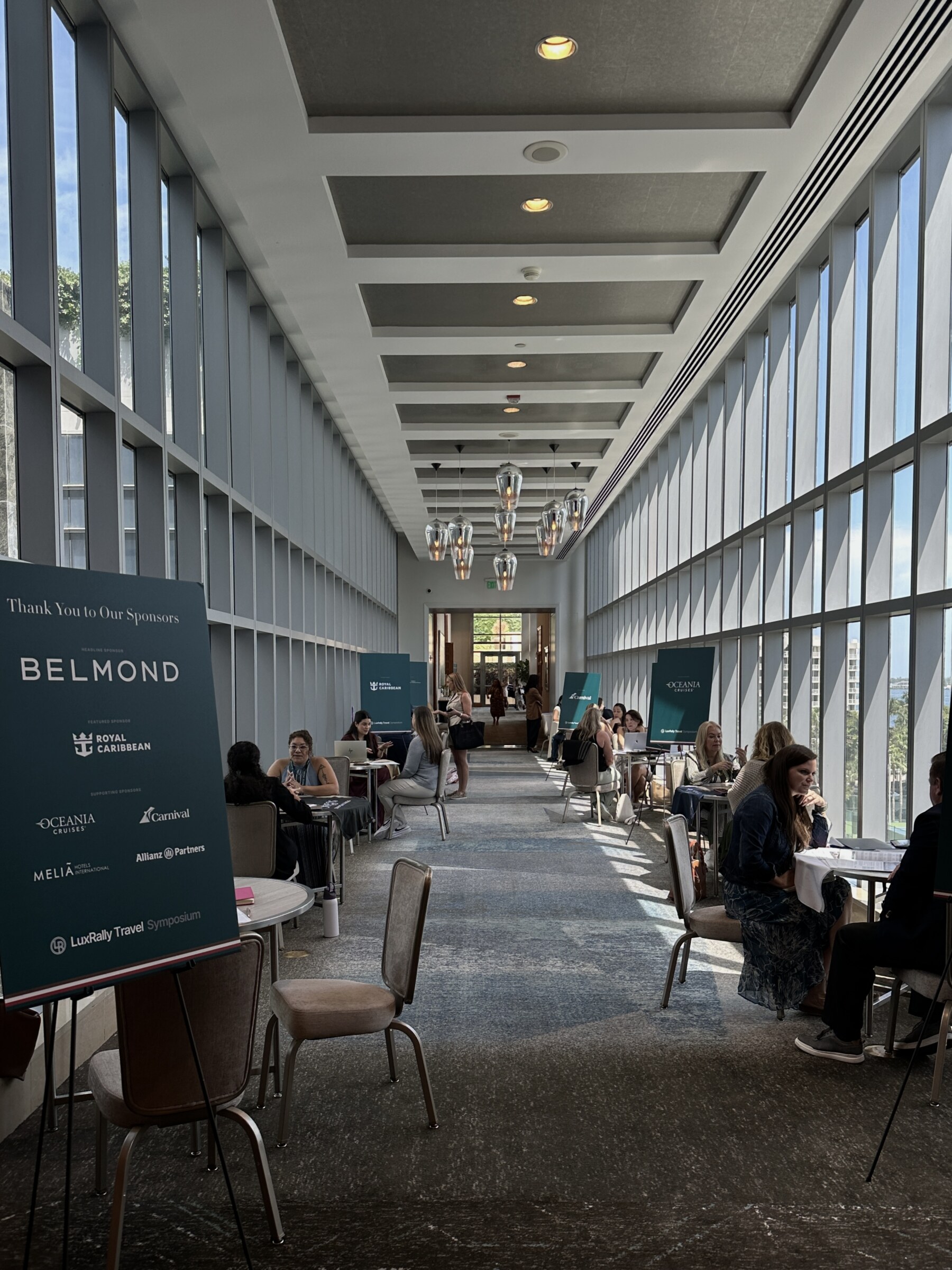
Inside LuxRally Travel's 2026 Symposium: Belmond, Royal Caribbean, and the Advisors Redefining Luxury Travel
A look inside the annual LuxRally Travel Symposium at the Four Seasons Miami Brickell. Over fifty vendors, expert advisors from across the country, and hospitality's best and brightest, all in one building.
By Theodora Green
From Oil Exec to Luxury Travel: Building a Business with Authenticity
An Australian oil and gas executive turned luxury travel advisor, Alisha Myers, shares how she rebuilt her career from the ground up—by showing up every single day and letting authenticity drive her success.
By Theodora Green
The Questions Everyone Asks a Travel Advisor — and Their Honest Answers
People ask me travel questions constantly — at school pickup, at dinner parties, via panicked Sunday morning texts. So I'm putting the answers in one place: from whether advisors are obsolete (they're not) to how I recently saved a client $1,000 on a Hyatt stay she almost booked herself.
By Carrie Hays