
Destination Guide
The British Virgin Islands Were Made for Sailing — Here's How Anyone Can Do It
Over 60 islands and cays, turquoise water so clear you can watch the anchor settle in the white sand below, and distances between stops short enough that you're never spending the whole day at sea. This is the Caribbean at its best.
By Carrie Hays
August 25, 2026
The British Virgin Islands are one of the Caribbean's most celebrated sailing destinations — they don't need much of an introduction. With over 60 islands and cays (pronounced keys), water so turquoise and clear you can watch the anchor settle at 30 feet, trade winds that actually show up, and short distances between stops so you're never spending the whole day at sea, this is the Caribbean at its most functional — beautiful without being complicated.
But there's a lot happening right now that affects how you plan your trip.
New regulations have reshuffled the BVI yacht charter game. British Virgin Islands resorts have been rebuilt and repositioned. And if you're thinking about combining a USVI and BVI trip, there are things you need to know before you book.
This guide covers everything you need to know before visiting the British Virgin Islands, so I can help you plan a trip to these incredible islands that feels like a vacation the moment you decide you want to go.
Why a BVI Yacht Charter Is the Best Way to Experience the British Virgin Islands
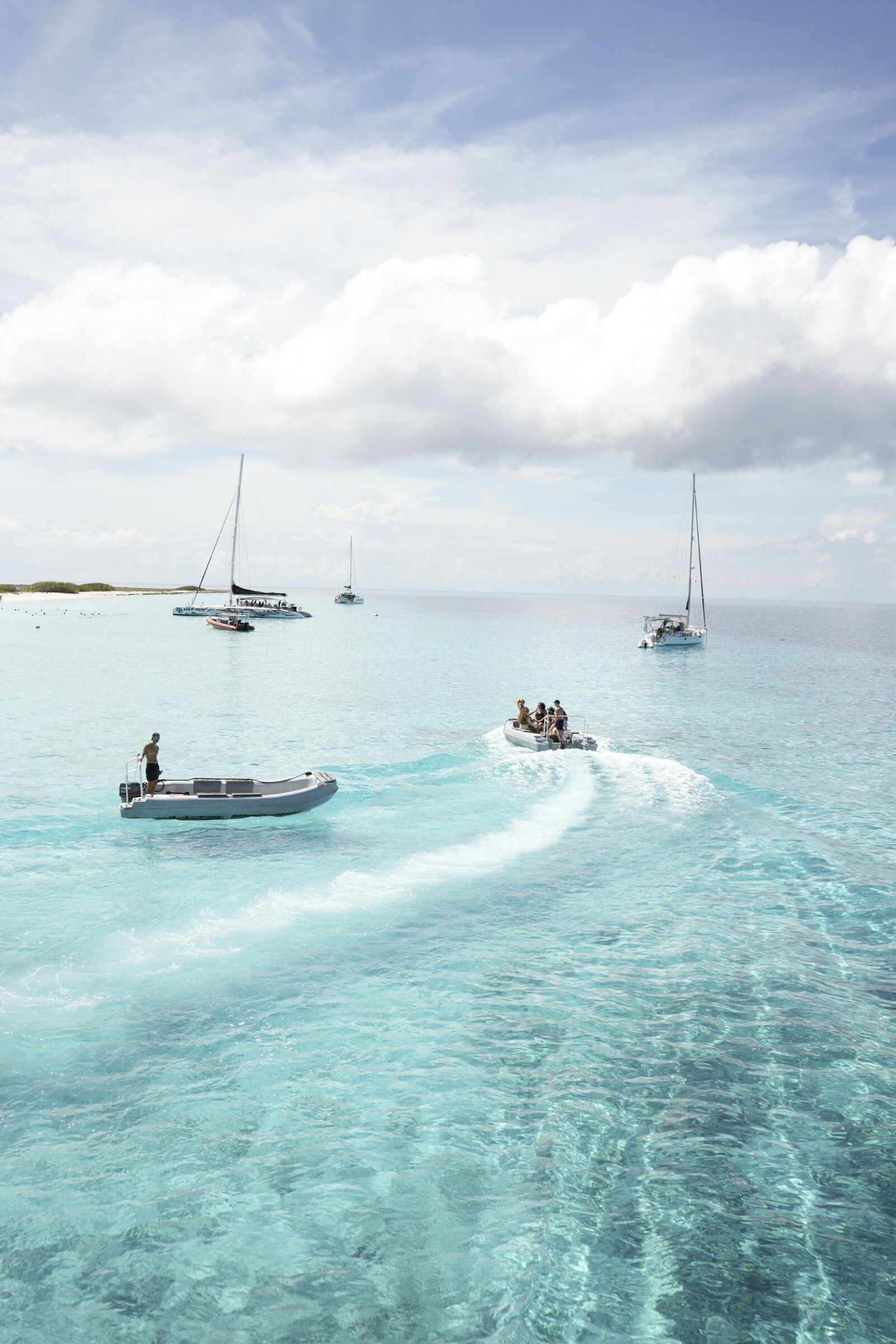
The BVI has great resorts. But here's the thing: the BVI is an archipelago. There are over 60 islands and cays, most of them uninhabited, and the best spots aren't connected by roads or shuttle buses. They're separated by water. A resort gives you one beach, one pool, one set of views. A charter gives you a different anchorage every morning.
The distances between islands are short enough that you're rarely sailing more than an hour between stops. The trade winds are steady and predictable. The waters are protected, not open ocean. The BVI was practically designed for this format, which is why it has the most developed charter infrastructure in the Caribbean.
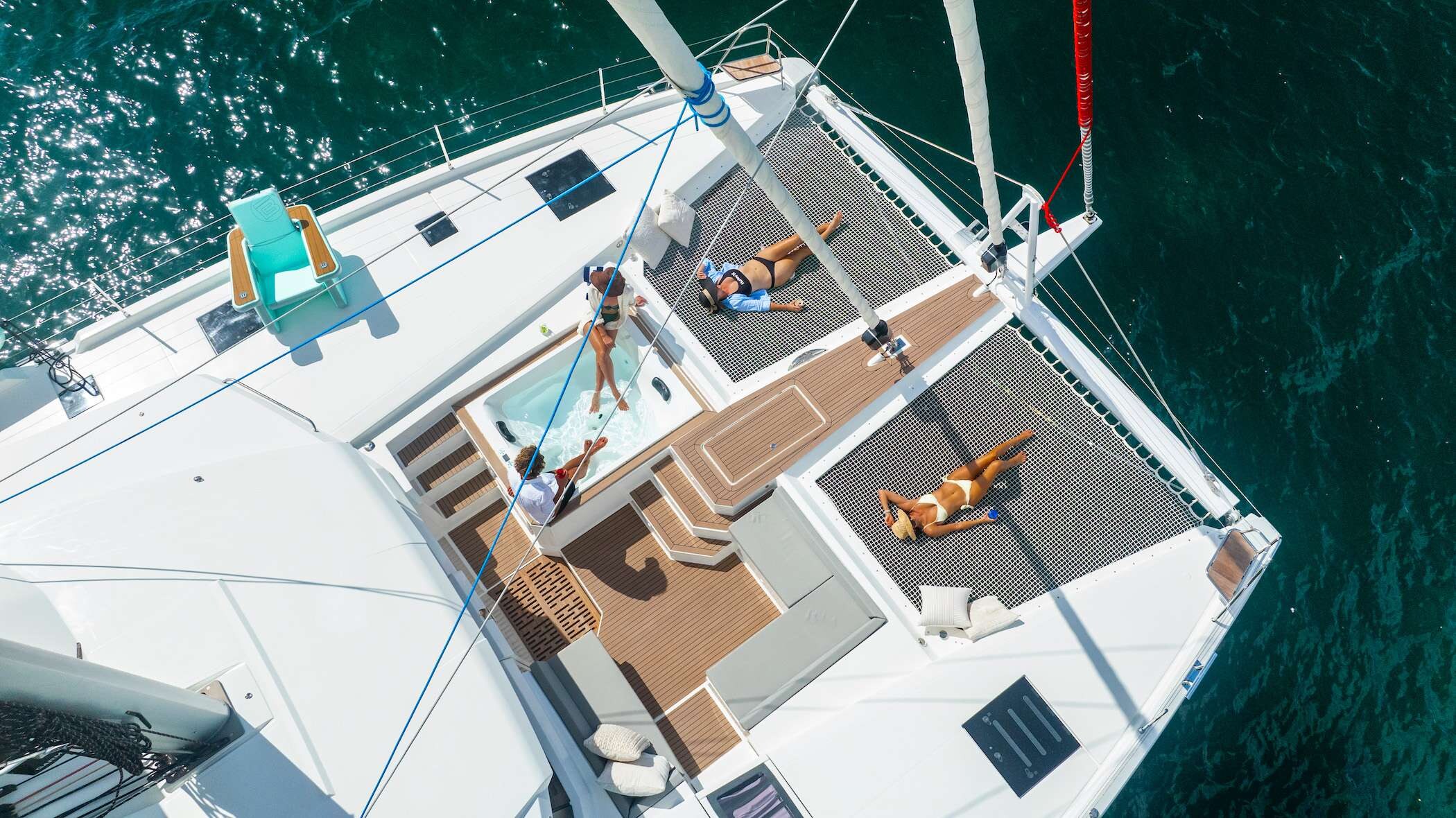
On a crewed charter specifically, the experience compounds in a way that land-based travel doesn't. You wake up anchored in a calm bay. Your chef has breakfast ready. You snorkel off the swim platform, paddle around in a kayak, then pull up anchor and sail somewhere else for lunch. No packing, no checking in, no fighting for chairs by the pool. The boat is your hotel, and the hotel moves.
The other thing a BVI charter gets you is access. The best beaches in the BVI don't have resorts on them. Sandy Spit is a tiny sandbar with no facilities and nobody on it except the people who anchored nearby. The Caves at Norman Island require arriving by boat. The Bubbly Pool on Jost Van Dyke is a short hike from the only anchorage. These places exist almost exclusively for people on the water.
If a charter doesn't fit the budget or the group size, a land-based stay at one of the better resorts is genuinely good. But trust me on this: you'll spend most of your day trips wishing you had slept on the boat. Either way, matching the format to your group is where I usually start the conversation — charter and land-based stays solve very different trips, even in the same destination.
One thing first-timers miss: the BVI is a British Overseas Territory. You need a valid passport to enter, even if you're arriving from the USVI. Make sure everyone in your group has theirs before you travel. It's a small detail until it's not — which is why I confirm this with every group I send to the BVI well before departure day.
BVI Charter Crossing Rules (2026): What You Need to Know Before Booking
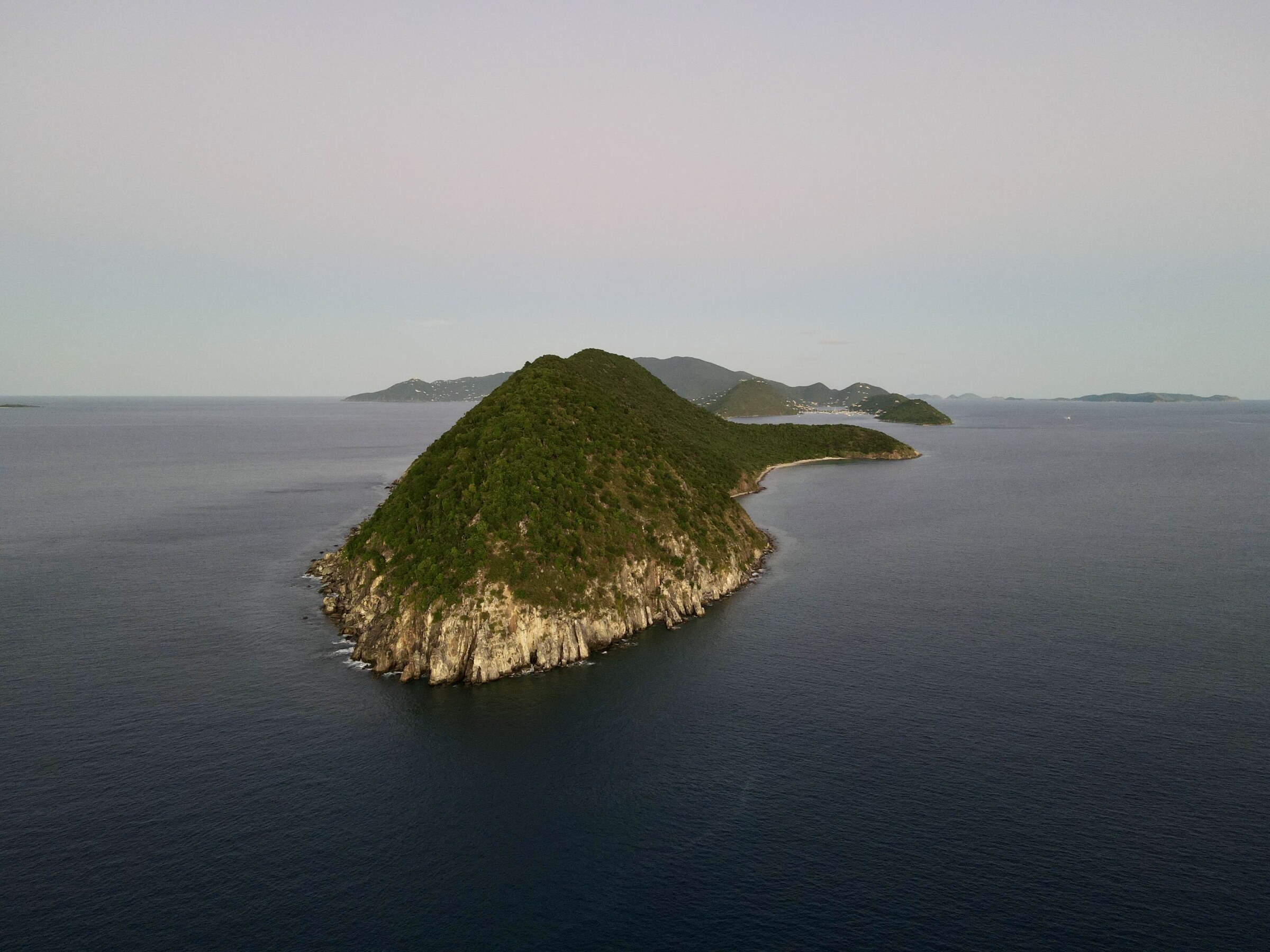
As of June 1, 2025, the BVI government implemented new regulations on foreign-based charter yachts operating in BVI waters. The practical effect: charter boats based in the USVI can no longer freely cross into the BVI the way they used to.
Here's what changed:
- USVI-based charter yachts are now limited to 7 total charter entries or pickups in the BVI per year
- They face a maximum stay of 60 consecutive days in BVI waters
- Licensing fees for foreign yachts increased by as much as 6,000% in some categories, making regular BVI visits economically unworkable for many
BVI-based yachts picking up guests in the USVI are now limited to just 4 pickups or drop-offs per season, and they cannot spend more than 15 days per month in USVI waters.
The industry has already responded. Several major USVI-based charter management companies relocated their fleets to BVI marinas for the 2025/2026 season rather than navigate the new restrictions.
What this means for you: If your plan was to fly into St. Thomas, board a charter, and cruise over to the BVI, your trip could be disrupted if the yacht is USVI-based. The solution is simple and something I can handle for you: book a BVI-based, BVI-licensed, BVI-flagged yacht. Those boats operate under no such restrictions and have full access to every anchorage.
You can still fly into St. Thomas and take a ferry or water taxi to meet your BVI-based yacht at its marina. It adds one transfer, but it's seamless when arranged in advance, and I help plenty of groups do it this way every season.
BVI Charter Options: Catamarans, Motor Yachts, and the Captain-Only Option
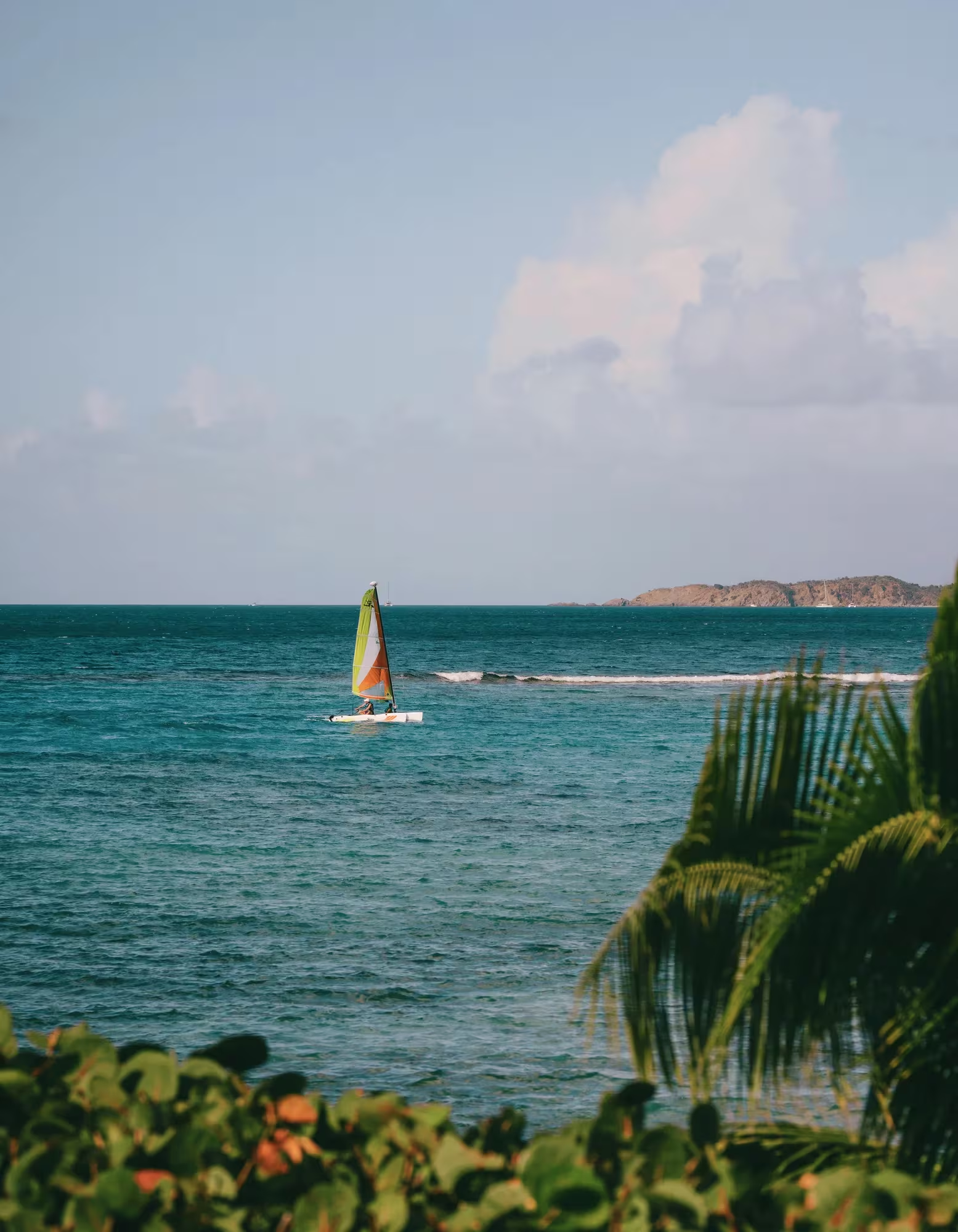
The BVI has the most established charter infrastructure for sailing in the Caribbean, with real options at every level:
Crewed Catamarans — The sweet spot for most groups: stable, spacious, and all-inclusive, with one price covering the yacht, crew, meals, drinks, water sports gear, fuel, and cruising permits. Budget $25,000–$100,000+ for a week on a catamaran sleeping 6–10 guests, typically with a captain and chef (many now include a steward too). The chef sends a preference sheet before the trip, so every meal is tailored to your group. You wake up anchored somewhere, have breakfast on deck, snorkel, swim, repeat — it's the least stressful vacation format I know of.
Motor Yachts — More ground covered, more privacy, more elevated service — at a cost. Most charge a base rate plus an Advance Provisioning Allowance (APA) of 25–40% of the charter fee, covering fuel, food, beverages, and running costs. Best for groups wanting to push further each day, truly private anchorages, or a more yacht-hotel-style experience.
Skippered (Captain-Only) Charters — A middle ground between bareboat and a fully crewed experience: an expert captain handles navigation, anchoring, local knowledge, and safety, while you provision and cook yourselves, or dine ashore. The BVI is set up wonderfully for that, with a different restaurant available most nights. A good fit for groups who want a more hands-on trip at a lower price point than a full crew.
Bareboat — Best for experienced, certified sailors ready to handle everything themselves. The BVI is one of the best bareboat destinations in the world, thanks to protected waters, well-marked anchorages, and forgiving distances — though most charter companies will want proof of sailing experience or certification before handing over the keys.
Gratuity, standard across all crewed formats, runs 15–20% of the charter cost, given directly to the crew in cash or via payment app on the last day.
The Best BVI Islands to Visit: Where to Go When Sailing in the Caribbean
Tortola
Tortola is the largest island and the main hub — Road Town is where most ferries arrive and where the major charter bases are located. Most visitors treat it as a starting and ending point rather than a destination in itself, which is mostly the right call — but there are a few things worth doing before you cast off. Sage Mountain National Park offers hiking through what remains of the original Caribbean rainforest. Long Bay Beach on the north shore is wide and swimmable with reliable surf. The Callwood Rum Distillery in Cane Garden Bay is one of the oldest working distilleries in the Caribbean and worth a stop.
Virgin Gorda
Virgin Gorda is the one everyone comes for, and the reason is The Baths — giant granite boulders tumbled into formations along the southern shore, creating tidal pools, sea grottoes, and a cave trail that connects several small coves. Arrive early. By late morning the beach is crowded, and by midday it'll be a different experience entirely.
For visitors on boats, there is a remote area you can navigate to called Fallen Jerusalem — a destination similar to The Baths, but without the crowds.
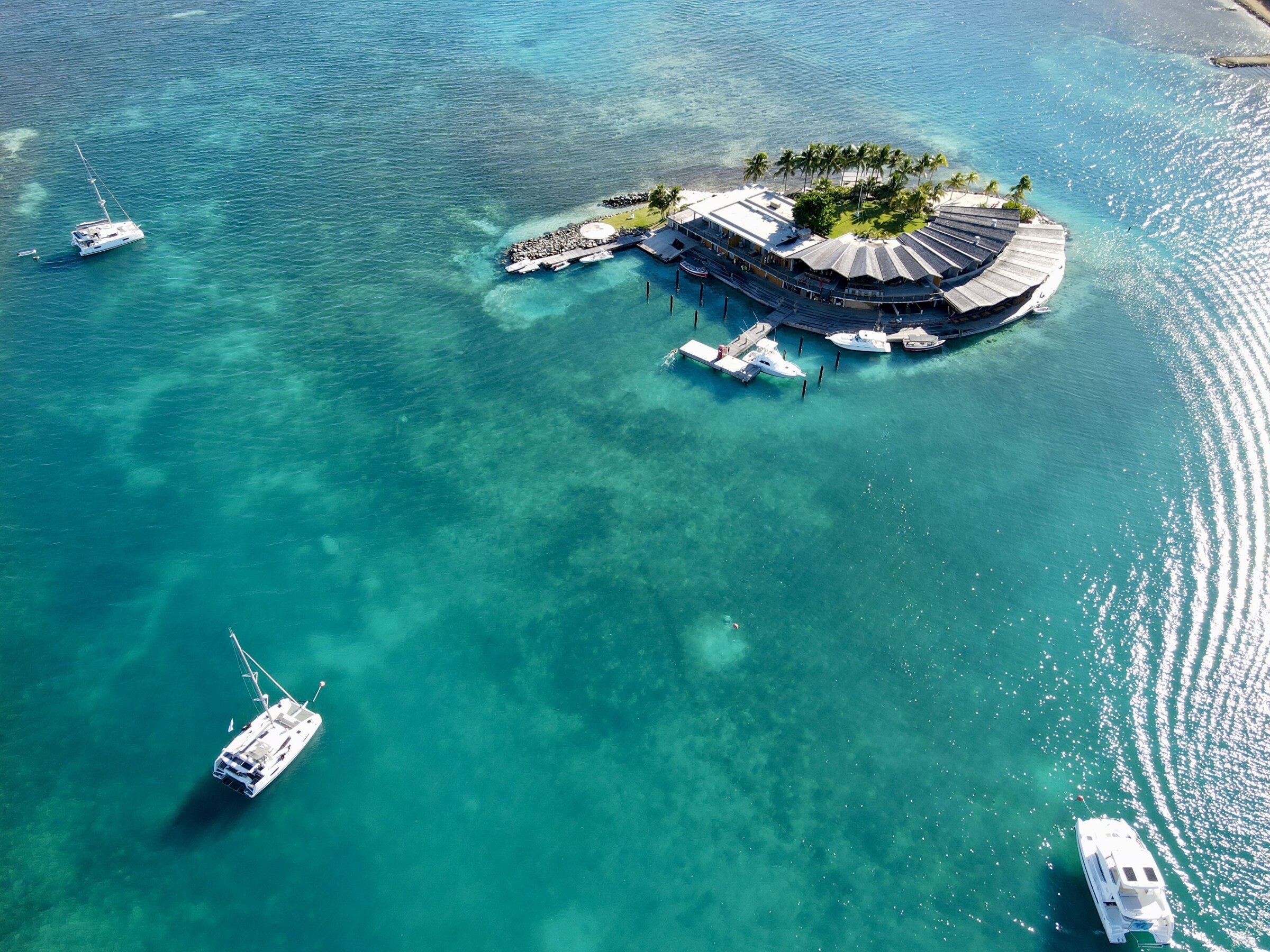
The island's north end is a different world. North Sound is one of the most sheltered natural harbors in the Caribbean, and it's where you'll find Bitter End Yacht Club, with a full marina, sailing lessons, and direct water access to Eustatia Reef for snorkeling. Saba Rock sits just inside North Sound, recently rebuilt and noticeably more polished than its previous incarnation — think proper cocktails and a kitchen that's actually trying, not just a dive bar with a view. The local tarpon feeding that happens at dusk is also a genuine spectacle and a tradition for anyone anchored nearby.
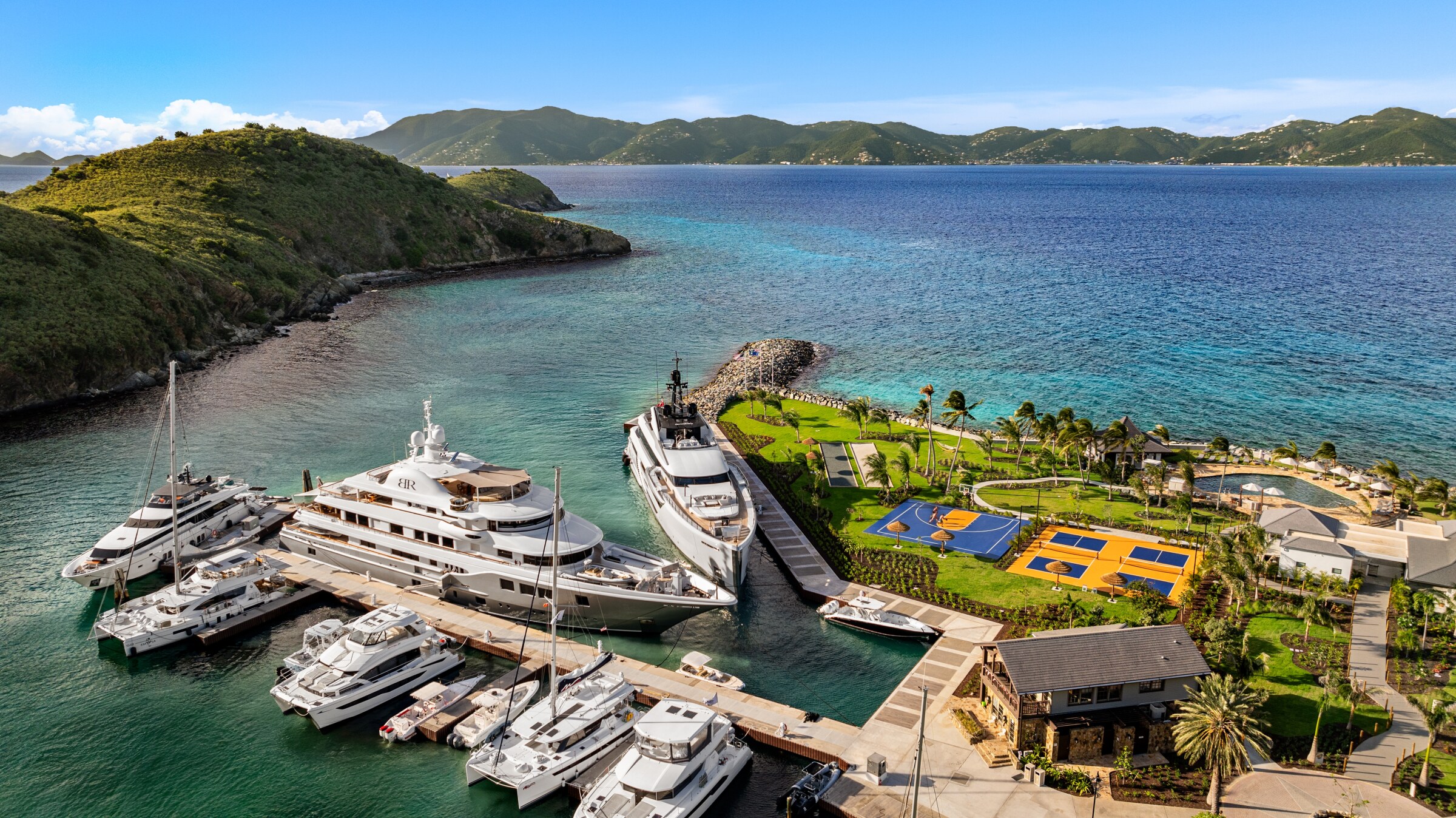
Oil Nut Bay is on the eastern tip of Virgin Gorda, accessible only by boat or helicopter — which is either a dealbreaker or the entire point. It's a 300-acre private resort community with villa rentals, Fendi-furnished interiors, private pools, personal chefs, and a beach club. Charter guests can pull up for a beach club lunch; worth doing at least once, even if you're not staying.
Jost Van Dyke
Jost Van Dyke has only a few hundred year-round residents and an impressive number of beach bars per square mile. The ferry from West End Tortola runs daily to Great Harbour and takes about 25 minutes.
White Bay is the main draw. The Soggy Dollar Bar has been here since the 1970s and claims to be the birthplace of the Painkiller cocktail. The "soggy dollar" name comes from the fact that there's no dock, so guests swim ashore with their cash. Whether or not you care about the cocktail's origin story, it's a genuinely great beach and a fun stop. Foxy's in Great Harbour is the other institution, with a large outdoor stage and a reputation for holding parties that attract sailboats from all over the Caribbean.
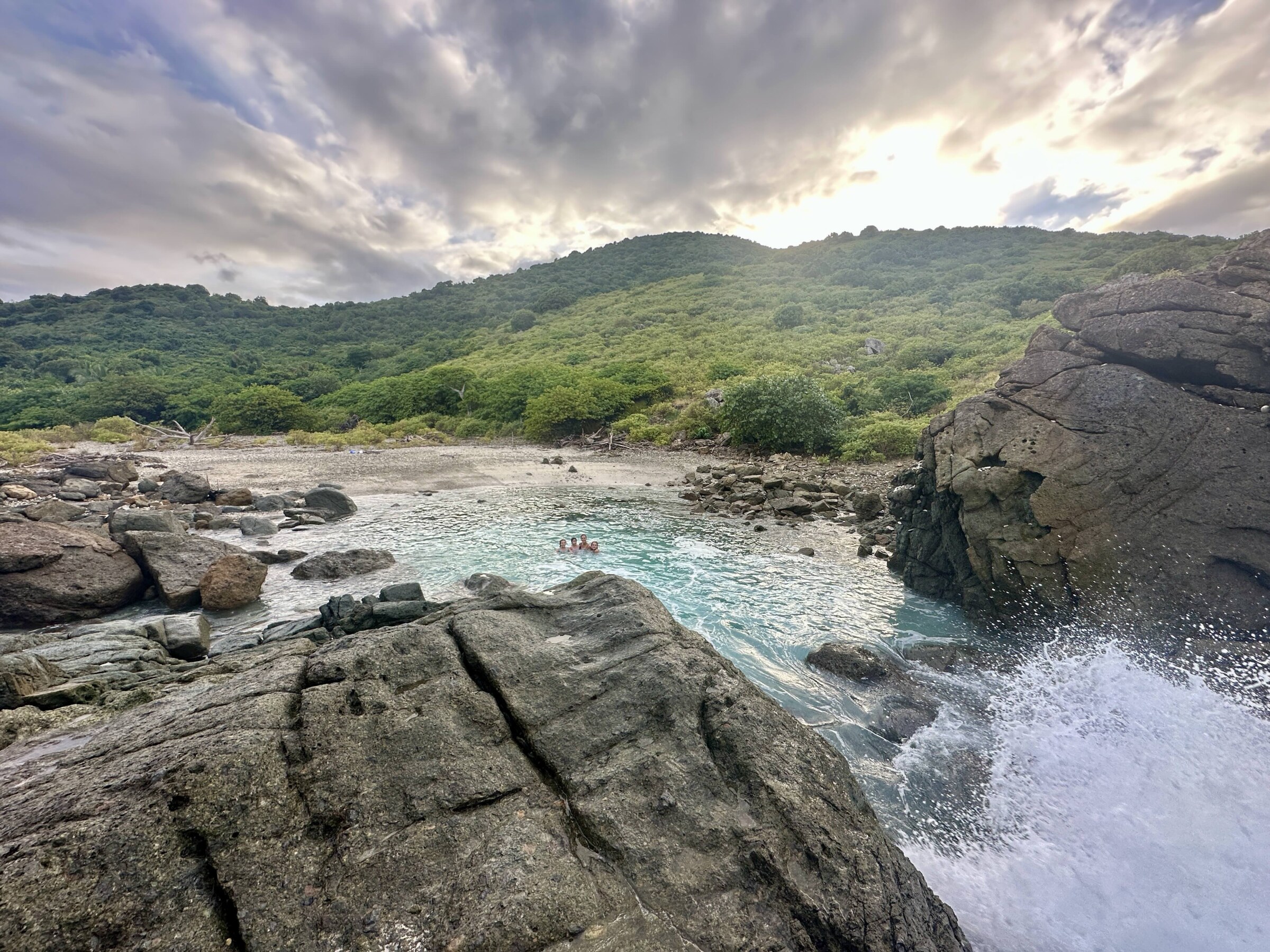
The Bubbly Pool is a natural tide pool tucked into the rocks on the north end of the island near Diamond Cay — when the swells are right, the water churns into something like a natural jacuzzi. Worth the short hike from Foxy's Taboo, and one of those things that sounds gimmicky but actually delivers. Our kids still talk about it two years later.
Norman Island
Norman Island is often described as the inspiration for Treasure Island, and whether or not that's historically accurate, the pirate lore fits the vibe. The Caves at Treasure Point offer the best snorkeling in the British Virgin Islands outside of a dedicated reef dive. The caves consist of three interconnected sea caverns with fish life, shafts of light cutting through the openings, and enough space to swim through without feeling cramped. On a clear morning before the day-trippers arrive, you'll have them nearly to yourself.
The Willy T, a retired Baltic trading vessel converted into a floating bar and restaurant, is anchored in the Bight on Norman Island. By afternoon it becomes the liveliest spot in the channel. Jumping from the top deck is apparently a rite of passage.
Anegada
Anegada is the outlier. It's flat, remote, made entirely of coral and limestone, and sits about 14 miles north of Virgin Gorda. Getting there requires the longest sail between islands (about 2.5 hours) or a short charter flight from Tortola. Most itineraries skip it because of the distance, but Anegada is my favorite island in the BVI.
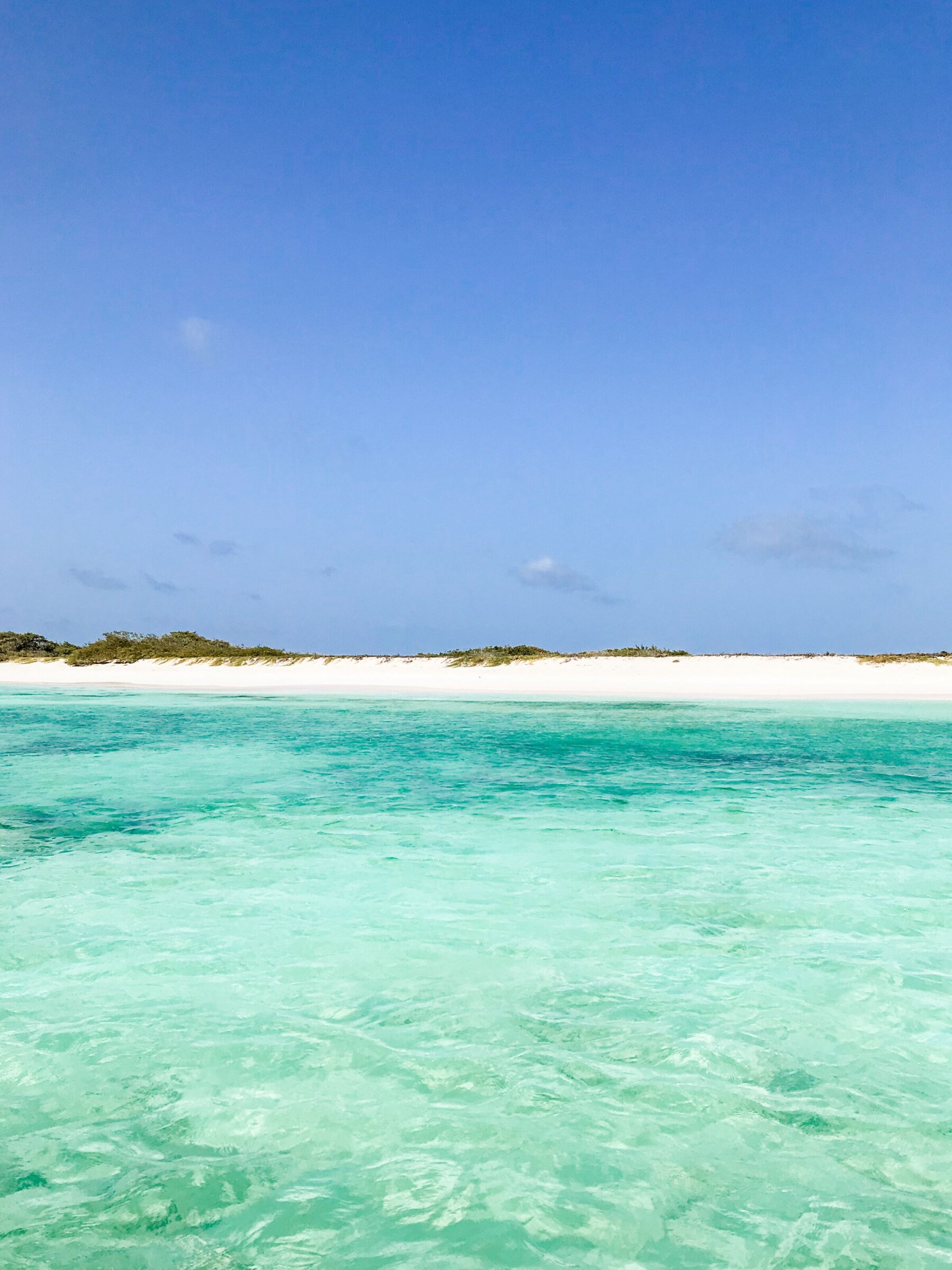
The reef system around Anegada is one of the largest barrier reefs in the Caribbean and has claimed more than 300 shipwrecks over the centuries, making it one of the best snorkeling and diving spots in the British Virgin Islands. The flamingo colony at Flamingo Pond has been growing steadily. And the lobster is the real reason to come: fresh, simply prepared, and served at places like Cow Wreck Beach Bar and Anegada Beach Club. You'll place your order in the early afternoon, then arrive at the restaurant and be served within 20 minutes or so.
Cooper Island
Cooper Island is a short sail from Road Town and an easy day stop on most charter itineraries, easy enough that some groups skip it, which is a mistake. Cooper Island Beach Club is the standout: an eco-resort running entirely on solar power, with a rum bar stocking more than 280 rums and a microbrewery producing the first craft beer brewed in the BVI. The rum list alone is worth an afternoon. The snorkeling at Haulover Bay on the eastern side of the island is among the best near-shore snorkeling in the islands.
Other Islands Worth Knowing
The BVI has dozens of smaller stops that don't need a full day but are worth building into an itinerary.
Salt Island, just south of Cooper Island, is home to the RMS Rhone, a Royal Mail ship that sank in 1867 and remains one of the best wreck dives in the Caribbean, with parts of the hull shallow enough for snorkelers as well.
Peter Island is known for its resort, but the anchorages stand on their own. Deadman's Bay is one of the most scenic, quieter beaches in the BVI; Little Harbour offers a calm stern-tie anchorage right off the sand.
The Dogs, a small cluster of uninhabited islands between Tortola and Virgin Gorda, are worth a morning stop. George Dog has some of the best, least-crowded reef snorkeling in the territory.
Marina Cay, off Tortola's northeast tip, is a low-key half-day stop with a small resort, a bar and restaurant, and good snorkeling right off the beach.
Sandy Spit and Sandy Cay, near Jost Van Dyke, are small sandbars with clear water and nothing else. Sandy Spit is the classic version: drop anchor, swim over, do absolutely nothing for an hour. Sandy Cay adds a short interior hiking trail.
Fallen Jerusalem and The Boulders, near Virgin Gorda, share The Baths' dramatic granite formations with a fraction of the crowd — worth sailing to if The Baths are packed.
The Best Resorts for Land-Based Stays
If a charter isn't your thing, the BVI still has strong resort options, though the inventory is smaller than other Caribbean islands.
Rosewood Little Dix Bay on Virgin Gorda is the premier land-based option. Laurance Rockefeller built the original resort here in 1964 on 500 acres, and Rosewood has polished it into one of the best properties in the Caribbean.
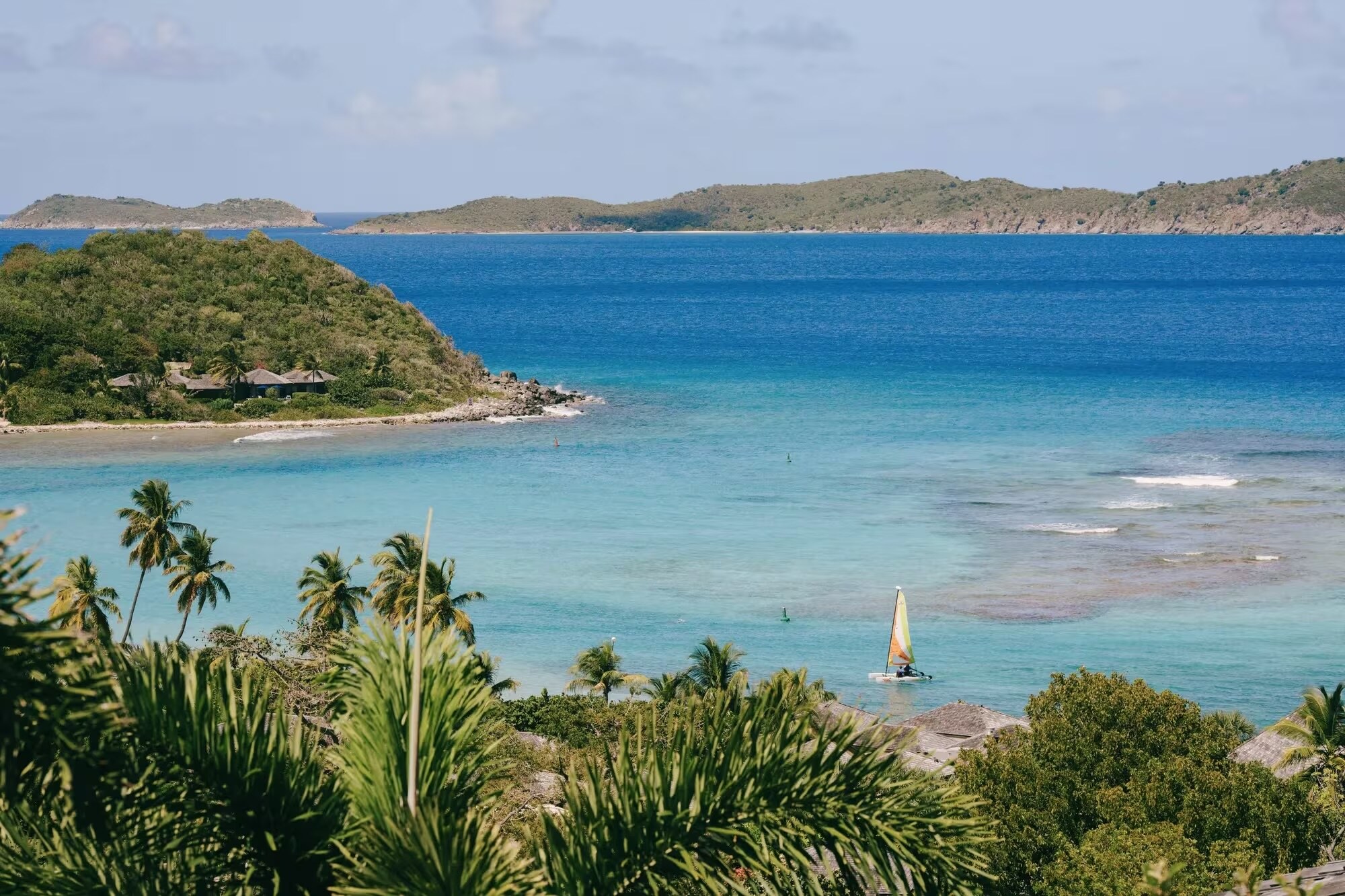
Peter Island Resort sits on its own 1,800-acre private island directly south of Tortola, with five beaches, a marina, a spa, and accommodations from beachfront suites to a three-bedroom villa, reached by scheduled ferry from Road Town. It's genuinely secluded in a way most "private island" resorts overstate.
Guana Island takes exclusivity further: just 18 rooms and villas across 850 acres, a maximum of 35 guests at any time, and seven beaches. Operating since 1934, it has the kind of worn-in character newer luxury properties spend millions trying to manufacture.
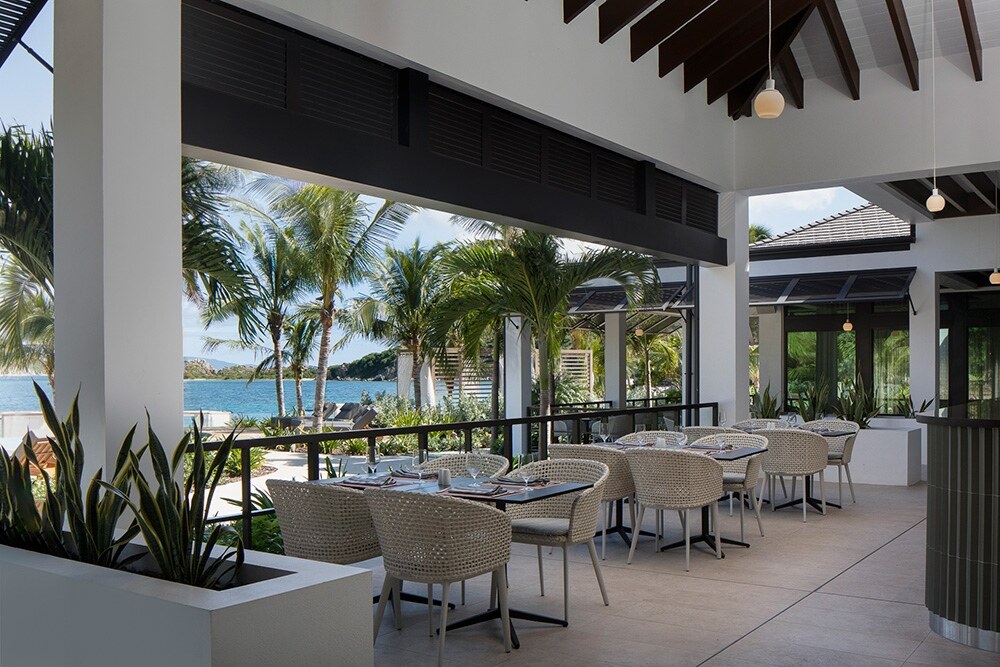
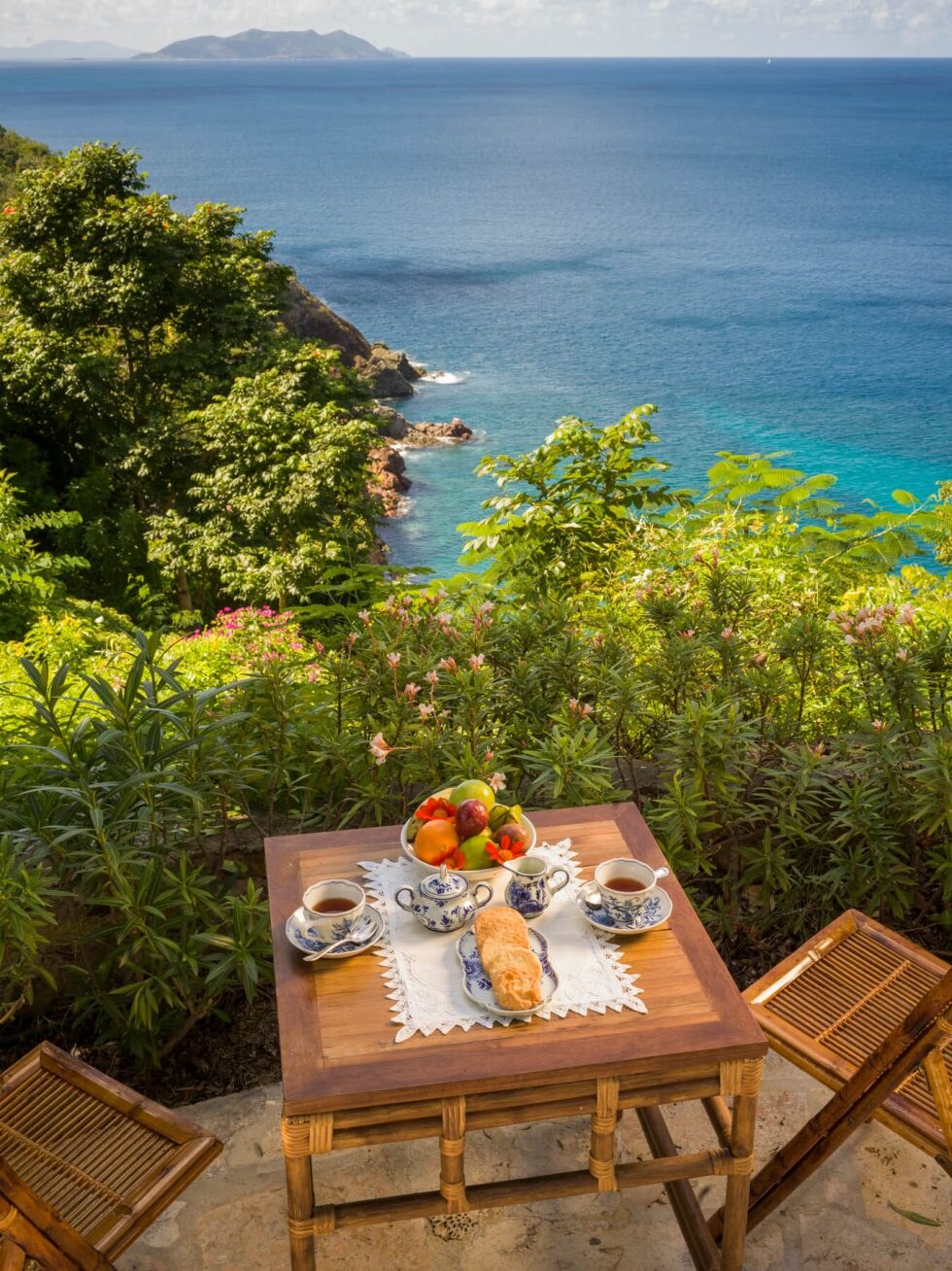
Oil Nut Bay, on the eastern tip of Virgin Gorda, is accessible only by boat or helicopter — either a dealbreaker or the entire point. The 300-acre private resort community offers villa rentals with Fendi-furnished interiors, personal chefs, and butler service — the most exclusive address in the BVI. Charter guests can pull up for a beach club lunch, worth doing at least once.
Necker Island and Moskito Island sit close together in North Sound, both owned by Richard Branson under the Virgin Limited Edition portfolio. Necker, his primary residence, is a 74-acre full buyout (up to 48 guests, starting around $155,000/night) or, on select dates, individual room bookings. Flamingos roam the property, lemurs turn up at breakfast, and the whole thing has a laid-back-billionaire energy that's harder to find than you'd think at this price point. Moskito, a short boat ride away, is newer and quieter, divided into four separately bookable private estates with an eco-villa design built around privacy over Necker's communal vibe. If Necker is the party island, Moskito is where you go to actually disappear.
Anegada Beach Club is the only lodging on Anegada worth considering for non-charter guests: beach tents and bungalows on a long, flat stretch of white sand, a restaurant serving fresh catch daily, and the quiet that comes from being 14 miles from the nearest crowd.
Logistics Worth Knowing Before You Go
A few things that don't fit neatly into any other category but will matter once you're there:
- BVI customs and immigration is handled in Road Town and at a few smaller ports.
- Mooring balls in the national park areas (Norman Island, The Baths, The Indians) are required and fill up by early afternoon in high season. If any of these stops are priorities, ask your captain to anchor or grab a mooring early in the morning.
- Cell service is inconsistent across islands. Download offline maps and have the ferry schedule saved.
- Peak season runs November through April, with the most reliable trade winds and the highest rates, especially around the holidays. June through August is quieter and more affordable, but falls in hurricane season, so trip interruption coverage is worth having in place. Many establishments close in late August and reopen in early October.
- Reef-safe sunscreen only.
Getting to the British Virgin Islands
The most common route is flying into St. Thomas (STT) — direct service from most major US cities — and then taking a ferry or private water taxi over to Tortola. The public ferry from Red Hook on the east end of St. Thomas to Road Town, Tortola runs about 45 minutes and costs around $30 per person each way. It's reliable and runs multiple times daily, but it sticks to a schedule, so check times in advance.
For groups, a private water taxi is worth every penny. It's more expensive, but the crew will meet you at the airport dock and bring you directly to your marina or anchorage. Chillout Charters and Island Time Water Taxi are both solid options for getting from St. Thomas to the British Virgin Islands.
You can also fly directly into Tortola's Terrance B. Lettsome International Airport (EIS) via connections from Miami, San Juan, St. Thomas, Antigua, St. Maarten, and St. Kitts. When the routing works, it simplifies arrival day considerably.
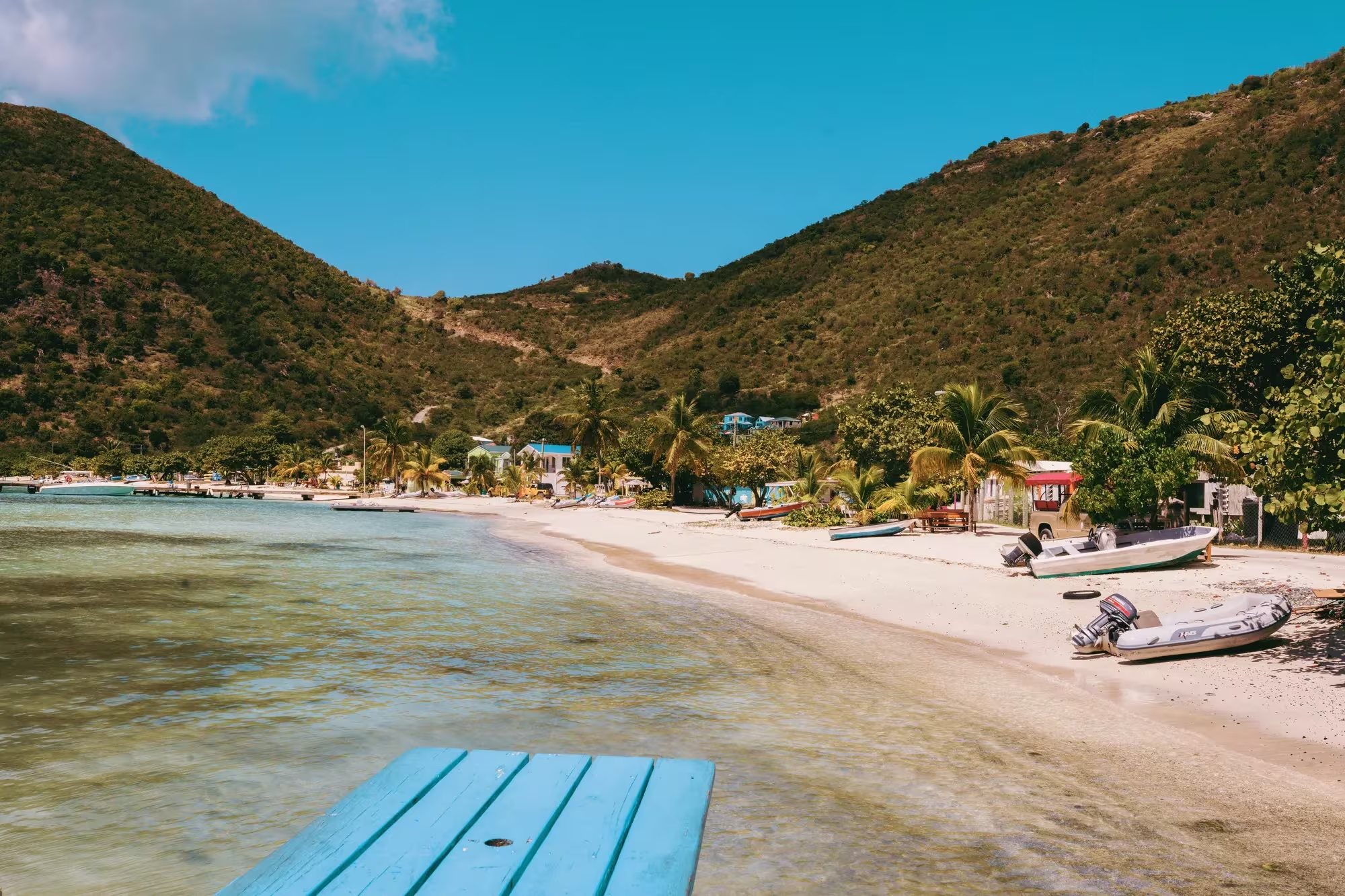
The BVI rewards people who show up knowing what they're doing. Get to Anegada at least once, order the lobster the night before, and don't leave without spending an afternoon somewhere with no dock, no crowd, and water clear enough to see the bottom. Whether you get there by charter or by ferry, that part is the same.
The part that isn't the same is everything leading up to it — knowing which yacht is BVI-based before you book, whether Anegada is worth the extra sail time for your group, which BVI resort actually delivers the seclusion it promises. As a LuxRally Travel advisor, I do that work well before you ever set foot on a dock.
Connect with me below, and let's build the version of this trip where the only decision you have left is which beach bar to start at.

Plan your next journey with
Carrie HaysCarrie Hays is a dedicated travel agent with a passion for creating unforgettable journeys. As a mom of three adventurous girls, she knows the importance of balancing comfort with excitement to create the perfect trip.
Related Stories
The Questions Everyone Asks a Travel Advisor — and Their Honest Answers
People ask me travel questions constantly — at school pickup, at dinner parties, via panicked Sunday morning texts. So I'm putting the answers in one place: from whether advisors are obsolete (they're not) to how I recently saved a client $1,000 on a Hyatt stay she almost booked herself.
By Carrie Hays
The Real Cost of Booking Travel on Your Own—And How to Book Better
From hidden rates and VIP perks to real-time advocacy when plans go sideways, here's why a luxury travel advisor is the highest-leverage move for your next vacation.
By Carrie Hays
The Grand Tetons Are Calling: Ski Season with the Four Seasons Resort & Residences Jackson Hole
From ski-in, ski-out luxury at the Four Seasons to a hidden speakeasy bathed in moody red light, this curated roundup captures everything the discerning skier needs for the ultimate Teton Village experience.
By Amy Van Den Top
Local’s Guide to Chicago: America’s Most Underrated Luxury Family Escape
From a Chicago rooftop pool where snow falls beyond the glass, to afternoon tea that needs no occasion — this city rewards the traveler who slows down. Even after thirteen years, it's still a city that my family and I can discover anew.
By Natalia Semizarov
Multigenerational Travel Is Having a Major Moment: Here's The What, Why, Where, and How
Multigenerational trips are the fastest-growing travel trend — and for good reason. From grandparents initiating the adventure to Gen X bridging generations, families are trading scattered getaways for one unforgettable shared experience.
By Sara Ryburn
Hotel Xcaret México Review: Everything You Need to Know Before You Book
With eight distinct Casas, five adventure parks, and over 20 restaurants, Hotel Xcaret México is the Disney of the Riviera Maya. My biggest takeaway? Don't arrive unprepared.
By Alexis Dunfee