
THE UNLISTED, No. 02
Listening to Incense: A Private Kōdō Ceremony at Aman Kyoto
A private kōdō ceremony with one of Japan's Living National Treasures, arranged exclusively through Aman Kyoto. Inside a room never opened to the public.
October 16, 2026
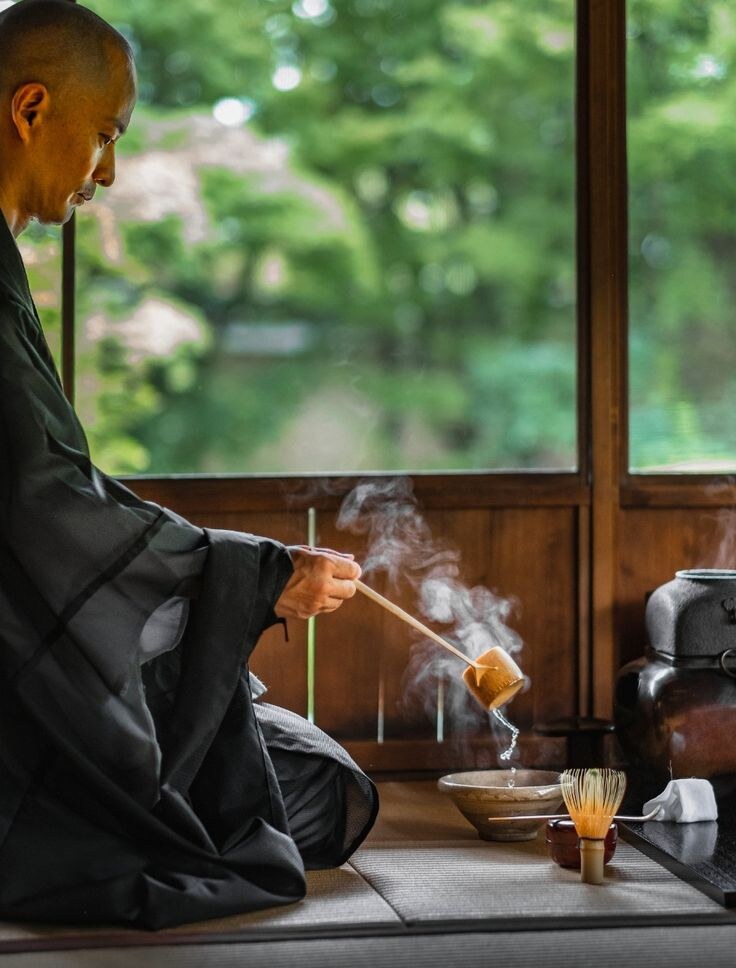
He held the burner with both hands. Left palm beneath, right hand curved above, forming a small chamber of warmth around the porcelain vessel. He brought it slowly toward his face, closed his eyes, and did not smell it. He listened.
That is what the word monkō means. Not "incense appreciation." Not "scent experience." Listening. As if the wood has something to say, and the only requirement of the person in the room is to be still enough to hear it.
The piece of jinkō inside the burner was perhaps the size of a thumbnail. It had taken decades to form — wounded agarwood slowly secreting the resin that gives it its scent, then aged for years more in darkness. Some pieces preserved in Japan's imperial treasury have been held for over a thousand years. That morning's piece was not among them. But the man at Aman Kyoto warming it had spent fifty years in the study of exactly this ceremony — long enough to have been named a Living National Treasure of Japan.
There were two guests in the room. No other people. No cameras. No record of the session on any website, booking platform, or printed brochure.
The only reason they were there was because of the hotel.
I have arranged this exact morning at Aman Kyoto for three clients over the past two years. Each time, I have asked the same questions afterward, trying to understand what actually happened in that room. The answers are never quite the same, and that inconsistency is, I have come to believe, the truest evidence that something real took place.
A Ceremony Unchanged for Centuries
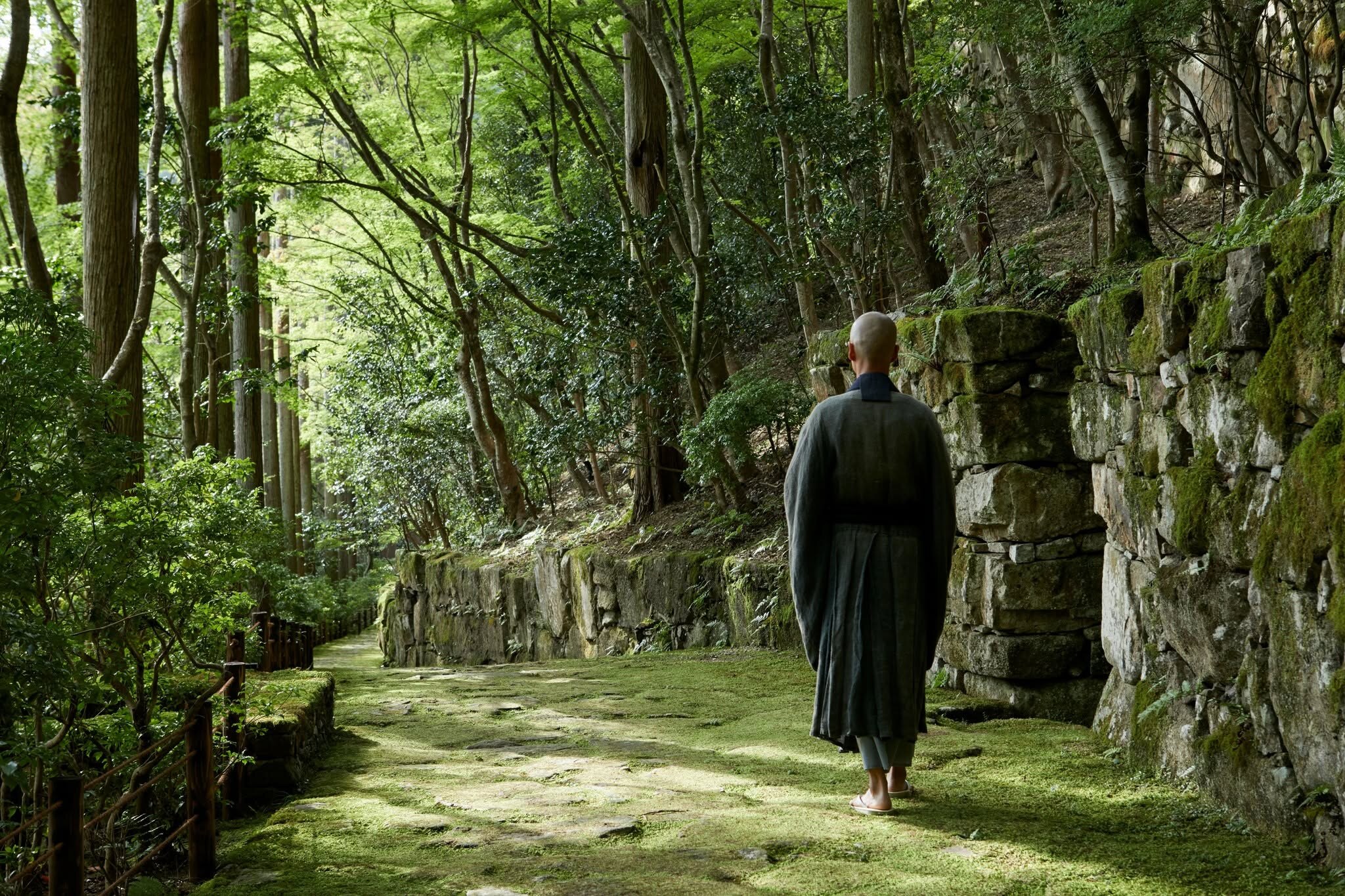
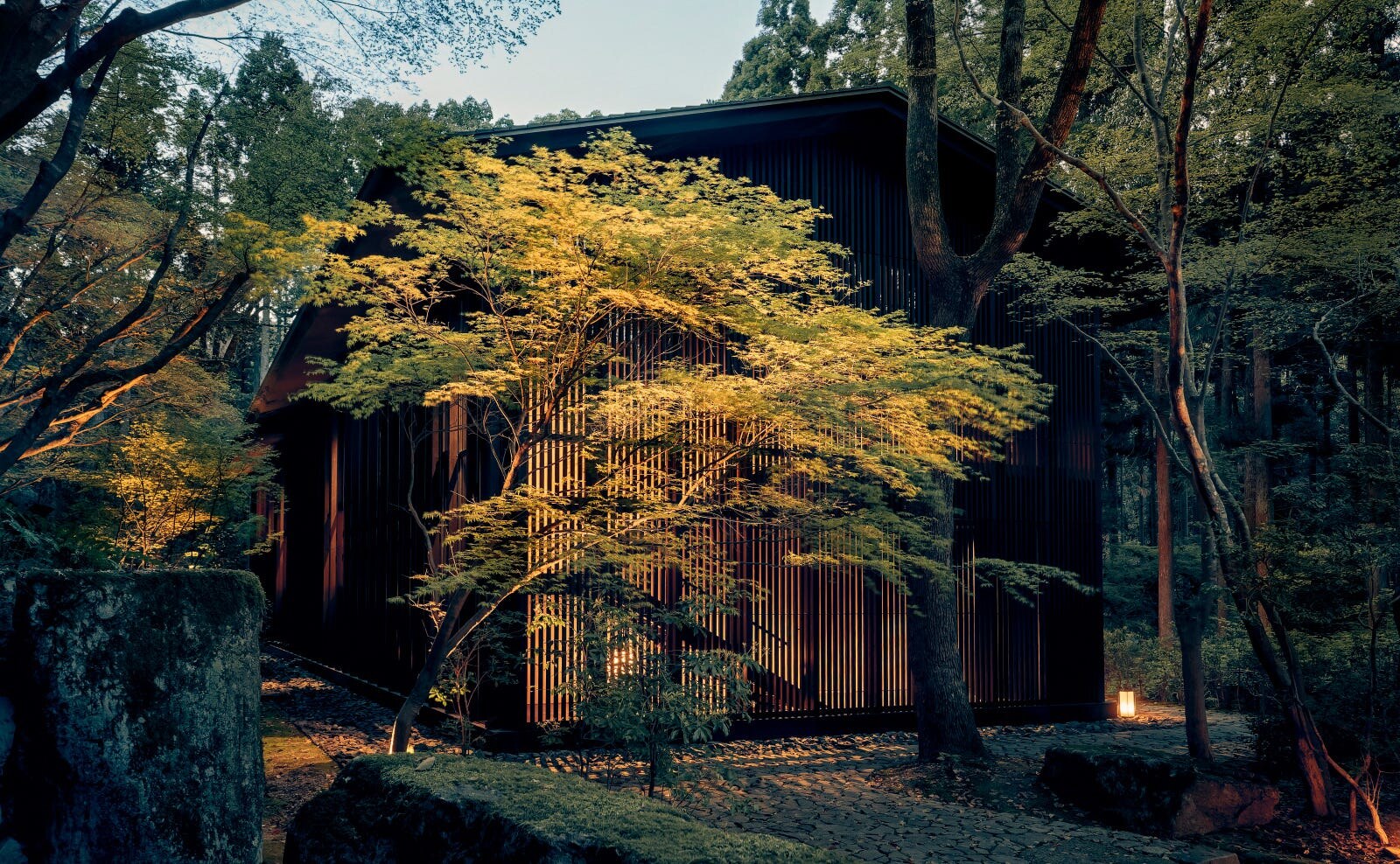
To reach that room, you walk first through the gate: heavy wood set into a stone wall, opening onto a path that enters the forest. The city — whatever was left of it in your mind — disappears somewhere in those first few steps. By the time the trees close overhead, you have already arrived in every sense that matters.
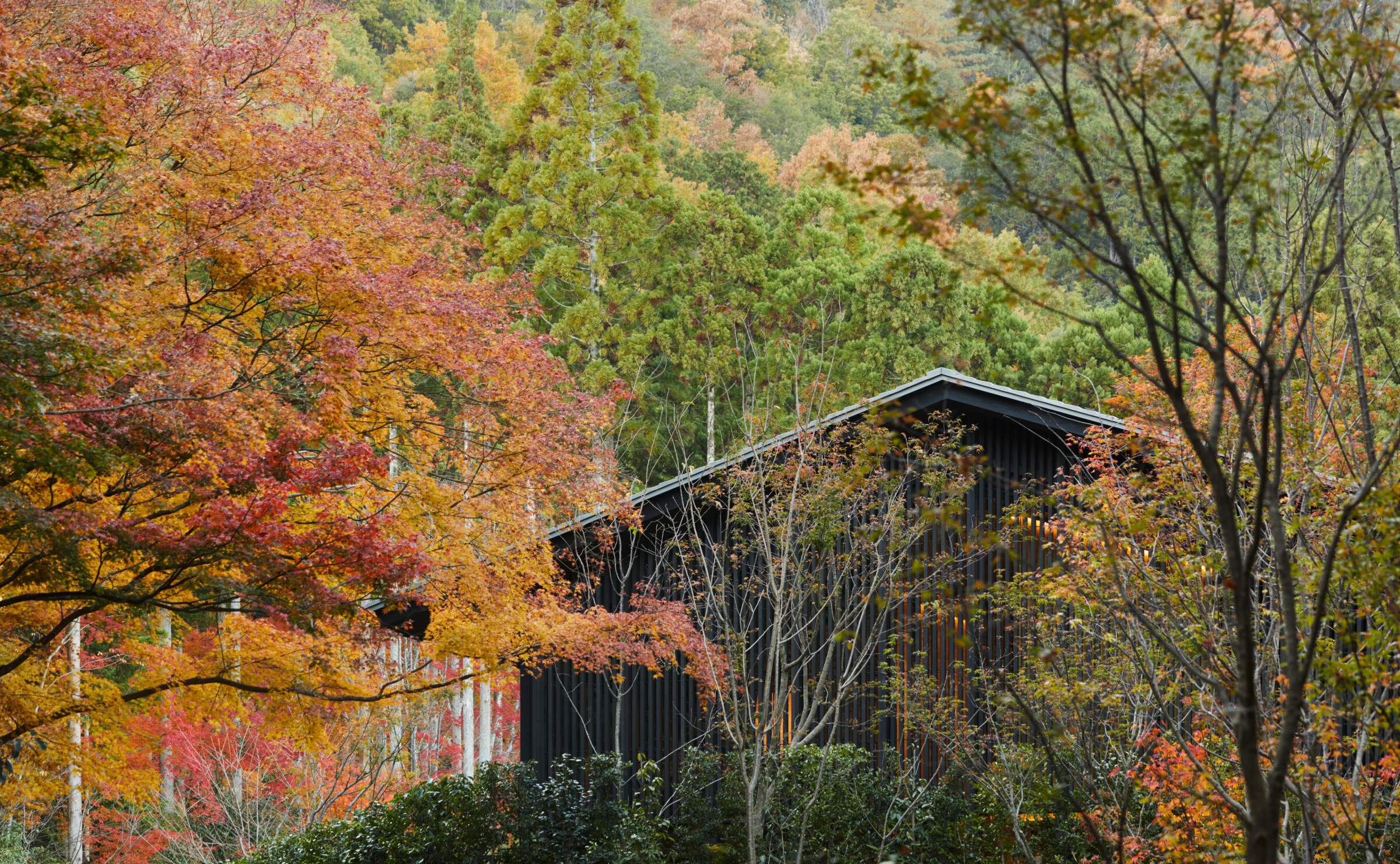
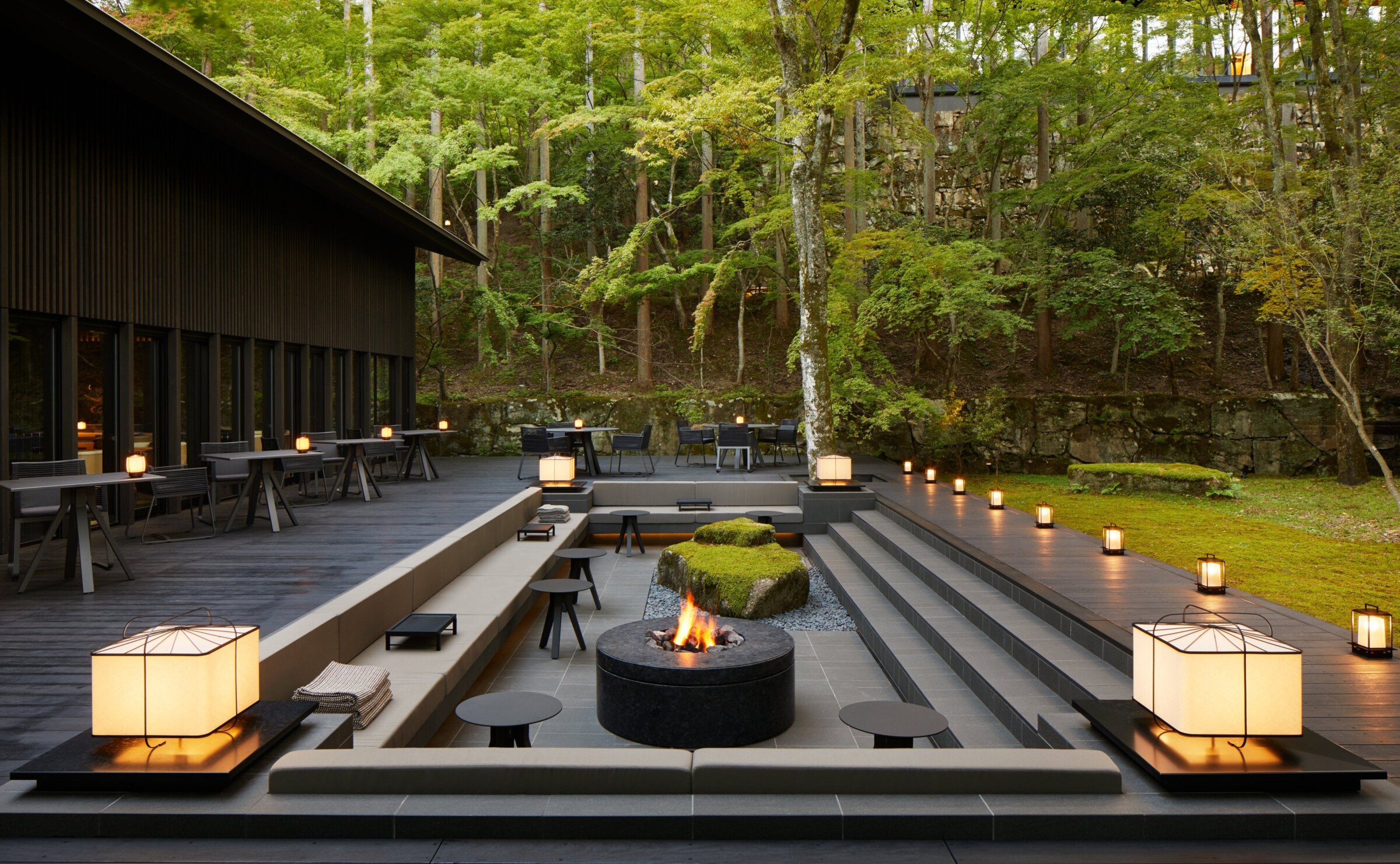
Aman Kyoto sits inside a 32-hectare private forest at the foot of Hidari Daimonji mountain in Kyoto's Takagamine district, its 26 rooms arranged among woodland clearings, with no visible presence from the road. Kerry Hill Architects, the late Australian firm behind many of Aman's most considered properties, completed it as its final project. The materials disappear into the landscape: hinoki wood, moss-covered stone, shōji screens framing forest views that shift with the hour.
What this luxury Kyoto resort holds that no other property does is the relationship. It opened in 2019, but the cultural partnerships that define it were decades in the making. Adrian Zecha, who founded Aman in 1988, built the brand around a single principle: the most extraordinary access comes not from money but from trust built over time.
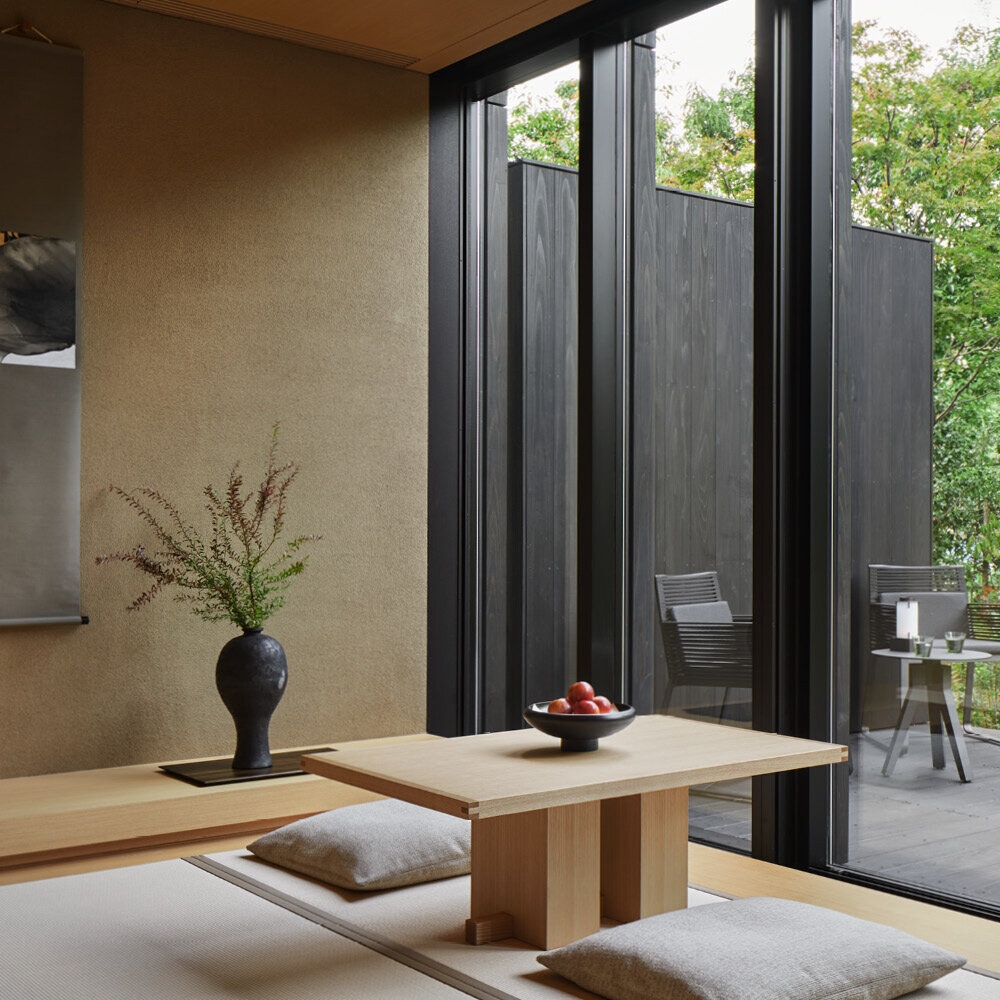
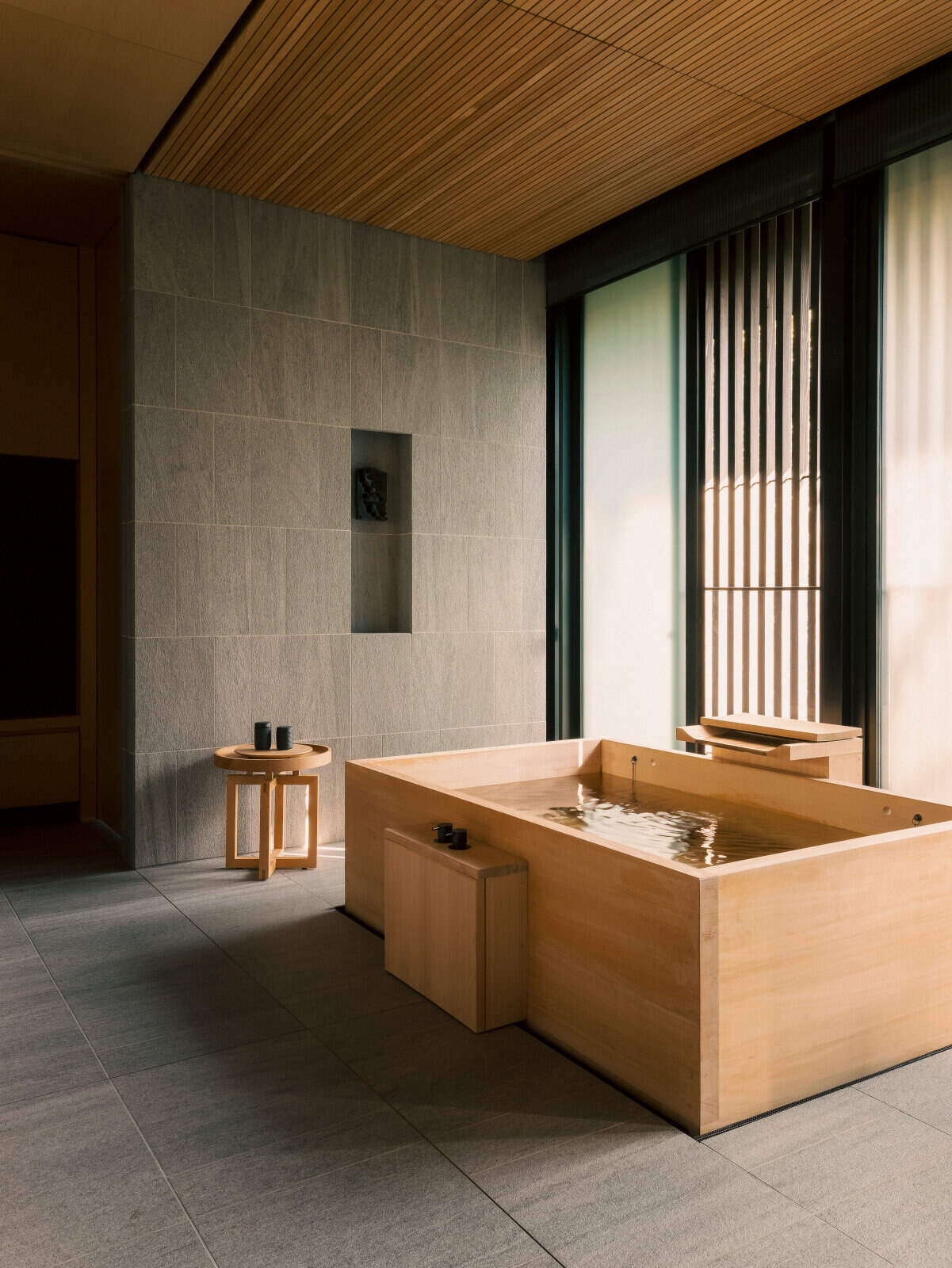
A personal relationship with a temple. A standing invitation from an ochaya that has never accepted a first-time visitor. A connection to a master artisan with no public demonstrations, no booking website, who receives guests only through an introduction he has approved personally.
That infrastructure is what you are paying for with a room at Aman Kyoto. Yes, the forest and the onsen are extraordinary. They are not the point.
What Every Aman Kyoto Review Mentions — and What It Misses
The tea ceremony. The private onsen fed by natural hot springs. The morning forest walk through two thousand Japanese maples. Every Aman Kyoto review surfaces these first, along with the kaiseki dining at Taka-An and the geiko evening in Kamishichiken.
These are real Aman Kyoto experiences, among the finest versions of each available anywhere in Kyoto. A tea ceremony arranged here is not the tourist version offered near Gion for thirty dollars.
But they are known. A few hours online will turn up all of them, listed and priced across dozens of Japan travel sites in the most general terms.
The experiences that cannot be found that way — the private cultural experiences Kyoto rarely advertises — are what I seek out for my clients.
Japan's Rarest Private Cultural Experience
Kōdō, sometimes described to Western guests as a Japanese incense ceremony, is one of Japan's three classical refinement arts, alongside the tea ceremony and ikebana. It is also the least known outside Japan, and the most difficult to access at its highest level.
The practice arrived from China in the sixth century as part of Buddhist ritual. For the next thousand years it traveled upward through Japanese society — from temple to imperial court to warrior class. Oda Nobunaga and Tokugawa Ieyasu, the two most powerful figures of the Sengoku period, used kōdō to purify their minds before battle.
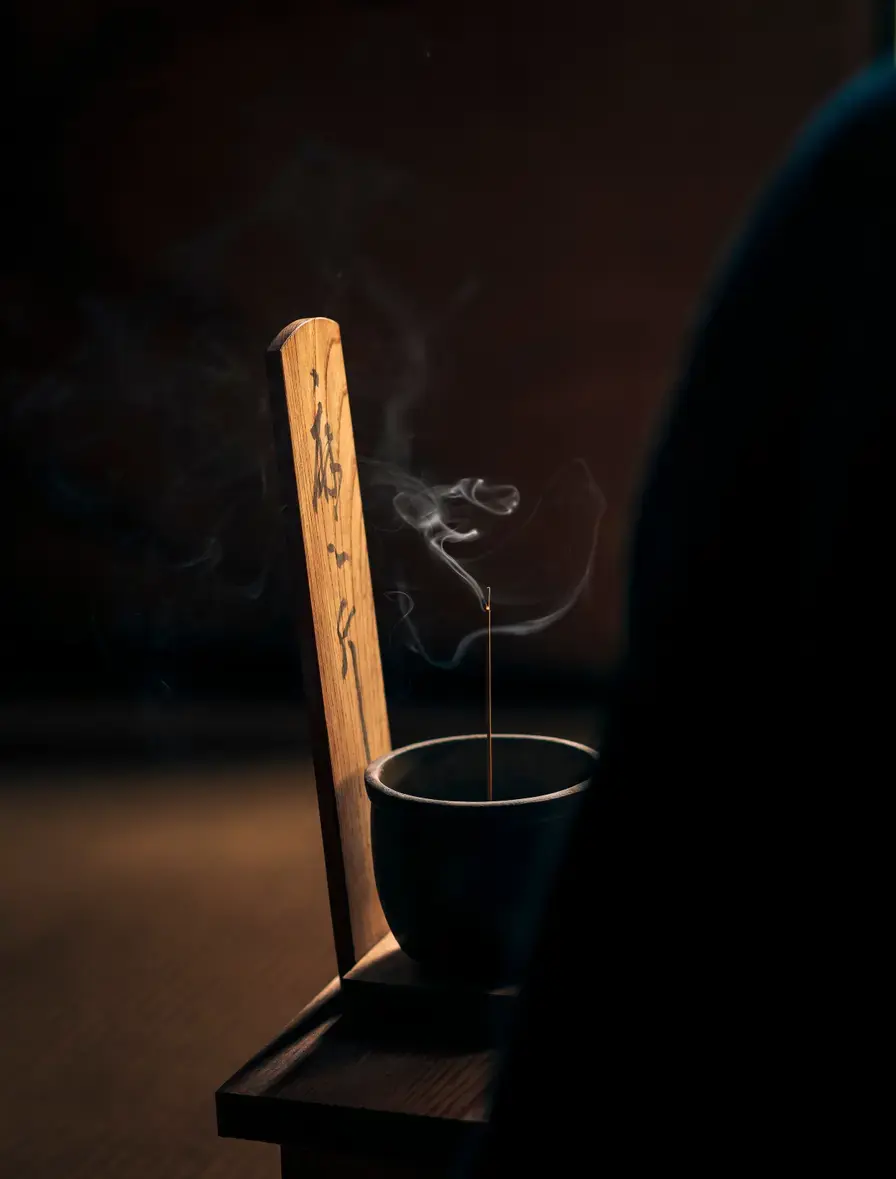
The wood at the center of the ceremony is jinkō, also called agarwood: a tropical hardwood from Southeast Asia that produces resin only when wounded, after years of slow transformation in the living tree. Heated gently over ash-covered charcoal in a small porcelain vessel called a kōro, it releases a scent with no Western equivalent.
Not sweet, not sharp, not floral. Something older. Something that, for practitioners, carries the quality of undoing thought.
The finest grade is called kyara. A single gram trades at prices exceeding most precious metals. The Shōsōin treasury in Nara holds a piece called Ranjatai, designated a national treasure and believed to date from the eighth century.
Fewer than twenty grandmasters of the major kōdō schools remain alive in Japan. The designation of Living National Treasure, awarded by the Japanese government, recognizes individuals whose mastery of an intangible cultural property is considered irreplaceable. These are not instructors. They are the last living vessels of a lineage that cannot be reconstructed if it is lost.
A Living National Treasure does not give public demonstrations or receive guests without a relationship vetted over years. And Aman Kyoto holds a relationship with one of them.
Inside the Ceremony Room
The session takes place in a private room not open to the public under any other circumstance. No map lists it. Access comes solely through the resort's cultural team, through a relationship that required patience, demonstrated respect, and a commitment to presenting the art form in a context worthy of it.
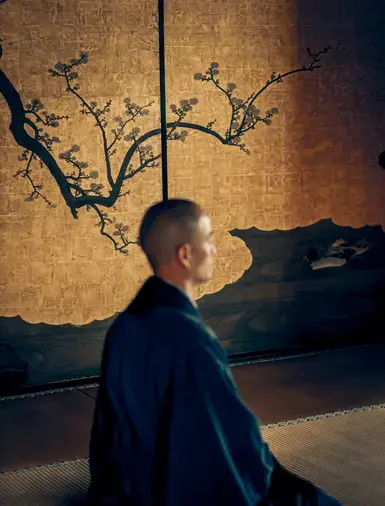
The ceremony follows a structure that has not changed in centuries. The room itself is small — perhaps twelve tatami mats — with walls of unfinished plaster and a single alcove holding nothing but a scroll and a branch of seasonal foliage. Light enters through paper screens on one side only, holding the room in a suspended dimness through which the smoke from the charcoal becomes faintly visible as it rises.
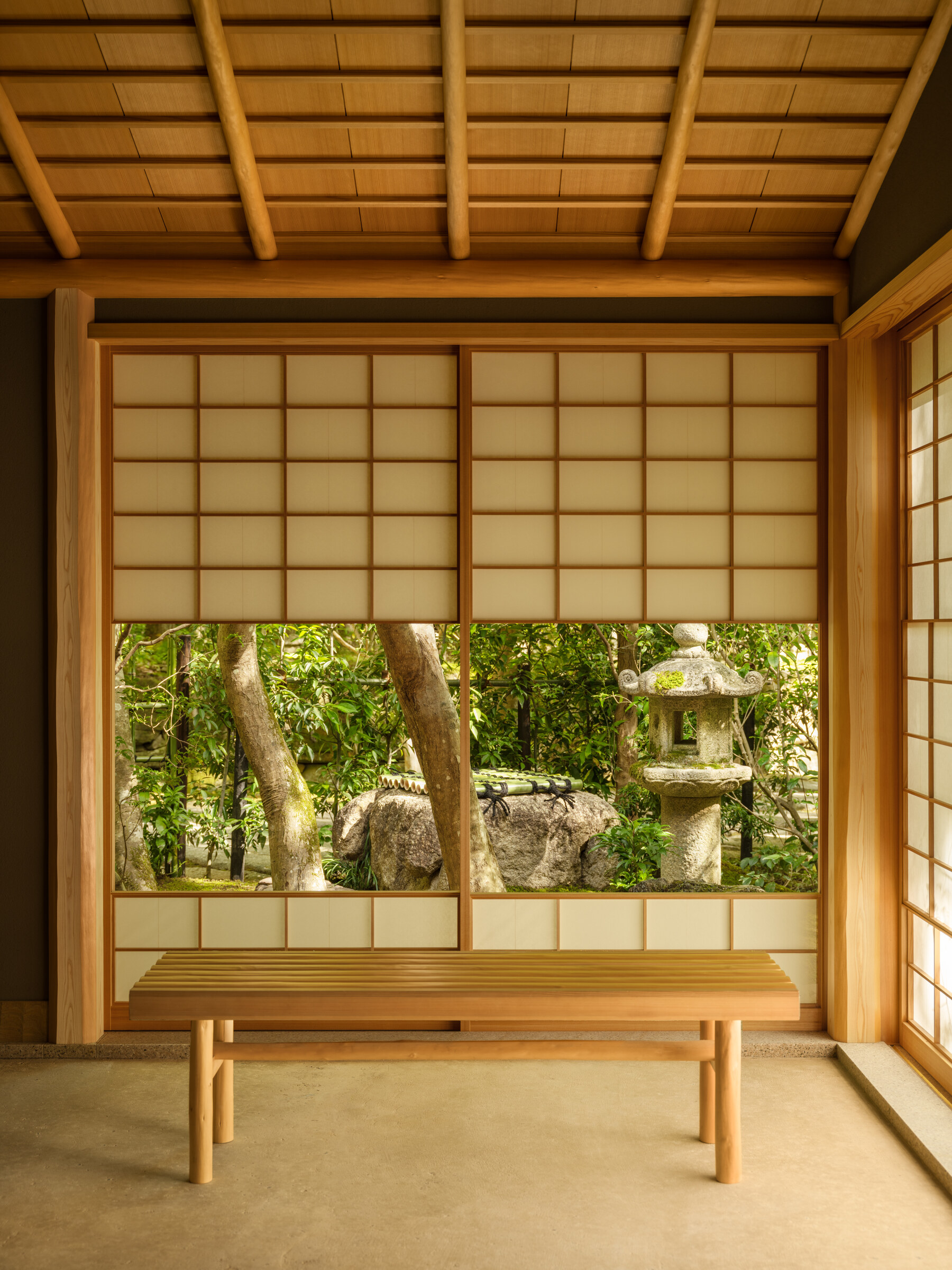
The tatami absorbs footsteps almost entirely. The plaster returns no echo. The only sounds are the ones made on purpose: a sleeve moving against itself, the small click of the kōro being set down. The master prepares the charcoal bed in silence — arranges the ash, places the wood — reading the room before beginning: the temperature, the humidity, how far the morning has advanced. Each shifts how the wood will release its scent.
When the kōro is passed to a guest, the protocol for holding it is demonstrated: left palm beneath, right hand above, fingers creating a small aperture to direct the rising warmth upward.
Then the instruction that changes everything: do not smell it. Listen.
What this means, in practice, is a quality of attention most people have never applied to a single sense. The incense does not announce itself. It arrives slowly, changes as the wood warms, shifts register several times within a single breath.
Practitioners describe monkō as the closest thing to silence that still involves perception. The mind, given only this one thing to follow, eventually stops trying to categorize what it is receiving.
Something else begins.
One Guest's Account
One of my clients — a senior executive who had been to more than sixty countries, who had stayed at properties most travelers have never heard of — told me afterward, quietly, that he had not expected to feel anything. He had come as an observer, the way he approached most things now: appreciative, attentive, slightly removed.
For the first twenty minutes, he said, that distance held. He noticed the master's hands. He noticed the precision of the ash, the careful placement of the charcoal, the economy of every movement in the room.
He was, in his own words, watching a skill — until the incense changed.
He could not explain it more precisely than that, no matter how many times I asked him to try. The scent had been doing one thing, quiet and somewhat abstract, and then without any perceptible transition it was doing another. Something shifted in register, he said. Not louder. Lower, and somehow closer, as if it had moved from the air in front of him to somewhere nearer the back of his own thinking.
He stopped noticing the master's hands. He stopped noticing that he was in a room at all.
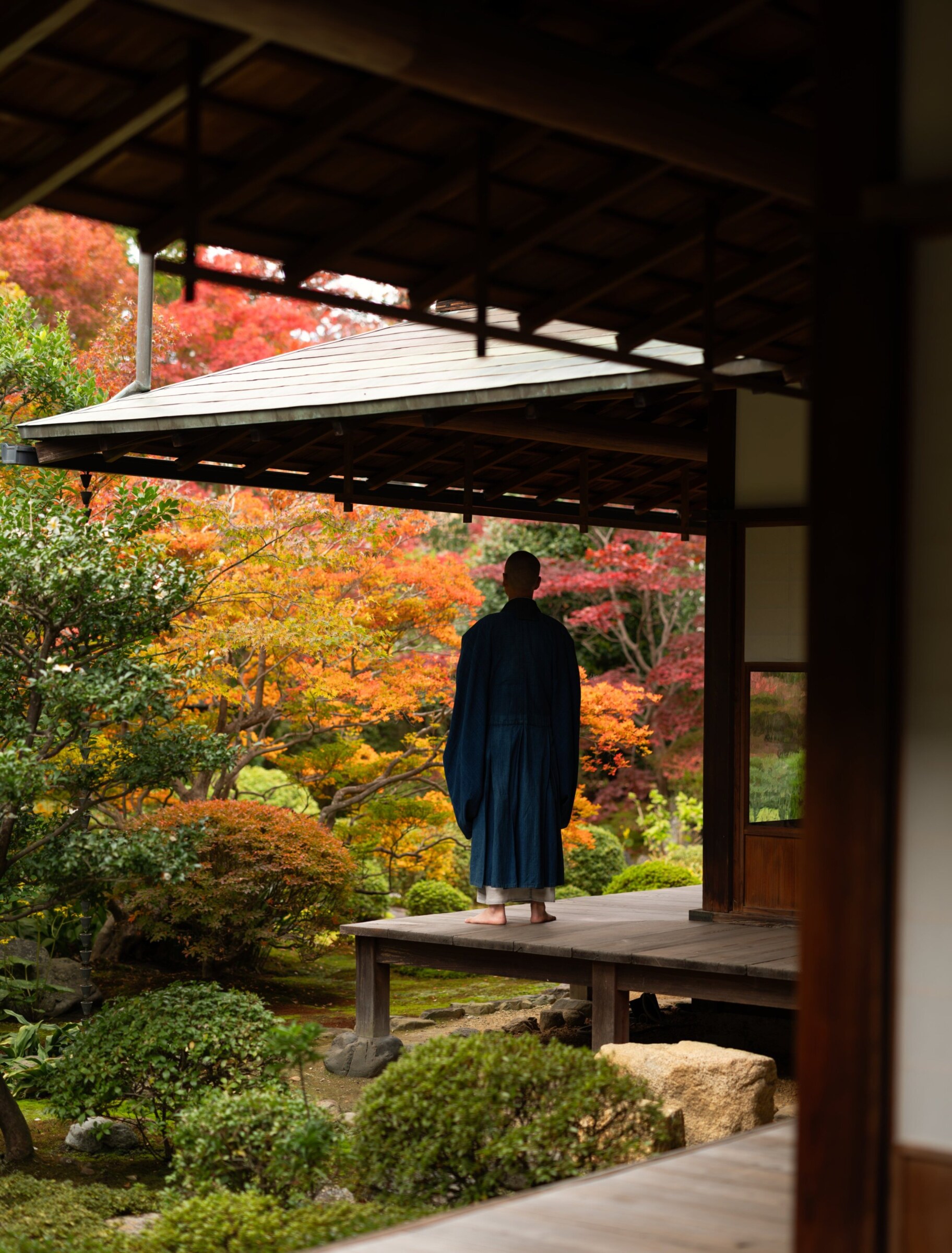
What he described after that was not a thought. It was the absence of something he had not realized was always running: a low, continuous accounting of what came next, what he should be doing, what he was missing by sitting still. For some period of time he could not measure, that accounting simply was not there. Only the incense, and the particular quality of silence that exists when no one in a room is performing stillness — only experiencing it.
He sat for forty minutes.
He did not want to leave. And he told me later that he had not wanted to examine why — not yet. Whatever had shifted in him during those forty minutes, he was not ready to name it. He seemed, when he described it to me, almost protective of that delay.
I never pressed him further. Some things earn the right to stay unnamed.
Private Cultural Experiences Kyoto Does Not Advertise
The kōdō ceremony is the deepest access this resort holds, but not the only one. What connects these private cultural experiences in Kyoto is not their subject matter but their structure: each exists because the resort has spent years earning the kind of trust that money alone cannot buy.
A Temple Painting Lesson at Genkō-an
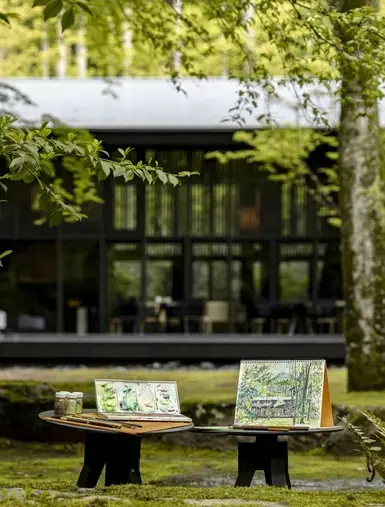
Genkō-an Temple, a short distance from the resort, is known to most visitors for its two famous windows: the circular Ensō-no-mado, representing enlightenment, and the square Mayoi-no-mado, representing delusion. Fewer visitors notice the ceiling — built from the floorboards of Fushimi Castle, stained with the blood of samurai who died there in 1600. Guests staying at the resort can arrange a private sumi-e ink painting lesson inside the temple, led by the resident priest in the inner rooms before the public arrives, in a silence broken only by brush and water drawn slowly into ink.
An Invitation to an Ochaya in Kamishichiken.
In Kamishichiken, the oldest of Kyoto's five hanamachi, Aman holds a standing personal invitation to an ochaya that operates on a strict introduction-only basis. Even wealthy Japanese clients without the right connection are turned away. I have walked clients to that door myself, and the moment that stays with me is not the performance inside — it is watching the owner recognize the introduction before a word is exchanged. The quiet formality of being expected somewhere that admits almost no one. The evening that follows — geiko and maiko, ozashiki games by candlelight, a private dance performance over kaiseki — is an admission into a world insulated from tourism for centuries.
Private Zazen at an Unlisted Temple.
For guests who want stillness over spectacle, the resort can arrange zazen meditation with a practicing Buddhist monk at a temple that does not appear on public visiting lists, in a wooden meditation hall overlooking a private garden. The monk teaches correct sitting posture, the breath, the quality of attention that Zen practice cultivates. It is not a wellness program. It is a religious practice, offered in its authentic form, by someone for whom it is not a performance.
Who This Resort Is For
Aman Kyoto has 26 rooms. Not 260. At any given time, the entire resort might hold forty guests, and the forest paths stay quiet.
This is not a property for travelers who want to move efficiently through Kyoto's famous sites — for that, a centrally located hotel in Higashiyama or around Kyoto Station will serve you better. It is a resort for someone who has been to Japan before, and who knows that what they experienced was only the surface of it. Someone for whom an afternoon with a Living National Treasure, or an evening in a teahouse that has turned away guests for centuries, is not something money alone can arrange.
Aman Kyoto is for the traveler who understands that the most rewarding experiences are not found but introduced.
Rooms, Rates, and What to Know Before You Arrive
Rates begin at approximately $1,600 per night for a Garden Room. Suites range from roughly $3,000 to $5,000 per night; the Washigaminé and Takagaminé Pavilions — each with two bedrooms, a private garden, and direct forest access — sit at the higher end of that range.
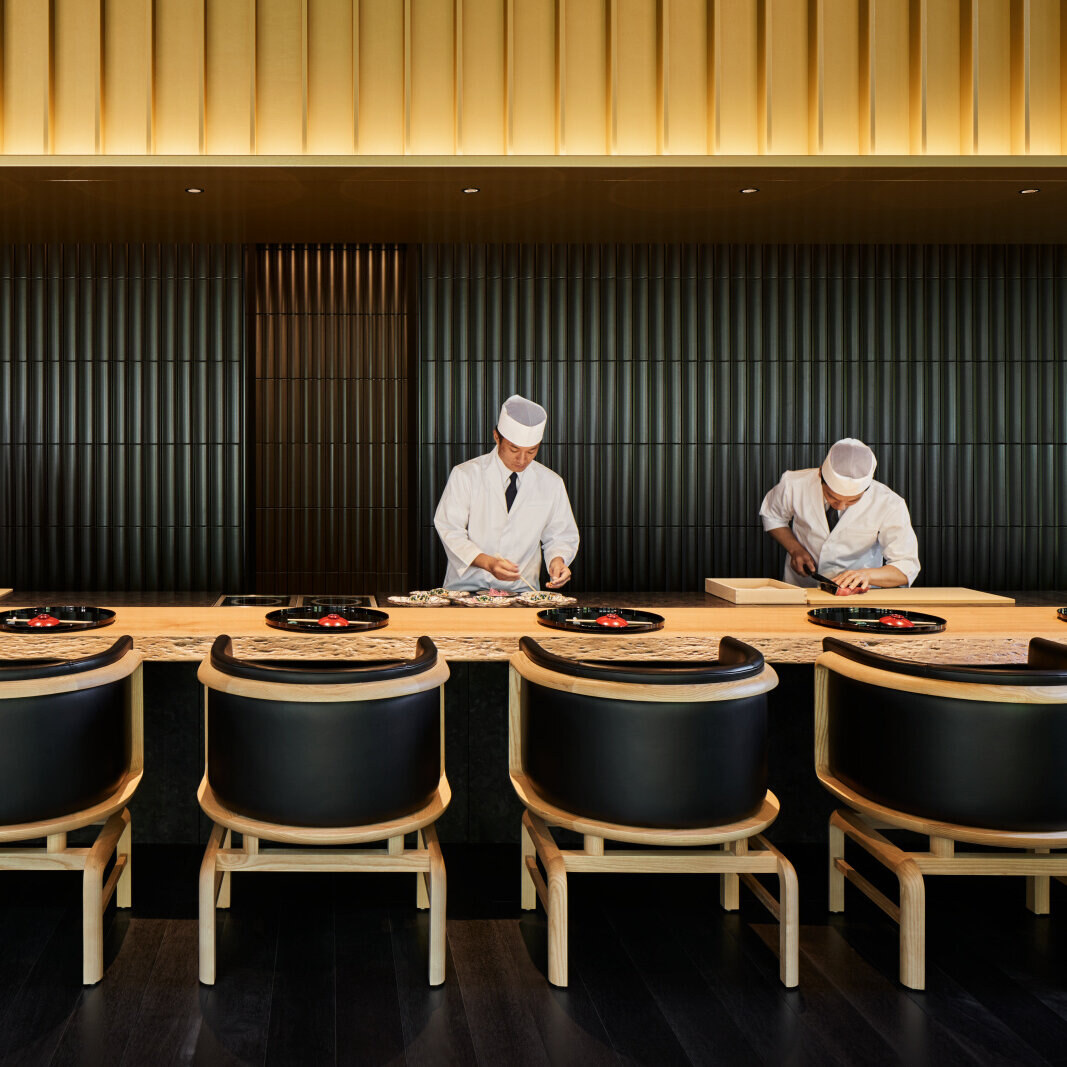
The kōdō ceremony, the Genkō-an temple session, the ochaya evening, and the private zazen all require advance arrangement through the resort's cultural team. None can be requested on arrival, and several need weeks of lead time.
The forest earns its reputation in two seasons: late March through mid-April, when the Japanese maples are budding and Kyoto fills quickly, and mid-November through early December, when the same trees turn amber and deep red. Both periods are peak travel in Japan. Summer (July–August) brings humidity and crowds; January and February are cold and very quiet — an underrated time to visit if stillness is the goal.
Aman Kyoto sits thirty minutes by car from Kyoto Station, unmarked from the street. From Tokyo, the Shinkansen reaches Kyoto Station in roughly two hours and fifteen minutes — a far more pleasant arrival than flying into Osaka Itami or Kansai International, adding transfer time without adding ease.
Where the Difference is Made
Working with a travel advisor who has an existing relationship with Aman's cultural team changes everything.
As your advisor and an Aman preferred partner, I handle this conversation before you land. The kōdō master's schedule accommodates very few requests, and the ochaya holds no space without prior arrangement. These are not details an online booking portal can manage.
You pass through that same gate again on the way out, and the forest lets you go the way it let you in — without ceremony, without announcement.
The forest here predates the resort by centuries. You pass through that same gate again on the way out, and the forest lets you go the way it let you in — without ceremony, without announcement. What remains, once the gate closes behind you, is that older quiet, and the understanding that what is arranged within it cannot be reduced to a room rate.
No review will tell you that. It has to be experienced.
If you're ready to experience Kyoto, connect with me below to start the conversation.
Frequently Asked Questions
How do I book a kōdō ceremony in Kyoto?
There is no public booking page for this ceremony — one of the most private cultural experiences Kyoto offers. Access flows exclusively through Aman Kyoto's cultural team, who hold the relationship with the Living National Treasure who conducts it. Plan for several weeks of lead time.
What is a Living National Treasure in Japan?
A designation awarded by the Japanese government to individuals whose mastery of an intangible cultural property — such as kōdō, Noh theater, or ceramics — is considered irreplaceable. Fewer than several hundred people across all art forms hold it at any time.
What is the difference between kōdō and a typical incense experience?
A Japanese incense ceremony in the kōdō tradition centers on monkō — listening to incense rather than smelling it. Most incense experiences marketed to travelers are closer to aromatherapy. Kōdō draws on a 1,400-year lineage and rare agarwood, heated rather than burned, producing a scent that unfolds slowly over the course of a session.
Is Aman Kyoto good for first-time visitors to Japan?
It suits travelers who have already seen Japan's more visited sites and want depth over breadth. Its 26 rooms and forest setting are not built for proximity to Kyoto's busiest attractions, though Kinkaku-ji and Ryōan-ji are nearby.
Are the cultural experiences included in the room rate?
They are arranged and billed separately from the room rate. Pricing is not listed publicly and varies by experience — your advisor can give you a realistic sense of what to expect before you commit to anything.
Plan your next journey with
Alina MorettiMy name is Alina Moretti, and honestly, travel chose me before I ever chose it. As a fully licensed travel advisor with LuxRally Travel, I still think about my first trip to Cuba. The coral reef. A coffee plantation in the middle of nowhere. The ocean so blue it didn't look real. That was years ago and I can still feel it. That's the thing about certain moments — they just stay. I became a travel advisor because I couldn't stop collecting those moments, and along the way I realized I was good at creating them for other people too. I personally visit every destination I recommend. I have relationships and access that open doors most travelers never even see. And every trip I design starts with one question: what do you want to feel? I work with couples, families and solo travelers who are done with ordinary and ready for the kind of travel that changes something in them. If that sounds like you, let's connect.
Related Stories
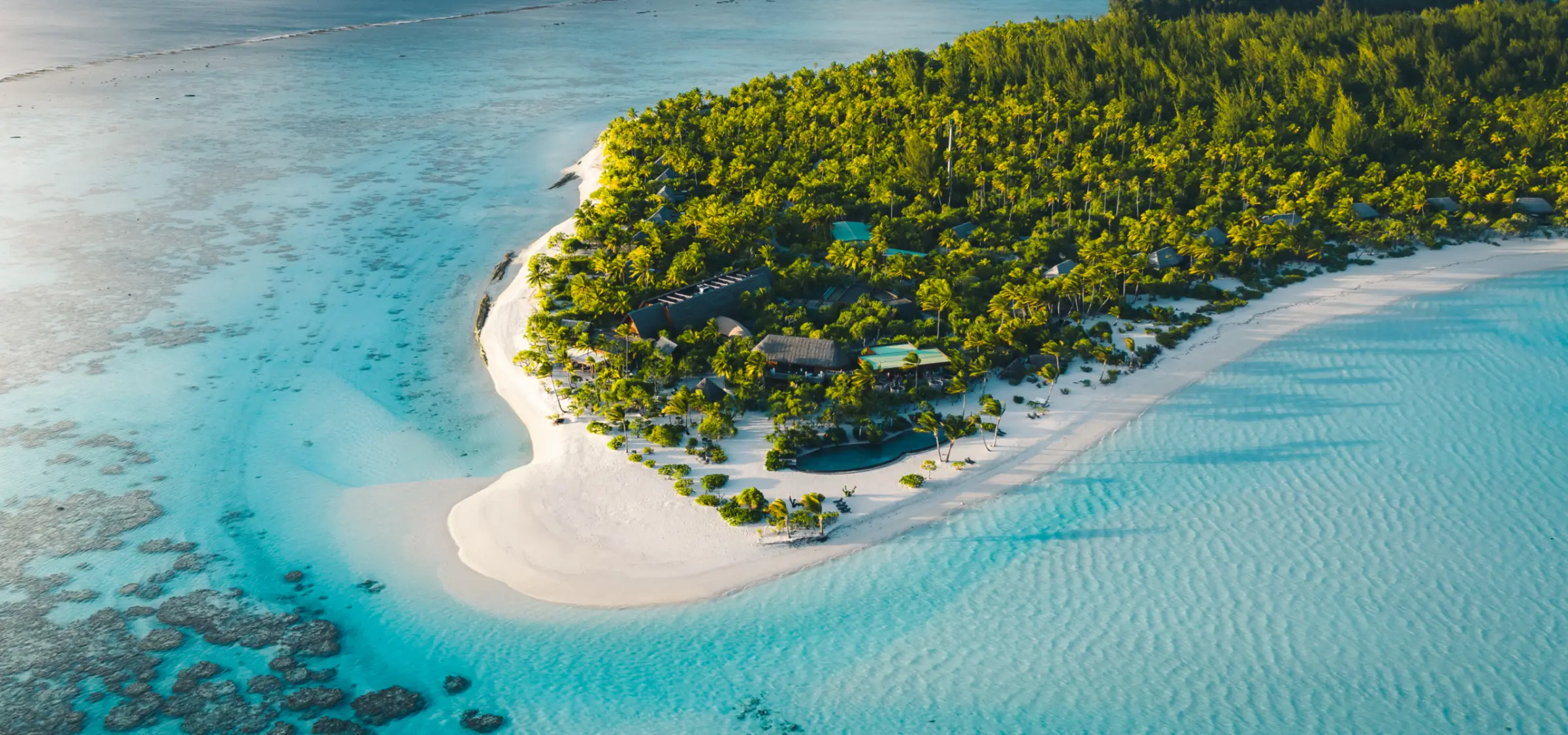
The Brando's Private Motu: One Island Marlon Brando Kept for Himself
A short flight from Tahiti, one islet sits apart from Marlon Brando's own resort, reserved by request for a single party at a time. It is the closest a traveler can get to the man who built this atoll, it's resort, and the private oasis even further from the main retreat.
By Alina Moretti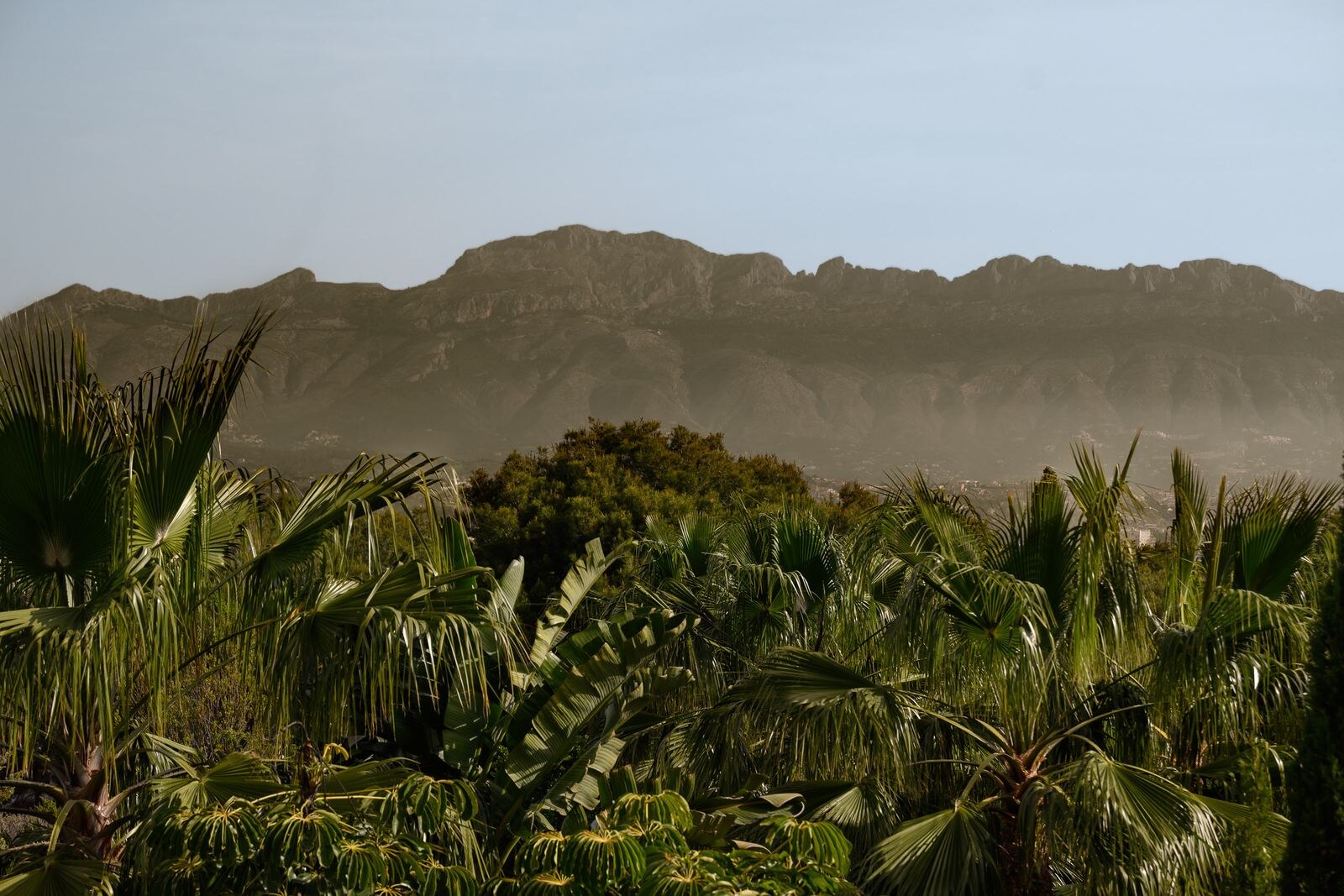
The New Science of Living Longer: 5 Anti-Aging Retreats Redefining Luxury Wellness
Five destinations where longevity, biohacking, and genomic medicine have become the most compelling luxury on earth. From Swiss clinics to Mediterranean retreats, the future of travel is biological.
By Alina Moretti
Kona Meets Sedona: Inside Black Desert Resort, Southern Utah's Luxury Escape
Deep black volcanic basalt, emerald fairways, and red sandstone cliffs that shift from terracotta to burnt sienna by the hour — Black Desert Resort shouldn't work as a landscape, but it does, spectacularly. I pulled up on an October morning and realized I was looking at something I'd never seen before in a place I call home.
By Megan Saldibar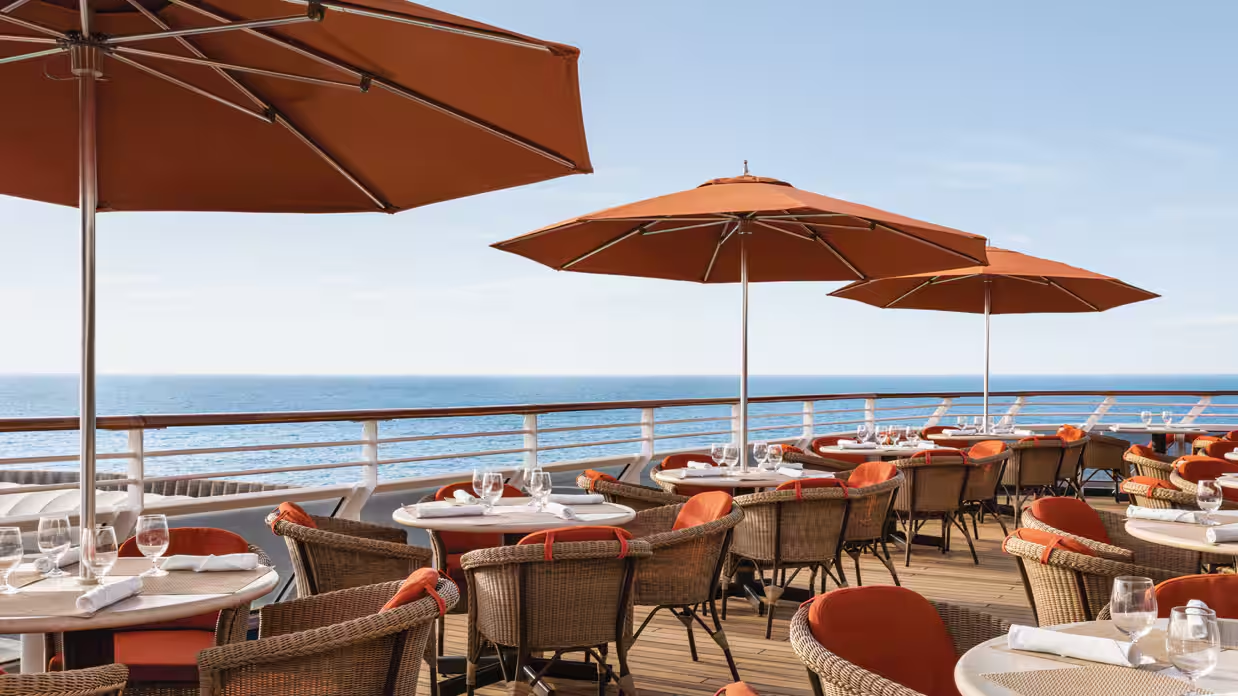
Confessions of a Converted Cruiser: How Alaska and Oceania Changed Everything
A self-proclaimed non-cruiser boards Oceania for an Alaskan voyage — and discovers that breaching humpbacks, foie gras-topped filets, and glass-smooth mornings can change a traveler's mind entirely.
By Cassie Bacon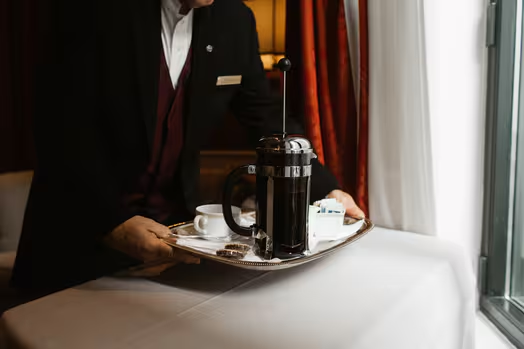
The Lesters of Travel: Luxury Hotels Where Doormen and Butler Service Set the Standard
Inspired by Lester's character on "Only Murders in the Building," a celebration of the real-world doormen and butlers who transform luxury hotels and cruise ships into places that feel like home.
By Sarah Garza
A Tale of Two Palaces: Mandarin Oriental vs. Rosewood Vienna
I stayed at two of Vienna's newest luxury hotels, doing a split-stay experiment that revealed two completely different sides of the city. Here's the honest verdict on the Mandarin Oriental Vienna and the Rosewood Vienna.
By Emily Payne